
Powerful Innovation Is a Function of Shared Ideas and Collaboration
Collaboration drives technological advancement at Southwire Spark, which is the innovation hub for Southwire Company, LLC, one of North America’s largest wire and cable producers.
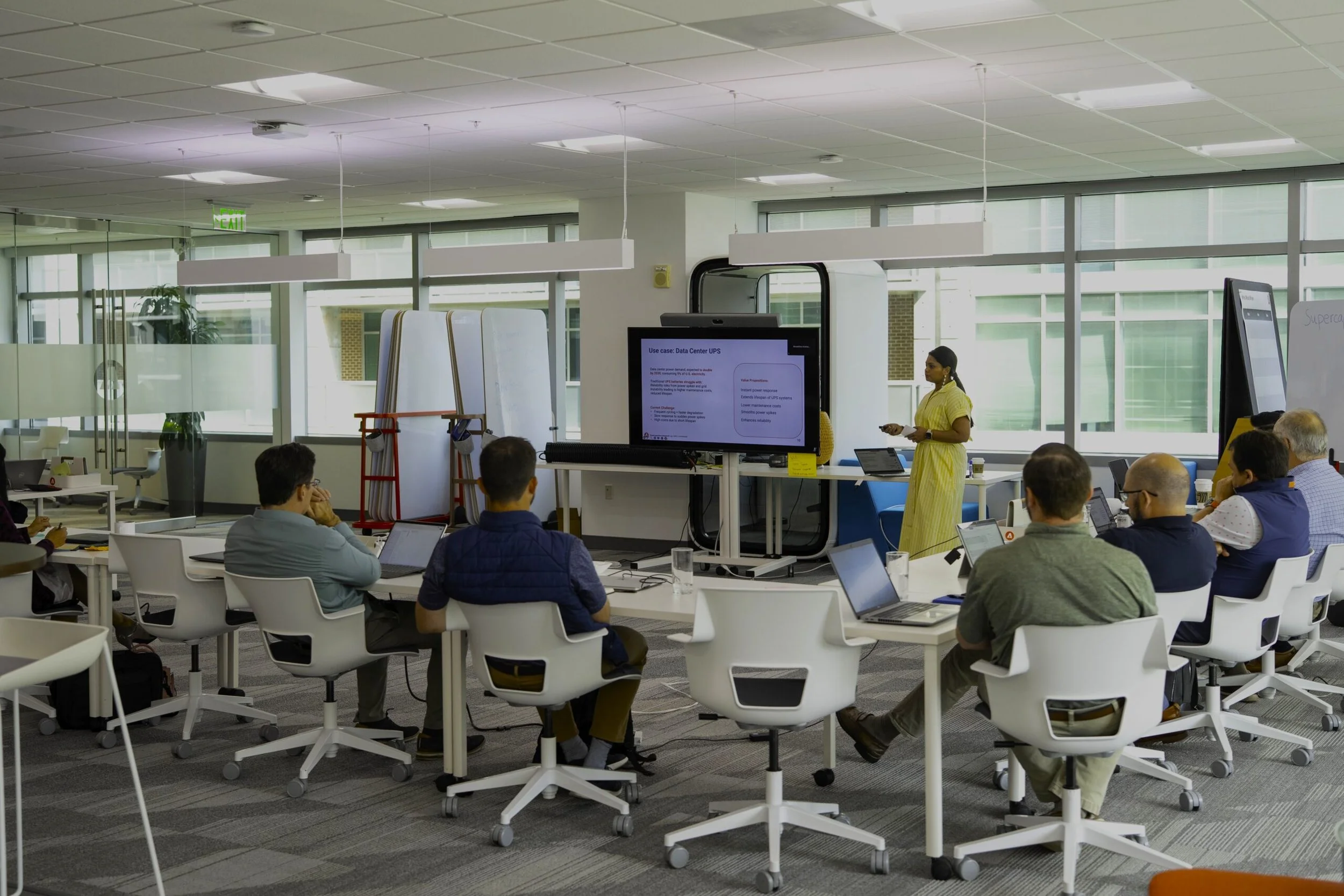
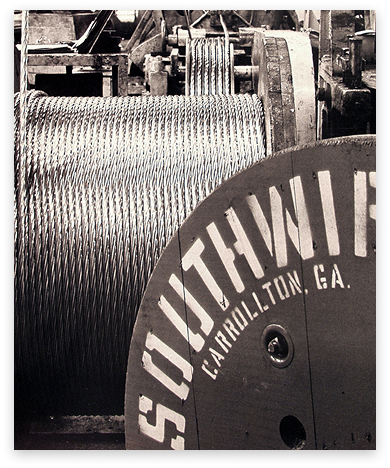
“Our cross-functional teams co-design solutions with our academic and start-up partners, validate them in instrumented testbeds, and pilot them in real operating environments,” said Michael Powell, Manager of Technology Partnerships at Spark.
Spark cultivates strategic partnerships with universities, startups, national labs, government agencies, and other industry partners to explore emerging grid technologies, applications of artificial intelligence and machine learning, advanced materials innovation, robotics, and intelligent machines.
For a collaboration right here in Tech Square, Spark is exploring a new project with Home Depot's Innovation Lab, OrangeWorks, related to supply chain management and distribution center transfers.
Putting Science and Strategy into Motion
Just as roads fill up during rush hour, the power grid becomes congested, causing cables to run hotter. Spark aims to reduce energy grid congestion and keep power lines cooler, especially as data centers plug in.
To meet this demand, Spark is commercializing AMPAMAX TM cables after seven years of research and development with a startup spun out from a Cambridge University researcher. AMPAMAX TM cables increase electrical capacity through a high-emissivity conductor coating that allows heat to be released into the atmosphere. As a result of this heat reduction, the AMPAMAX TM cables efficiently carry electricity, unlocking additional capacity without the need to build new towers while strengthening the reliability of legacy infrastructure.It's Joule’s First Law, or the Joule heating equation, at the core of the AMPAMAXTM cable functionality. This formula calculates the power (P) dissipated as heat by an electrical conductor with a given resistance (R) and flowing current (I), P = I2R. When current (I) or resistance (R) is lowered, such as the high-emissivity conductor coating allows, heat generation is reduced.
“AMPAMAXTM cables will be great for Southwire’s sustainability goals as well as addressing the issue of a congested electric grid in the US. This comes at a good time as the electric grid is seeing rising pressures from things like AI data centers that are using tons of electricity,” said Kiran Manchiraju, Southwire Company’s Vice President of Research and Lead at Spark. Even as commercialization is in process, utilities are already planning to invest in this system upgrade, including at a site in Kentucky.
Video: Simple Science and Maths
Additionally, Spark’s recycled copper and aluminum program integrates circular-economy partnerships with an AI-driven materials-intelligence platform to increase recycled content while protecting performance, cost, and supply assurance, turning Southwire’s sustainability commitments into operational advantage. This metal recycling process, related to the production from ore to cathode, reduces Scope 1 greenhouse gas emissions.
Spark’s emerging technologies include highly conductive materials, graphene, advanced coatings, new metal alloys, and composite materials. The Spark team shares, “Our mission is clear. We convert high-potential ideas into grid-ready products and platforms that improve sustainability, resilience, and help shape the standards that will define how power is delivered.”

Photo: Fré Sonneveld, Unsplash
Moving Beyond Transaction
Talent and ecosystem development are a big part of Spark’s mission. Through summer internships and employing part-time students, the Spark team mentors interns and Capstone Project teams, co-creates with entrepreneurs, and collaborates with public stakeholders to align innovation with priorities such as decarbonization, advanced materials development, and grid modernization.
Photo: Southwire Spark
Reflecting on industry and academic collaborations, Manchiraju said, “We want to create more robust partnerships, not just being transactional.” To achieve this, Spark conducts engagement with a variety of universities to develop the next generation of talent, including Georgia Tech, Kennesaw State University, the University of Georgia through the Student Industry Fellows Program, the University of Notre Dame in Indiana, and the Atlanta University Center Consortium, which includes Clarke Atlanta University, Morehouse College, and Spelman College.
Spark works with students on projects related to artificial intelligence, machine learning, superconductivity, materials science, data analytics, digital twins for grid applications, and metallurgy. Powell said, “The result is a pipeline of solutions—and a pipeline of people—ready to deliver durable impact at scale.”