Prioritizing Play Over Profits: How Fan-Made Worlds Are Resisting Corporate Control
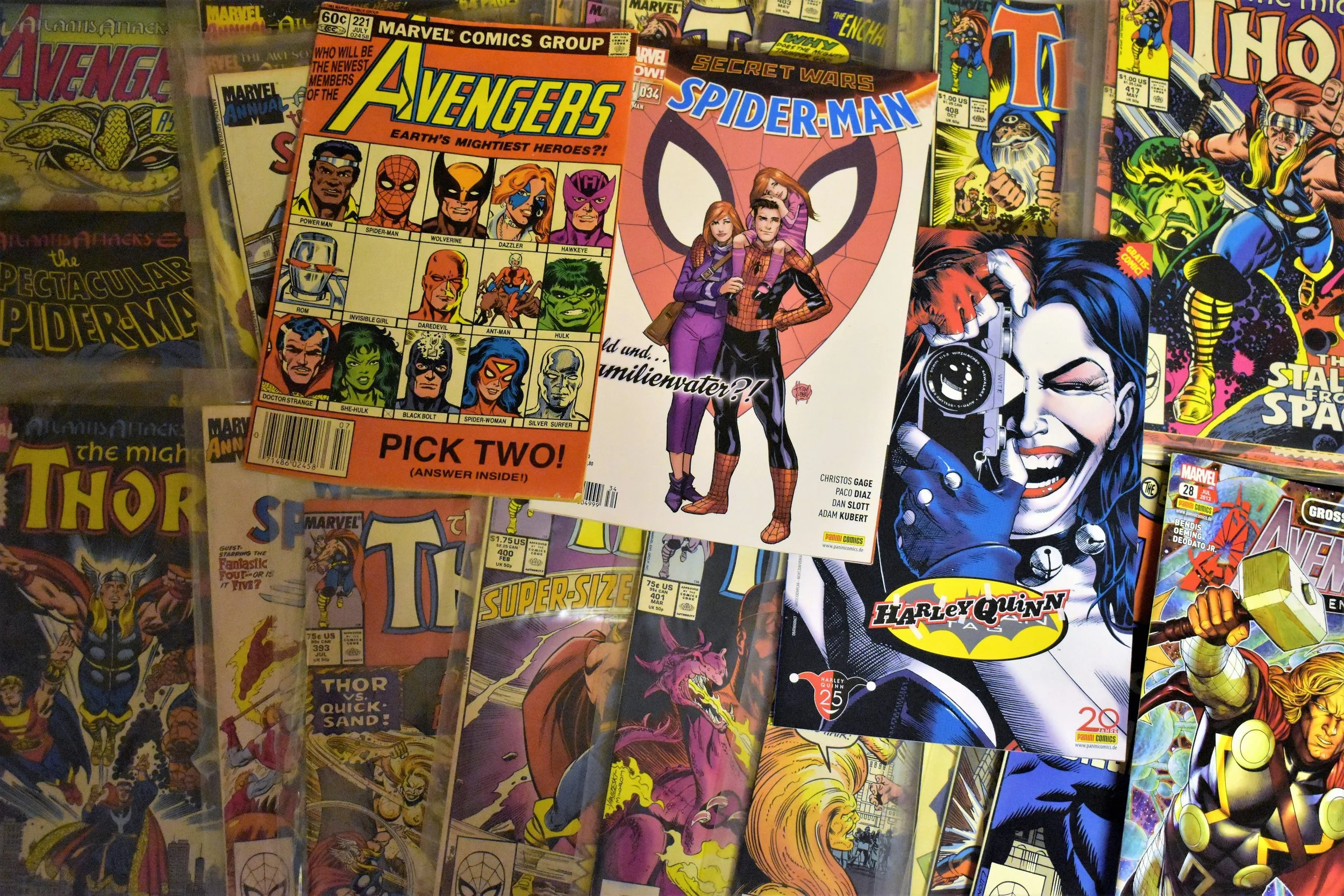
In the world of fictional storytelling, emergent transmedia is a phrase that refers to the unintentional, organic expansion of a story or narrative across different media platforms. Key elements of emergent transmedia are that it is primarily driven by audience participation and the actions, interpretations, and creations of fans and participants. Unlike planned transmedia, emergent transmedia isn’t initially designed to span multiple media types. It often sprouts from fan-created content, online communities, and other forms of audience engagement. Examples include memes, podcasts, online threads, narrative fiction, man-made and machine-generated art, and any forms of content created by audiences to expand upon an existing story or narrative.
Terra Mae Gasque, a researcher at the Tech Square Research Building (TSRB), focuses on interactive narratives while completing her Ph.D. in Digital Media at Georgia Tech. Gasque’s research explains emergent transmedia as “the power of unity and fun exploring worlds beyond an original timeline.” Gasque also explains issues with modern fan culture. Gasque explains that emergent transmedia, “has gotten so visible, and profitable,” that large corporations have begun to take notice of this phenomenon, grown to anticipate it, and subsequently profit from it.
Growing Tensions Between Fans and Financiers:
In Gasque’s chapter, “Emergent Transmedia,” from the book Imagining Transmedia, Gasque explains this growing issue within modern fan culture. “I believe that one of the greatest challenges and greatest assets of fan works is the freedom,” Gasque asserts. “When a corporation takes control and strives to manicure their narrative world to their vision, they effectively hold the creative process… ransom.”
A prime example that Gasque expands upon in her research is the “Star Wars extended universe series.” Gasque presses, “Now that entire body of work has been culled, rendered unreal, under control by a litigious owner. More so, those works can be scavenged for the owner’s profit, stolen out from under these fans… it [has] become unpublishable for fear of potential litigation.” Gasque explains that when corporations try to intervene, with sour motives to profit from the beautiful improv that is emergent transmedia, it alienates fans and stales the hype for upcoming original stories.
How Table-Top Role-Playing Game Theory Teaches Audiences and IP Owners to Share:
The solution that Gasque presents to this overbearing rise of corporate presence in emergent transmedia is to utilize tabletop role-playing gaming theory to demonstrate a more effective and democratic model for the phenomenon of emergent transmedia.
To deeper dive into the roots of transmedia, Gasque, in the chapter, references Henry Jenkins, a provost and professor of communications, Journalism, and Cinematic Arts at the University of Southern California. Gasque mentions that Jenkins defines the essence of Transmedia as, “audiences working together to enhance the joy they receive from original storytelling.” However, things have changed since companies like Disney now control fan use of their characters and IP, even sending legal threats to authors who try to imagine an alternate ending to their stories.
Gasque’s chapter also referenced Adrienne Marce Brown’s Book: Emergent Strategy: Shaping Change, Changing Worlds (2017). While drawing on ideas from Brown’s book, Gasque presents three main ideas: small actions can create significant changes, being open to collaboration and flexibility is essential, and power should be democratized. These adages matter to Gasque’s research because they help challenge unfair systems, including capitalism, supremacy, and fake peace.
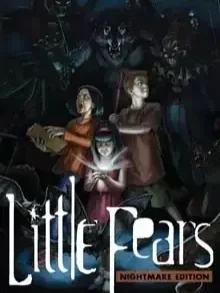
Gasque goes into depth on their notions that Table-Top Role Playing Games (TTRPGs) are powerful tools for change. A game that they specifically reference in their paper is the tabletop role-playing game, “Little Fears.” In this game, players assume the roles of children 6-12 who are fighting monsters from a nightmare realm called “Closetland.” The monsters in the game seek to harm or “kidnap the children,” and the kids must use their “beliefs” to stand against these threats. “TTPRGs and Fan Fiction reflect and enact change (politically or otherwise) all the time,” Gasque persists.
In the chapter, games like “Little Fears” work on improving the players' imagination, cooperation, and shared storytelling skills. No one person controls the story, and everyone contributes to the fun and shared outcome of their battles. Players explore challenging topics such as fear, justice, and community healing. Gasque explains that these games mirror the strategies outlined in Brown’s book on emergent strategy. Cultivating collective power, resilience, and empathy. “Play allows us to challenge an enforced view of our own world as unchanging and stagnant,” Gasque emphasizes
Throughout Gasque’s chapter, the main notion that is emphasized is that TTRPGs can be used as a tool for questioning your surroundings and challenging the system you reside in. Gasque often concludes that TTRPGs are creative resistance to corporate media control. This is because with tabletop role-playing games, participants are enabled to create their own narratives. This is much like the audience participants of emergent transmedia. Fan communities remix and expand stories across art, podcasts, literature, livestreams, and more.
Playing together equates to reimagining the fundamentals of traditional narrative storytelling. As you are interacting and “playing” with others in a tabletop role-playing game setting, you are reimagining how the story will be told, as well as who gets to tell the stories.
To deepen this point, Gasque brings up the role of the Game Master (GM). Traditionally, the GM is like the director. They sometimes hold too much control when it comes to directing the narrative in a tabletop role-playing game. However, new models of modern tabletop role-playing games introduce the concept of rotating GMs to democratize the games’ storytelling. The emphasis is on decentralization, shifting from “one voice rules” to “many voices collaborate.”
Ultimately, transmedia doesn’t have to be about profit. It is more of a call to play and build together. Emergent transmedia is, in its essence, about community and the spaces built to celebrate original storytelling. It's a way to democratize the enhancement of continued original narratives. TTRPGs show audiences and participants how to dream up better, fairer, and inclusive stories. If we all play, share, and imagine together, we can change the current world of transmedia, and thoughtfully challenge the status quo.