In a world prioritizing efficiency as technology advances, where does friction, especially related to higher education, come in, and how does it support students to be prepared for today’s world?
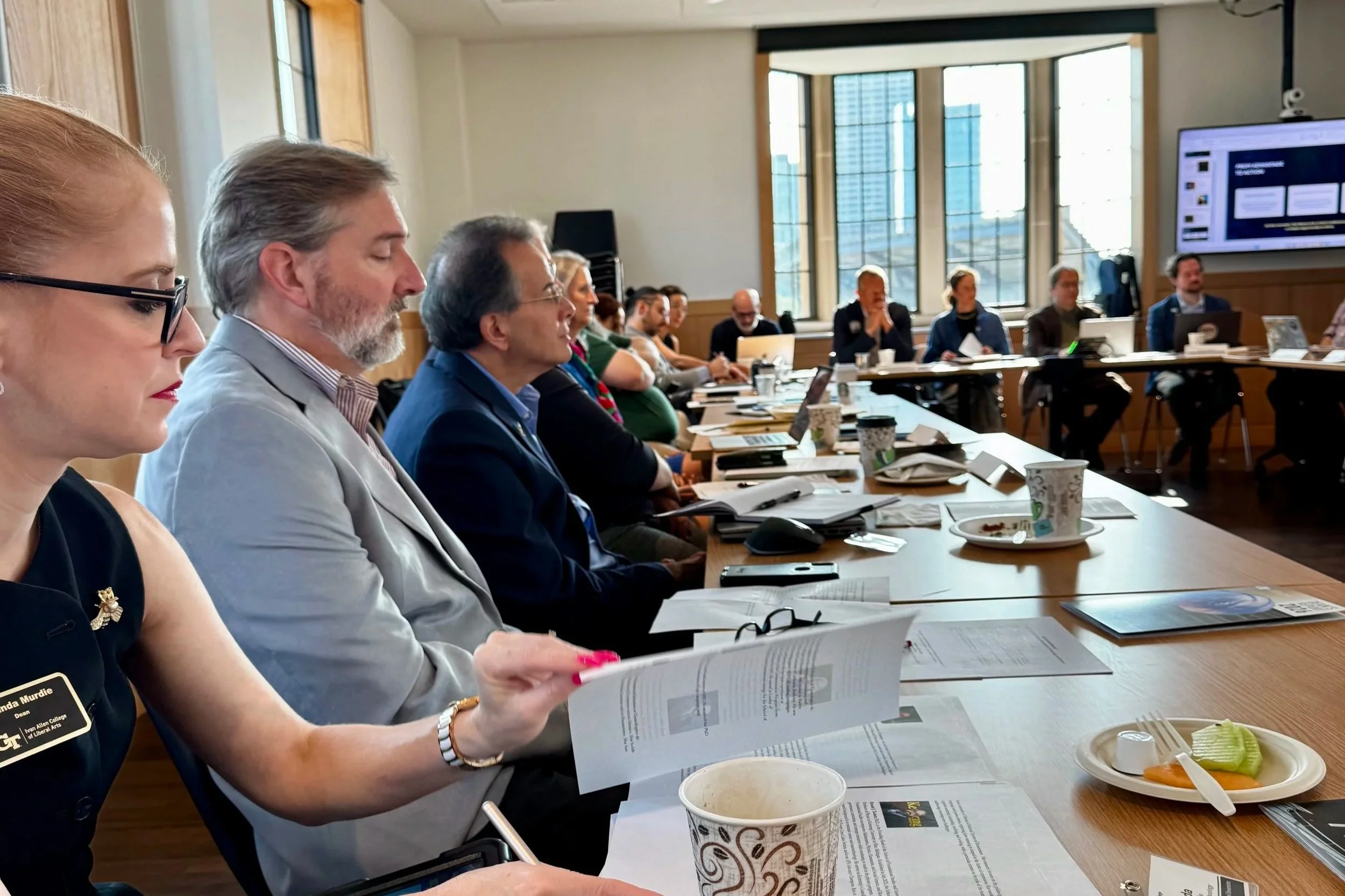
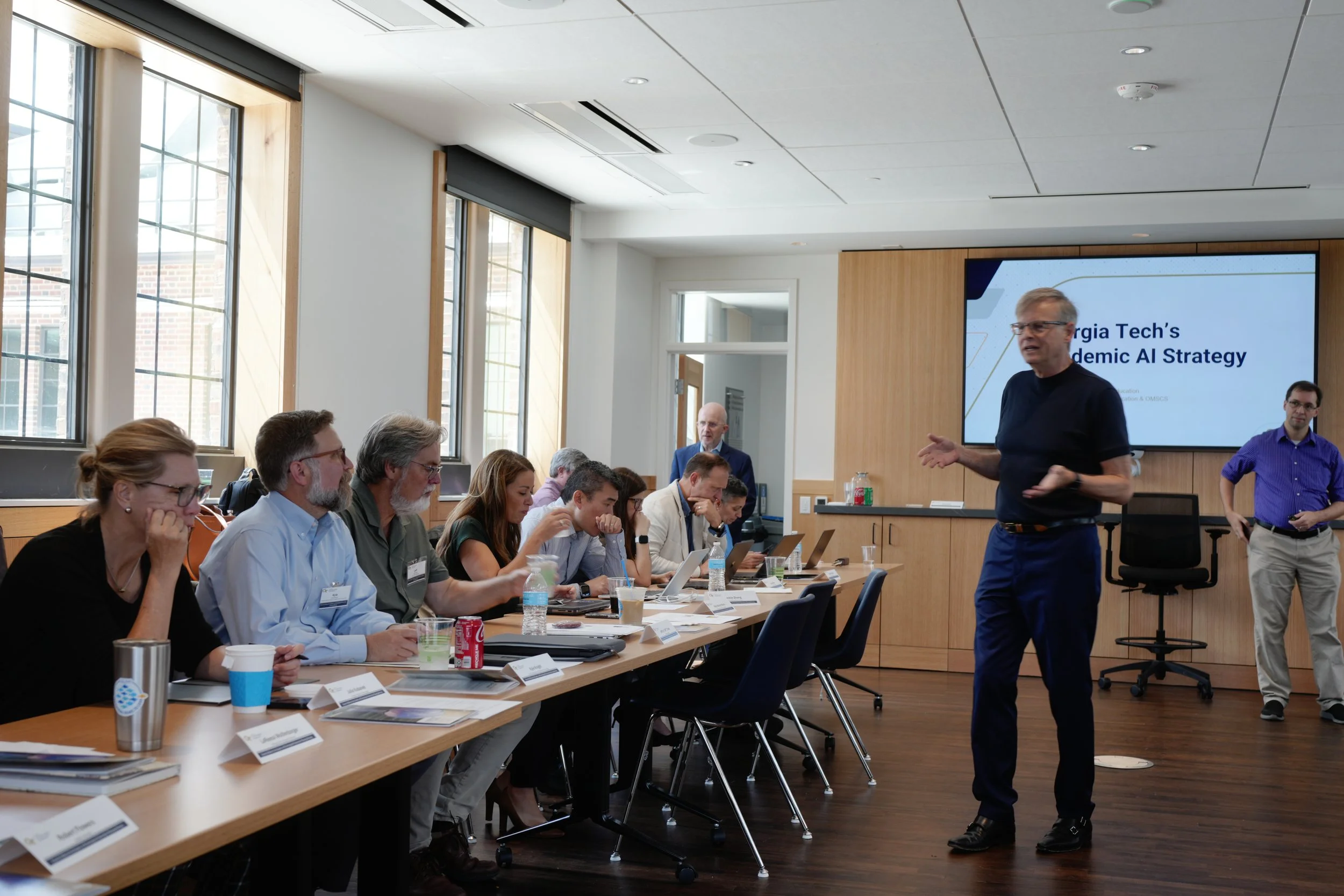
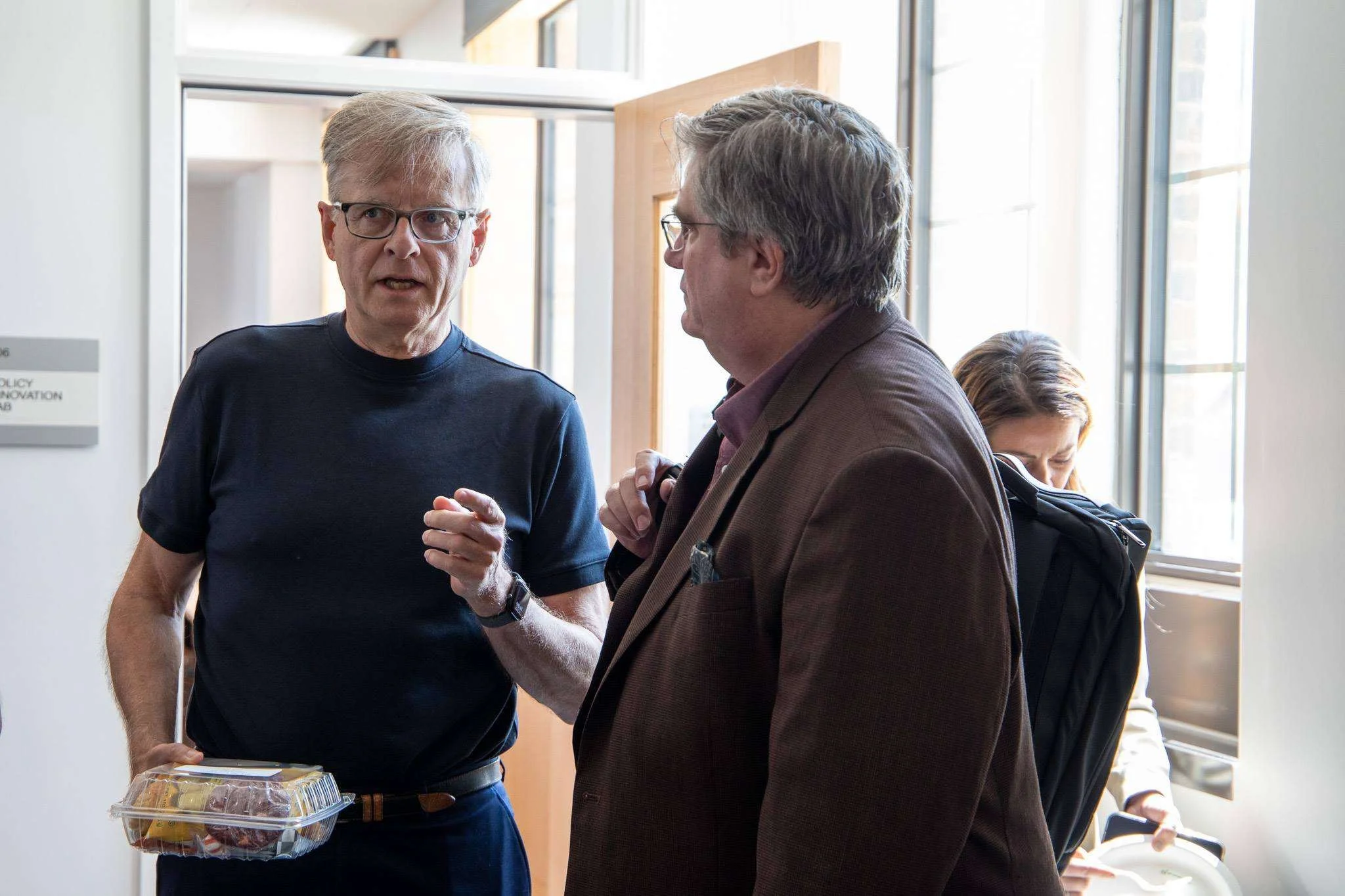
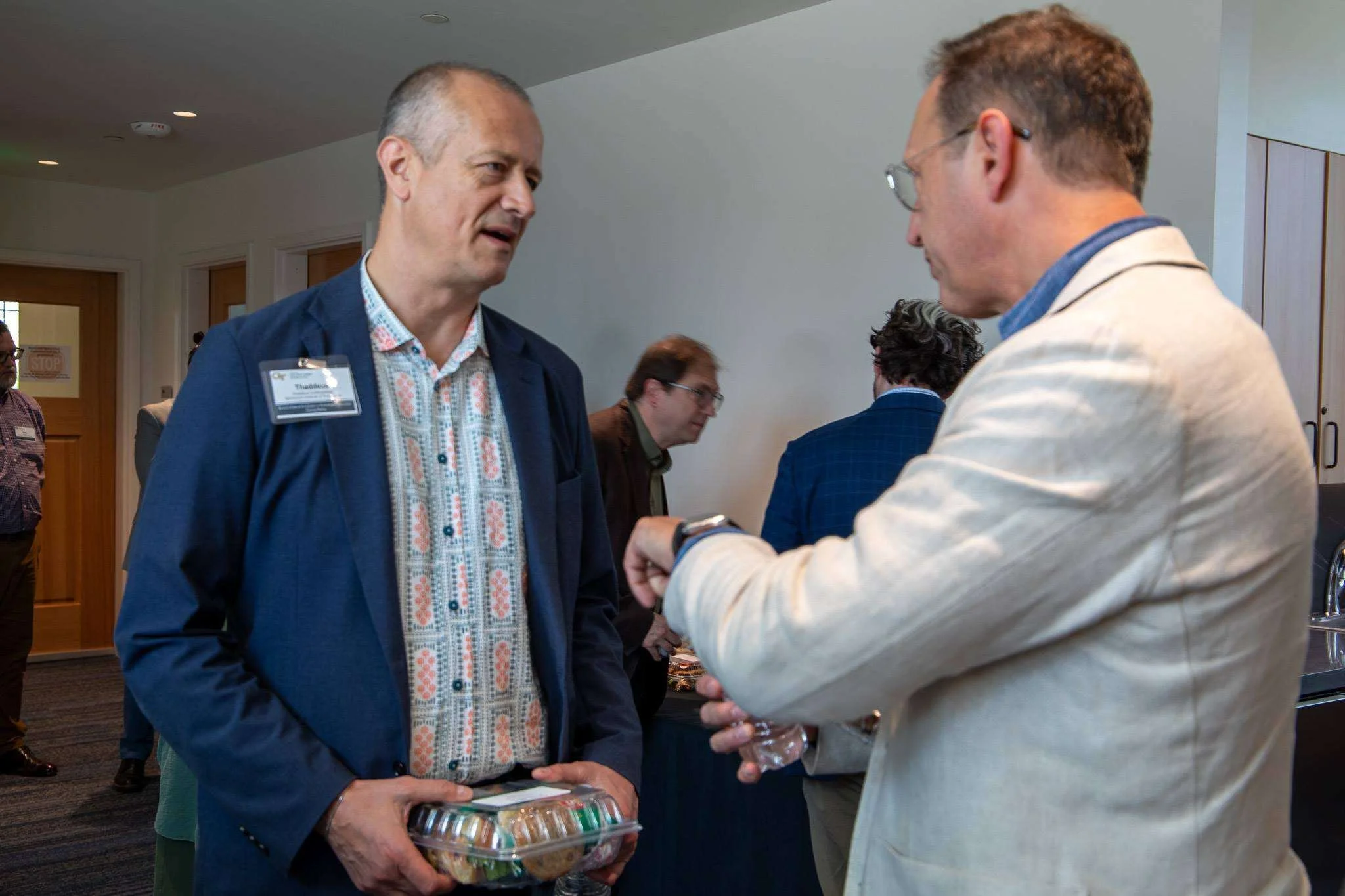
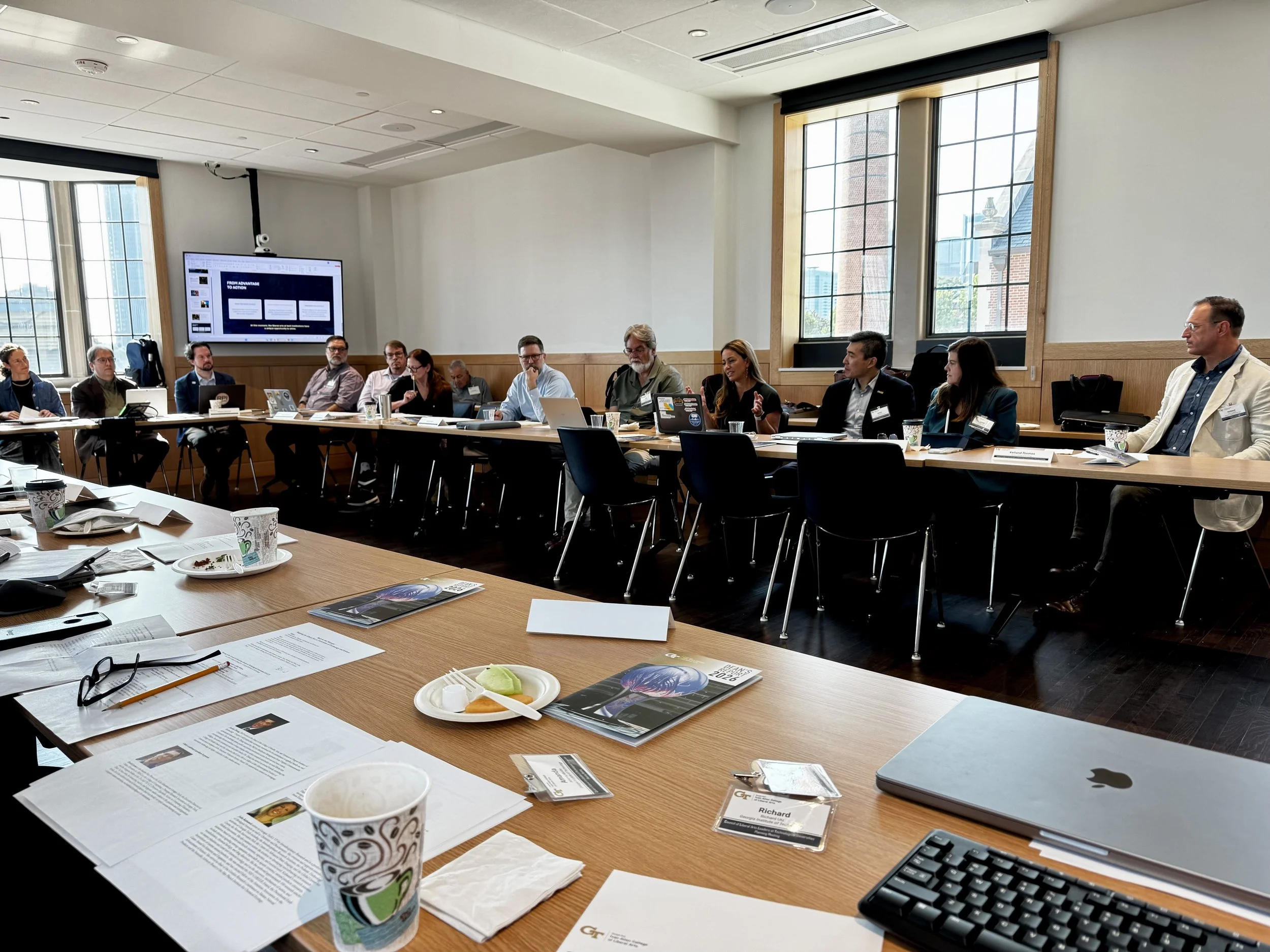
To discuss this question of “humanity and technology”, 25 academic leaders of liberal arts units at traditionally technical universities, such as MIT and Virginia Tech, met on Georgia Tech’s campus on September 4, 2026, for the second gathering of the Council of Leaders of Liberal Arts Colleges at Technological Universities (CoLLT).
A central tension explored at the meeting was what priorities are most aligned and misaligned between the liberal arts and STEM fields, especially as artificial intelligence continues to change the classroom and careers. And from there, what opportunities are there for these fields to support each other to better educate students, prepare them for their careers, and contribute to society?
In their foundational documents, CoLLT describes that not only do liberal arts units situated in traditionally technical schools enrich their own programs with the context of STEM campuses, but that these liberal arts units are also essential to prepare future technologists who can think critically, communicate clearly, and understand the social and cultural implications of their work.
The meeting, coordinated and facilitated by Richard Utz, Ph.D., Senior Associate Dean for Strategic Initiatives at the Ivan Allen College of Liberal Arts, welcomed deans, associate deans, and directors from the United States and Mexico. CoLLT had its first meeting in April 2026 and was co-founded by Georgia Tech’s Ivan Allen College of Liberal Arts and nine other participating liberal arts institutions.
The Heart of the Matter: How Liberal Arts and STEM Support Each Other
Ivan Allen College Dean Amanda Murdie, Ph.D., shared initial results from several evidence-based studies that are being submitted for publication on the return on investment of a liberal arts education. In these studies, when comparing a resume with a liberal arts degree from a traditional institution to one from a tech school, where students also take coding and math classes, there was an 11-point increase in the rating for the liberal arts resume from a tech school.
And the converse shows the same trend. When comparing a resume for an engineer from a tech school to that of an engineer with liberal arts coursework, the resume rating increased by 4 points for the engineer with the liberal arts coursework.
Utz, who works with Murdie on strategic initiatives, highlights the stronger value proposition of integrating the liberal arts with STEM, which is reflected in Georgia Tech’s Ivan Allen Advantage. Utz, who has a background in English and German Literary Studies and Linguistics with a focus on medieval culture and literature, said, “There are hurdles, but also a hopeful picture.”
To get a sense of this picture, one could look to the attendees of Georgia Tech’s CoLLT meeting for inspiration on how the liberal arts and STEM fields support each other and on the opportunities at this intersection. For example, in attendance was a comparative literature and philosophy scholar who transitioned their academic career to informatics, human-computer interaction, and design research.
Related to the hurdles and opportunities for resilience, Utz pointed out how while enrollment in computer science programs has decreased, this has not changed as much in collaborative, interdisciplinary programs. “A collaborative degree may protect against big fluctuations,” said Utz.
This work addresses the larger challenge: structural misalignment and impediments that exist for liberal arts units to work across colleges. “It takes work for us to share where we’re coming from,” said Utz. “If it’s the heart, why is funding not appropriate to that description?”
In essence, that is what CoLLT seeks to do in their work: organize liberal arts higher educational leaders collectively, outline what’s possible when the liberal arts and STEM fields support each other in education in a plan, and to share about their work in a legible way, such as by developing a network of speakers.
Key Themes…and Questions
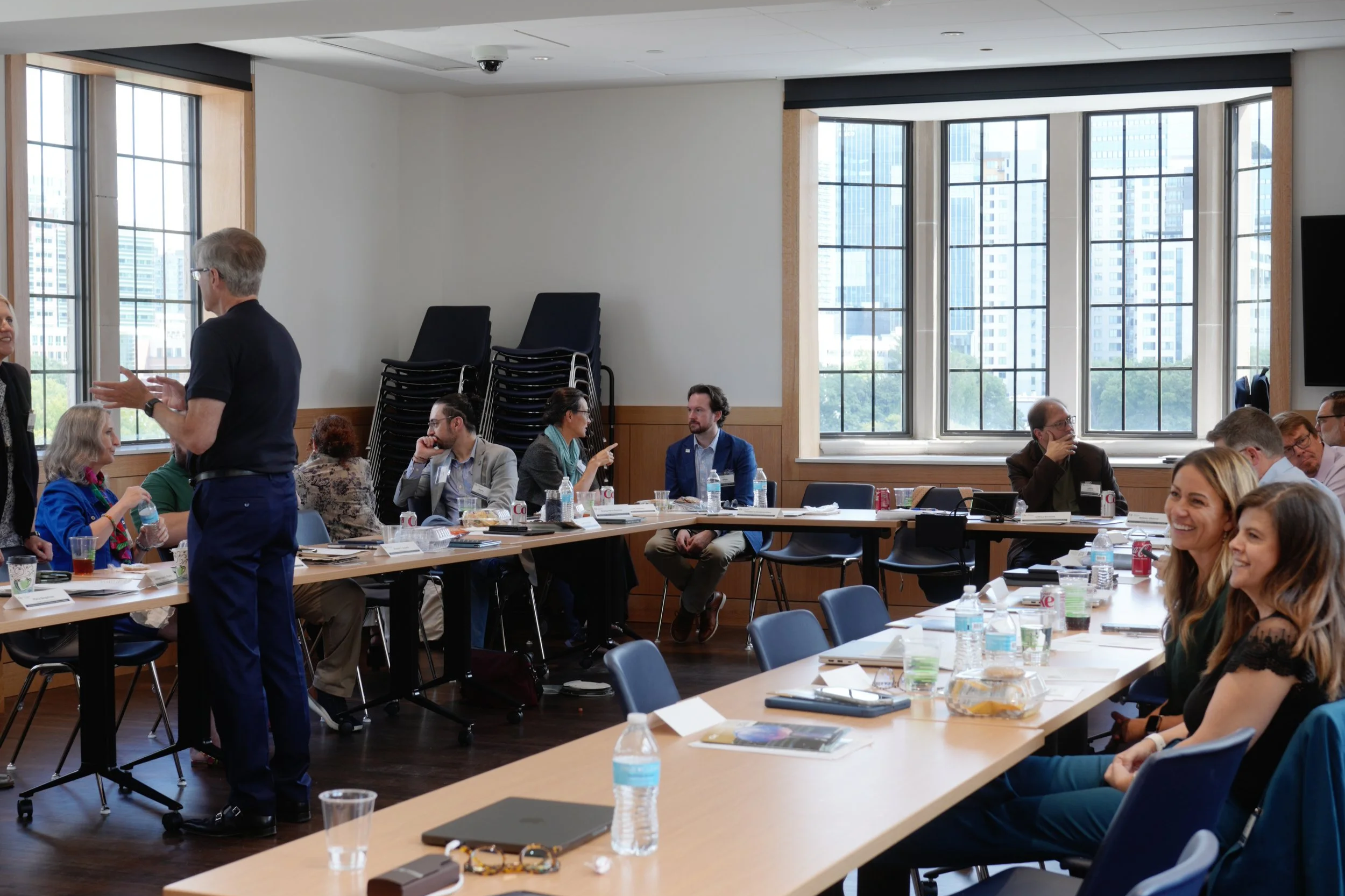
To understand how attendees themselves describe their own connection to the intersection of the liberal arts and STEM fields and the context of their liberal arts units at the STEM universities, each attendee provided a five-minute introduction in “Lightning Round: Branches from the Same Tree.”
These introductions provided a range of perspectives on what the liberal arts mean to attendees, their institutions' structures and historical contexts, collaboration among programs, and unique strengths or ideas about how liberal arts education at STEM schools prepares students for what’s next.
Going around the room, which included chemists, philosophers, historians, political scientists, and musicologists, each introduction added to the spectrum, depth, and unique facets of how the liberal arts and STEM fields interact for those working along this boundary.
Through the introductions, which were followed by presentations exploring themes of “Humanity & Technology”, discussions included topics such as developing critical thinking and transferable skills, reframing how AI can be used to complement deep domain expertise, the value of engaging in community learning outside of the classroom, and embracing the friction associated with learning.
Utz provided additional context. “The English word friction comes from the Latin word fricāre, which means ‘to rub’, such as with writing with an instrument on a tablet,” Utz said. “We also have, from Greek, graph/graphein for an instrument writing on a surface, with its root that means ‘to scrape’.”
Importantly, CoLLT attendees embraced the “seam” where the liberal arts and STEM disciplines meet, with Virginia Tech’s Tech for Humanity minor being discussed as an example in a presentation by Laura A. Belmonte, Ph.D., a historian and political scientist who is the Dean of the College of Liberal Arts and Human Sciences at Virginia Tech.
CoLLT attendees also explored the idea that a void could be created, that others may fill, when higher education liberal arts leaders at STEM schools don’t provide direction related to the use of AI in higher education.
CoLLT Is Picking Up Momentum: Comparing, Contrasting, Critiquing
“We’re looking to build something more concrete than a conversation,” said Utz, who has published a summary of the September 2026 gathering in The Edu Ledger.
And what that looks like is already being outlined. The group is discussing writing a book for higher education leaders, campuses, and the broader higher education field that showcases the spectrum of views, contexts, ideas, and questions that they encounter in their work in liberal arts units in STEM universities.
In addition to Utz, the editors for this resource are Camille Johnson, Ph.D., a social psychologist and Dean of the College of Letters, Arts, and Social Sciences at Cal Poly Pomona and Thaddeus Guldbrandsen, Ph.D., an anthropologist and Dean of the School of Science and Humanities at Wentworth Institute of Technology.
While the future of higher education, including the rapid expansion of the use of AI, remains unknown, the group draws hope from the foundation provided by the liberal arts: seeking to understand context, embracing constructive critique, identifying values and organizing principles, and allowing for exploration and experimentation.
Throughout the conversations related to technology, hiring, and funding, students' needs provided the center of gravity. These leaders acknowledge the serious questions that both students and parents ask: “What can be done with a liberal arts degree?” and “Why will students come to a STEM school to do a liberal arts degree?” and “What are you doing about AI?” and “What kind of job will I get with this degree?” and “The market is changing a lot, what can we do?”
CoLLT, which is still reaching out to other liberal arts leaders at STEM institutions to join, explores these questions as advances in technology and AI continue to shape the classroom, workforce, and society.
The more, and faster, things change, the greater the importance of transferable skills, resilience, critical thinking, and working at the edges between disciplines, where those fields meet in interesting and, perhaps, hopefully, unexpected ways.
Looking around the light-filled room, the gathered interdisciplinary leaders face each other and the future. Physicists and chemists as deans. Historians creating curricula that bring together technology and humanity. Comparative literature specialists and philosophers turned human-computing interaction specialists leading curriculum-wide AI implementation. All examples of why CoLLT is “Built for this Moment.”