
How Can Cities Build Resilience to Flooding and Drought? Experts Distilled Insights at CURA’s 2026 Symposium
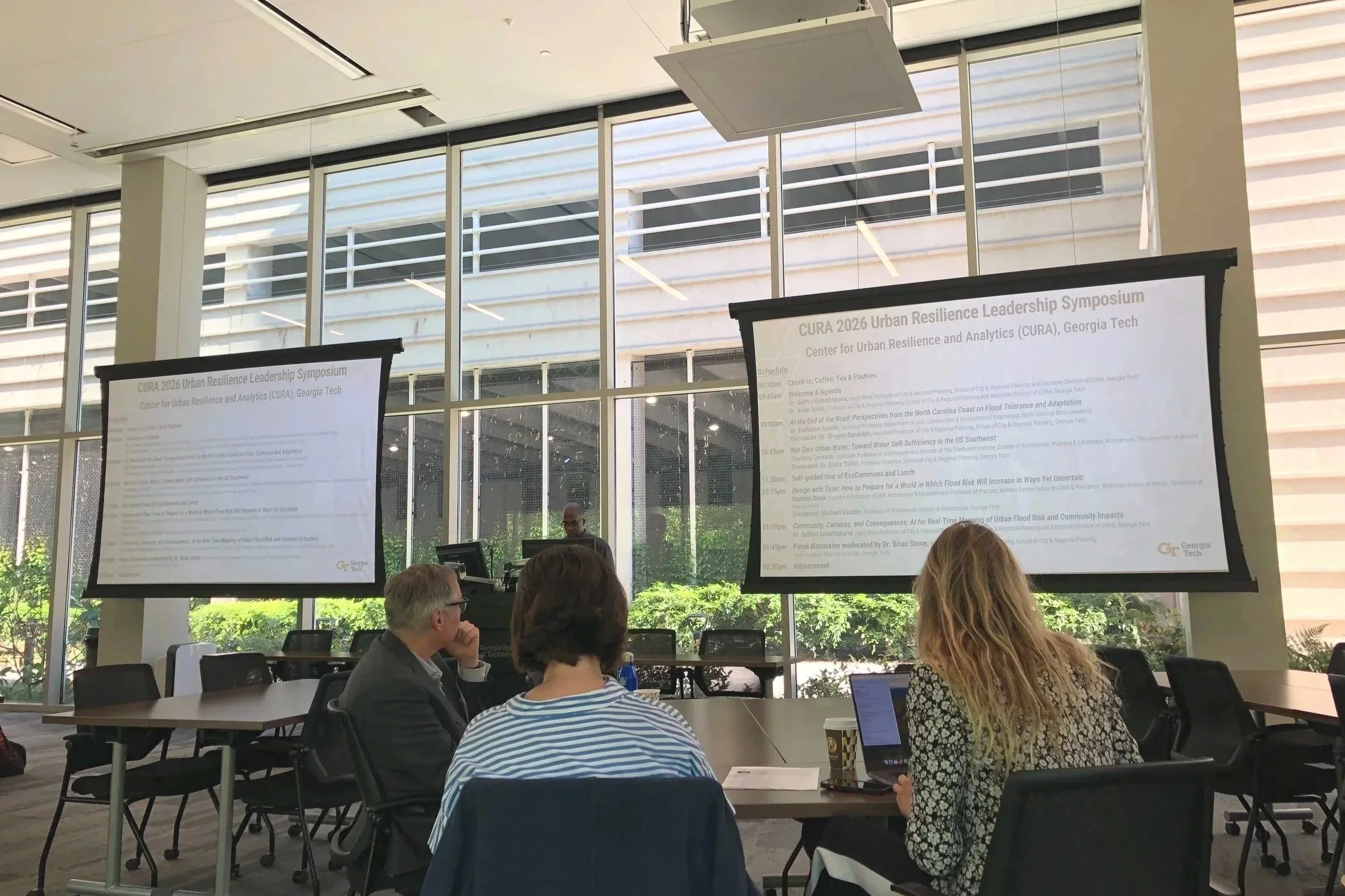
The theme for the Georgia Tech CURA 2026 Urban Resilience Leadership Symposium held on Tuesday, April 21, was water, a timely topic. While the warm morning sunlight, mild temperatures, and low humidity made for a perfect spring day in Atlanta, wildfires were burning in South Georgia due to an extensive drought affecting the state.
The smoke that would make its way to Atlanta the next day was nowhere to be seen through the floor-to-ceiling glass windows, where the trees, ferns, and grasses bordering the wooden paths of the Georgia Tech EcoCommons provided a natural backdrop to the room full of designers, planners, and researchers gathered with coffees and computers in hand.
More than just the site of the symposium, the EcoCommons reflects the work CURA is doing to strengthen urban resilience and climate adaptation. The EcoCommons, a nature-based solution, captures, stores, and uses half of the stormwater on campus while also providing a natural oasis for the community in the middle of Atlanta.
In his welcome to students, professors, alumni, and visitors at the annual event, Dr. Subhro Guhathakurta, Executive Director of the Center for Urban Resilience and Analytics (CURA) and Harry West Professor in the School of City & Regional Planning at Georgia Tech, highlighted that the interdisciplinary research center CURA, which launched in 2025, addresses global urban resilience and climate adaptation challenges, from coastal planning to tree canopy planning, in Atlanta and beyond, using evidence-based research, harnessing data, applying design thinking, and engaging with communities.
“What’s Not Common Is That We Can Predict This”
The sprawling dark red of the presentation slide contrasted against the expansive green plants and blue sky seen from the conference room’s windows. Dr. Brian Stone, Associate Director of CURA and Professor in the School of City & Regional Planning at Georgia Tech, referenced a map of Georgia from the U.S. Drought Monitor.
To ground the theme of water for the 2nd annual CURA Urban Resilience Leadership Symposium in the current climate, Stone referenced the extreme spring conditions we’ve experienced in Atlanta so far in 2026.
“It’s the most intense drought in 20 years and perhaps the most extreme and anomalous spring we’ve had across the country, Stone said. “Since January 2026, we’ve had the least average amount of rain across the United States over the past 130 years.“
“It’s almost certain that 2026 will be the hottest year, which is common. But what is not common is that we can predict this. And that requires us to respond. This symposium is about this response and the real approaches, science, practices, and design to address these responses,” said Stone.
Just the day after the symposium, on Wednesday, April 22, the smoke from the South Georgia wildfires traveled north, reaching Atlanta. Atlantans woke up to a gray haze, the strong smell of smoke in the air, and health notices advising them to limit time outdoors, especially for those with certain medical conditions.
On this Earth Day in Atlanta, parents shared on social media that as they dropped off their children at daycare, they asked teachers to keep their kids inside and not go outside to play in the smoky air.
Using Design to Navigate the Uncertainty of Water’s Extremes
“We have to design with uncertainty based on what is not known about sea level rise, climate, and different futures,” said Matthijs Bouw, “Doing nothing is not an option.”
Throughout the symposium’s presentations and discussions, leading experts and researchers shared how navigating uncertainty about the impacts of climate change is shaping how city planners model data, adapt frameworks, engage with communities, and implement solutions to build urban resilience.
What is certain is the need to take action. Water’s extremes, such as drought and flood, impact all aspects of our lives, from our health to travel to finances, and deepen socioeconomic disparities. “We need to design for a longer time period,” said Bouw.
How City Planning and Urban Resilience Bridge Data and Community Needs
From floods in coastal North Carolina to water importation and use in cities in the Southwestern United States, flood protection for New York City's dense urban coastlines, and the real-time mapping of urban flood risk in Florida, the symposium speakers represented various urban regions and topics.
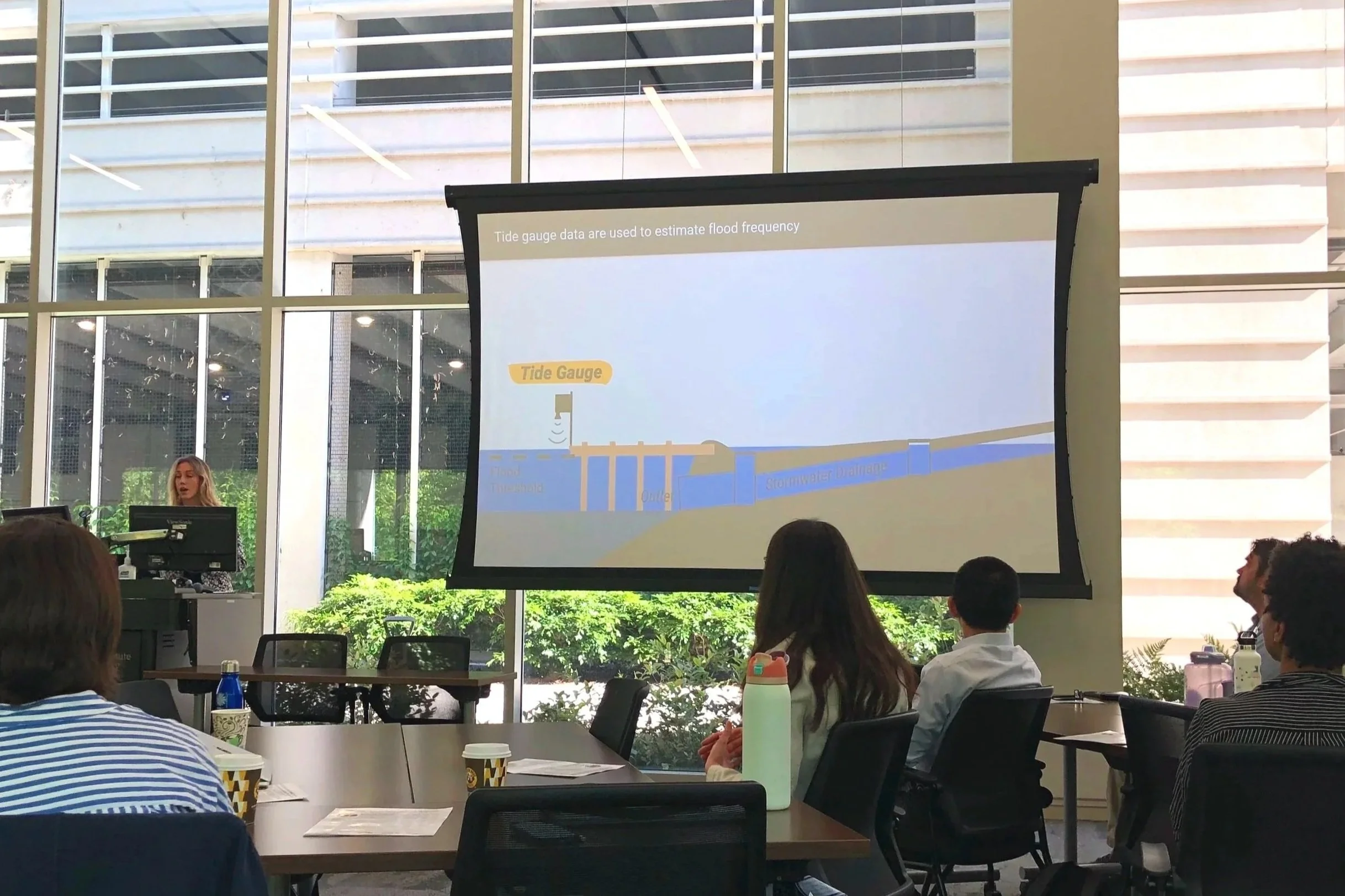
Dr. Katherine Anarde, Assistant Professor, Department of Civil, Construction & Environmental Engineering, North Carolina State University, presented how modeling based on sparse tide gauge data can be used to estimate flood frequency and improve flood prediction efforts in coastal North Carolina, which experiences chronic flooding. Anarde’s research incorporates community input to better understand experiences, concerns, and their tolerance to flooding events.
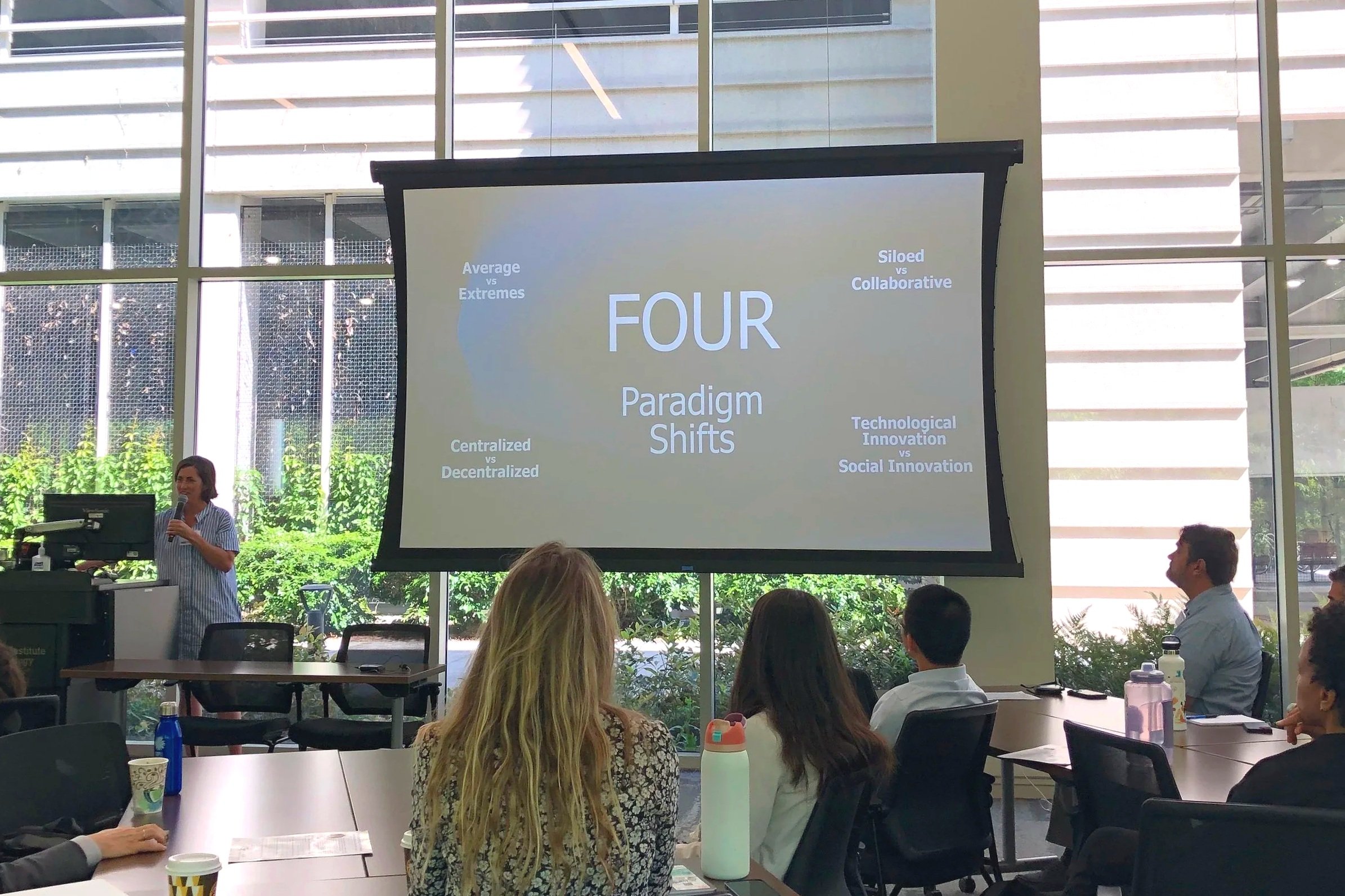
Courtney Crosson, Associate Professor of Architecture and Director of The Drachman Institute, College of Architecture, Planning & Landscape Architecture, The University of Arizona, discussed how cities and the 40 million people that depend on the Colorado River for water in the Southwestern United States can reframe their relationships with water and move from relying on importing water to Net Zero Urban Water (NZUW), while also significantly reducing demand. Crosson shared four paradigm shifts in designing and planning for NZUW, which she defined as, “Meets the needs of a given community with locally available and sustainable water supply, without detriment to interconnected systems.”
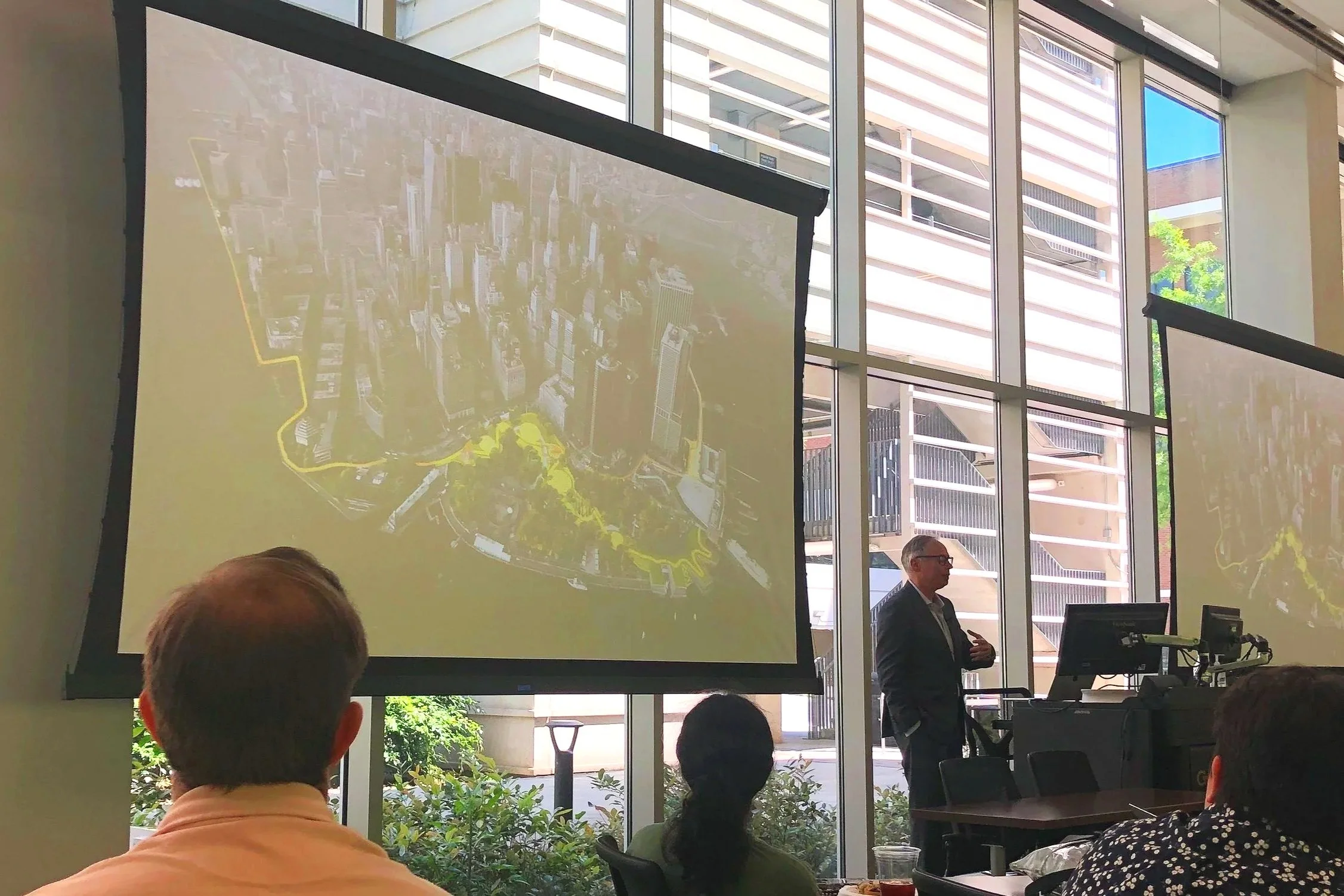
Matthijs Bouw, Founder & President of ONE Architecture & Urbanism and Professor of Practice, McHarg Center Fellow for Risk & Resilience, Weitzman School of Design, University of Pennsylvania, shared how, in the aftermath of Superstorm Sandy, The Big U, a project for flood protection against storm surges and sea level rise, is being designed in a way that enhances peoples’ connection to the waterfront and incorporates community input. The project, which is being completed in phases, uses parks, flip-up gates, and elevated landscapes, allowing the 10-miles of waterfront in lower Manhattan to be protected in a flexible, long-term, and community-centered way. “The Big U flood protection infrastructure was developed with the community. It’s not only physical infrastructure, but social infrastructure,” said Bouw.
Dr. Subhro Guhathakurta, Executive Director of CURA, presented research on how social media posts paired with CRIS-HAZARD, an app-based flood reporting, led to the development of an AI-driven mapping tool for urban flood risk in Pinellas County, Florida. Through community involvement, the AI tool can generate real-time flood risk information during extreme weather events, replacing hydrodynamic models that are difficult to update in real time. “When you bring community in, they will really want to contribute, and you need to give them the space to contribute. Tell them what their work is doing and show them the impact of their contributions,” said Guhathakurta.
Read more about the presenters in CURA’s 2026 Urban Resilience Leadership Symposium summary.
Expert Reflections on the Role of Cities in Climate Resilience
Given that cities can amplify the impacts of climate change, such as flooding and heat, Stone asked the presenters in the afternoon panel discussion, “How is the built environment an asset to the kind of work done in urban resilience for climate resilience?”
Stone’s question referenced the expected 2027 Special Report on Climate Change and Cities, which will be the first report from the United Nations Intergovernmental Panel on Climate Change (IPCC) focused on cities.
The speakers highlighted that in cities, infrastructure, such as for stormwater, sensors, and public transportation, may be more advanced, concentrated, or prevalent. “Cities attract attention, and that is an asset,” said Guhathakurta. Crosson added that people and resources are also concentrated in cities.
As places with a concentration of people, the presenters highlighted the opportunity for collective thinking in working towards a goal, especially when conducting community-centered work. “You can’t top down these things; you need to participate in the urban systems that are ongoing,” said Bouw.
The push and pull between adaptation and mitigation was also discussed, and how both put carbon into the atmosphere during their development. “It’s imperative for any adaptation or mitigation strategy. Thinking of it as multi-purpose and doing something for the social realm as well,” said Crosson.
Related to cities adapting for the future, Bouw said, “We don’t want to move people. It’s a lot of work to remake our cities; we can use nature-based solutions and systems to let nature do its work. Rethinking cities is critical, while also understanding the value that cities bring.”
Building Climate-Resilient Communities: Now and for the Future
The responses highlighted at the 2026 CURA Urban Resilience and Leadership Symposium are essential for preparing cities and communities to withstand and recover from unexpected changes or events due to climate change and extreme weather.
When it comes to water, as with any resource, presenters stressed the importance of shaping your lifestyle to where you are living.
“We need to live in alignment with our locations,” said Crosson, highlighting the practices of choosing a grass or rock garden for those living in the Southwestern United States. “Everywhere, we need to live more within our means with water use and acknowledge that green infrastructure can bring positive lifestyle changes as well.”
With the uncommon becoming common and the unexpected expected, what’s certain is that city planning and design that incorporate foresight, community participation, and climate resilience can help build physical infrastructure and communities that improve people's lives both now and in the future.