Local Solutions to Global Problems: The SDG Futures Fellowship Experience
While enrolled at Spelman College, Naomi Wagner, a political science student, was involved in voter engagement efforts in Atlanta. From the office where she was reaching out to voters, she could see an emergency care clinic across the street. As she kept looking at the medical building, she reflected on what she was seeing. She asked herself, “How would people get to this location, so far from transit options and the center of the city?”
Around this same time, Wagner was enrolled in two courses, Environmental Policy and Politics and Introduction to Public Health, in which she saw the connection between her classroom and work experience.
“While I was in these classes focused on environmental justice and public health, I was seeing it firsthand right from the office window while in my civic role,” said Wagner. Reframed questions came to mind for Wagner, such as, “How does the built environment impact the health of communities?” and “How can communities bring up issues in civic settings related to topics that impact their lives such as data centers, sidewalks, and access to parks?”
It’s one thing to learn about something in the classroom. And it’s a totally different experience to put theory into practice in the community. “When I was taking these classes, I was able to see it through a different lens, and I am grateful for this learning experience.”
As a result, Wagner continued to seek opportunities to bring together the overlapping topics of civic engagement, environmental justice, sustainability, and education. When her Introduction to Public Health professor shared about the SDG Futures Fellowship, which is co-led by Georgia Tech and Kennesaw State University and open to students from 12 RCE Greater Atlanta-affiliated higher education institutions, Wagner couldn’t wait to apply.
“I wanted to expose myself to the environmental sustainability field by increasing my knowledge of concepts, but also gaining experience in projects that further climate resilience. As a political science major, I felt that this fellowship would offer me the opportunity to build a background in such a field to prepare me for my career in environmental health,” said Wagner, reflecting on what motivated her to apply to the SDG Future Fellowship.
Framing Global to Local Impact
The United Nations Sustainable Development Goals (UN SDGs) are at the core of the SDG Futures Fellowship. “We take a global to local impact approach,” said Anna Tinoco-Santiago, co-lead of the SDG Futures Fellowship Program and Community Engagement Manager at the Georgia Tech Center for Sustainable Communities Research and Education (SCoRE) in the Brook Byers Institute for Sustainable Systems (BBISS), related to how the fellowship applies the global framework of the SDGs to make a local impact.
“In the SDG Futures Fellows Program, students have the chance to consider questions such as, ‘What does advocating for clean air look like in my backyard?’” said Tinoco-Santiago.
At the start of the 2025-2026 SDG Futures Fellowship year, Wagner and all participating fellows learned about the 17 UN SDGs, sustainability challenges, and how communities and nonprofits are working towards SDG goals at a local level.
“The program is built on three core ‘pillars’: professional development, leadership skills, and global to local impact,” said Tinoco-Santiago. In the program, fellows align their sustainability interests and learning goals with the projects available to them through the nonprofits.
Students Find the “Sustainability Bug”
For the SDG Futures Fellowship, Wagner partnered with the nonprofit Center for Sustainable Communities, led by Founder and President Garry A. Harris.
“In my SDG Futures Fellowship project with the Center for Sustainable Communities, I wanted to build skills in data analytics, and I gathered U.S. Census datasets related to social determinants of health, including related to transportation, income, healthcare insurance status, housing, and health conditions, to help build a Community Wellness Index for the Portsmouth, Virginia area,” said Wagner, who initially was a math major at Spelman before changing to Political Science.
This project and community partnership aligned with Wagner’s interests to better understand how sustainability, equity, and community-driven solutions related to place and health, as they focused on several UN SDGs, including “Good Health and Well-Being” and “Sustainable Cities and Communities.”
“The main purpose of the Community Wellness Index was ensuring that local governments as well as residents in Portsmouth, Virginia understood the demographic, geological, and environmental factors that contributed to their overall wellness, which translates to data-driven solutions and policies,” said Wagner.
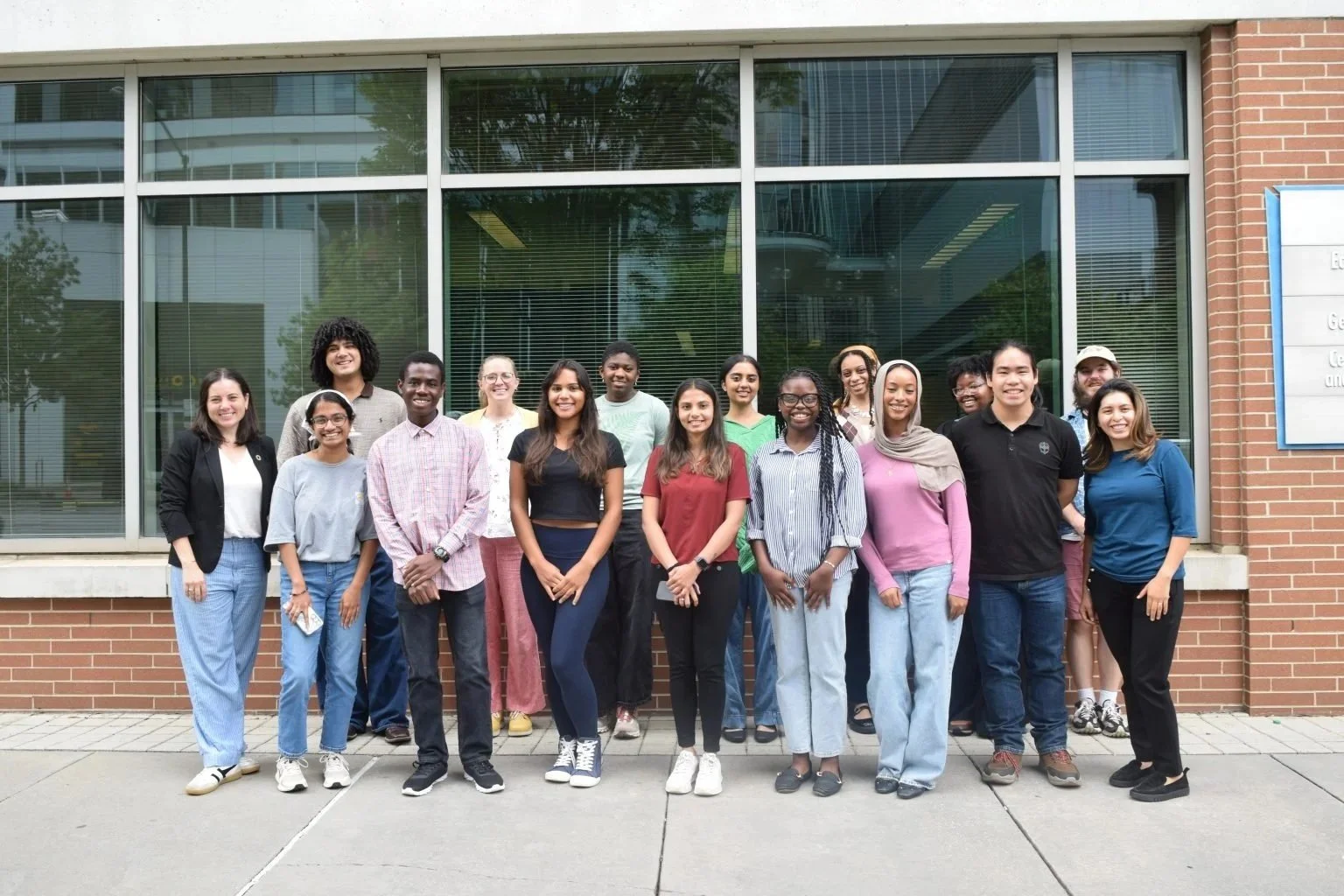
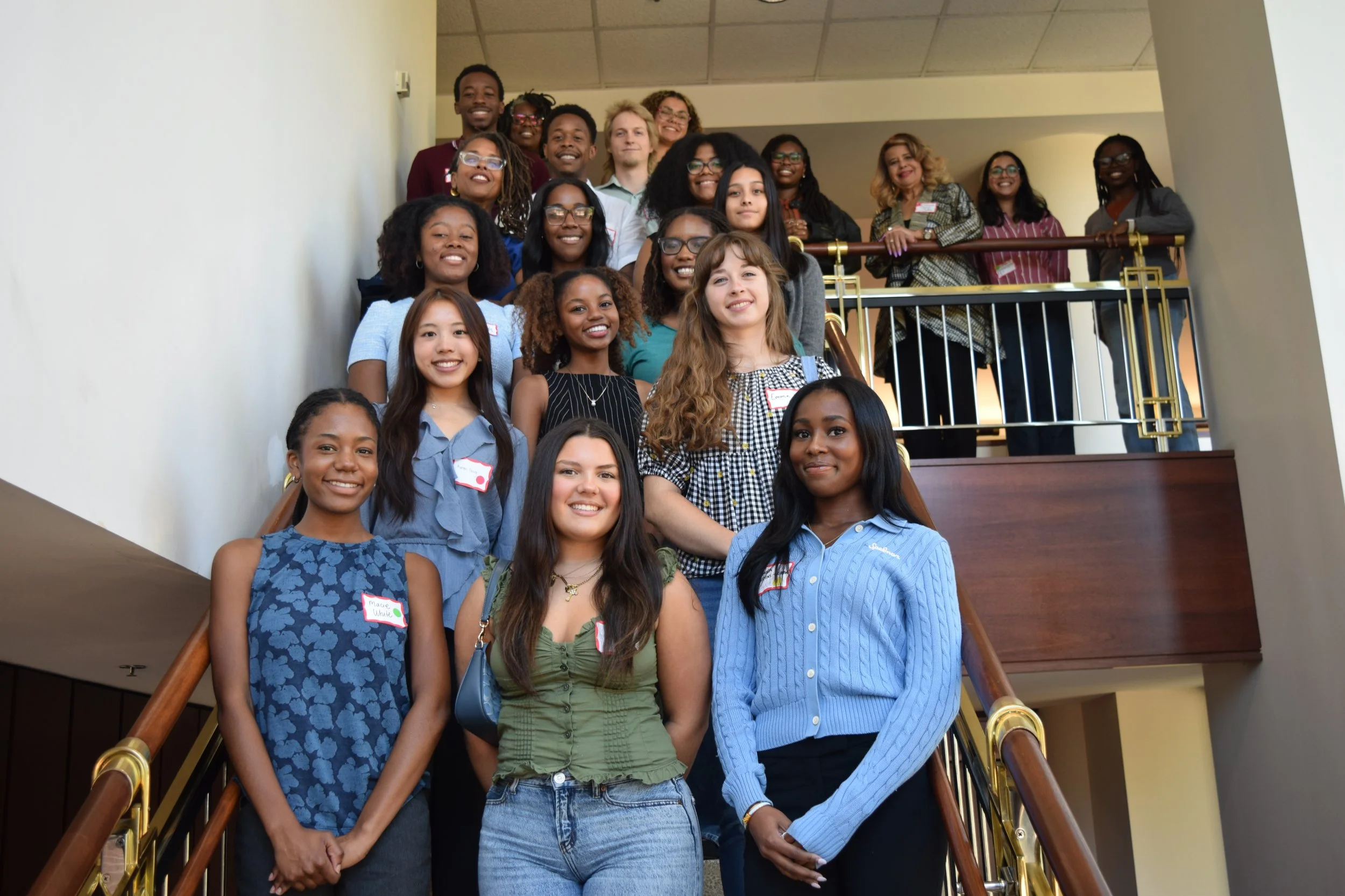
Since the start of the SDG Futures Fellowship program in October 2022, over 80 students have participated with a variety of partner organizations.
Projects have included engaging with middle school students to create a pollinator garden in partnership with My Green Earth and projects with organizations such as Wundergrubs, Partners in Change, and Praise House Project, among others.
“One SDG Futures Fellow was working with My Green Earth, and once the fellowship concluded, she reached out wanting to support any other nonprofit she could. As a result, I connected her with ECO-Action, where she has been supporting their PFAS-related work,” said Tinoco-Santiago. “Once students get bit by the “sustainability bug”, they keep looking for ways to stay engaged, whether those folks are fellowship partners or not. We’ve also had a Morehouse College student who now, after graduation, works with the same nonprofit where they did their SDG Futures Fellowship. And soon they may be sharing about their experiences as a fellow with students; it’s a full-circle moment.”
Full Circles and Turning Points
“After the fellowship, I reached out to Garry Harris to ask if he knew of opportunities that would allow me to continue to enhance my data analytics skills, said Naomi. “And that’s how I continued to engage with Center for Sustainable Communities in Virginia even after the fellowship was over.”
In this continued work, Wagner supported a project focused on centralizing disparate information related to programs, policies, and incentives for retrofits in both residential and commercial spaces into an interactive, public dashboard, beginning in the summer after her graduation from Spelman in May 2026, with a Bachelor of Arts in Political Science and Government. “Making this information more accessible makes communities stronger,” said Wagner.
At the same time, Wagner is having her own full-circle moment. This summer, she is a CleanTech Community Development Fellow in the Sustainable Spelman Office, which supports faculty, staff, and students. “It’s wonderful to go back to alma mater, to give back to the community that poured into me,” said Wagner.
As Wagner looks towards the future and reflects on her foundational experiences watching the medical center and thinking about the connections between place, health, and justice, she is planning to pursue a master's degree in public health and city planning.
“Because my SDG Futures Fellowship project was data-heavy, I understood the importance of data-driven decision-making and solutions to propel climate resiliency and sustainability in energy-burden communities,” said Wagner. “Previously, most of my work consisted of community-based programming through education and outreach efforts, however demographical data in itself tells a story. It presents what the reality of a community faces including any gaps in resources, scarcity in funding, and many other factors that can drive environmental health solutions. With that, as I aspire to pursue a career in environmental health policy, I am reminded of the importance of the intersection of both education of the community and data research.”
At SCoRE and for the SDG Futures Fellowship program, Tinoco-Santiago is thinking about the upcoming cohort of fellows, which kicked off in September 2026 with 18 fellows from five RCE Greater Atlanta-affiliated higher education institutions: Spelman, Morehouse, Georgia Tech, Kennesaw, and Georgia Gwinnett College.
“This year the nonprofits that we partner with will share more detailed descriptions, including the exact type of skills, project, and work the students will have the chance to do in their SDG Futures Fellowship, so we can make a stronger match for the fellows to projects and nonprofits” said Tinoco-Santiago. This alignment between community needs and students’ interests is key to ensure the “sustainability bug” can shape the growth of students educational and professional endeavors.
“The SDG Futures Fellowship is a turning point for students,” said Tinoco-Santiago. “Students may be studying engineering, and then they see or explore what impact they want to have in their community. And I have heard fellows say that the fellowship is worth it, even with the extra work on top of the demands of their coursework. It can change the trajectories of their career.”
“It doesn’t matter what major you are; sustainability connects to everything,” said Wagner.