The Dress Forms Tailored To Be Your Perfect Fit and Combat Fast Fashion
Designing a Solution
When Margo Lyman, founder of CREATE-X startup, Your Form, began making her own clothes, she ran into a problem: standardized sewing patterns and dress forms.
Most patterns and forms come in a base size with proportions meant to represent an ‘average’ body. “You have this standard model, and then, it's a little bit bigger, and a little bit bigger. Even the plus size is standardized. But real people don't actually represent those proportions,” explained Lyman.
She found that the tools she needed to create garments did not reflect her body’s specific measurements and proportions. A problem-solver, Lyman navigated the issue, remeasuring and adopting patterns that worked for her. However, as she expanded her work to include designing and altering clothes for others with unique bodies and measurements, the challenges posed by standardized tools only grew.
In addition to the problem of standardization, the fashion industry also has harmful environmental effects. According to the United Nations Environment Programme (UNEP), the fashion industry is responsible for 2 to 8% of global greenhouse gas emissions and uses 215 trillion liters of water every year. Furthermore, according to the European Parliament, only 1% of clothing is recycled into new garments.
To Lyman, upcycling and altering the clothing a person already owns is a creative way to reject fast fashion. “We can actually fix our clothes to make them fit us better. We can cut things up and rework them into new, exciting pieces and garments that we will enjoy,” said Lyman.
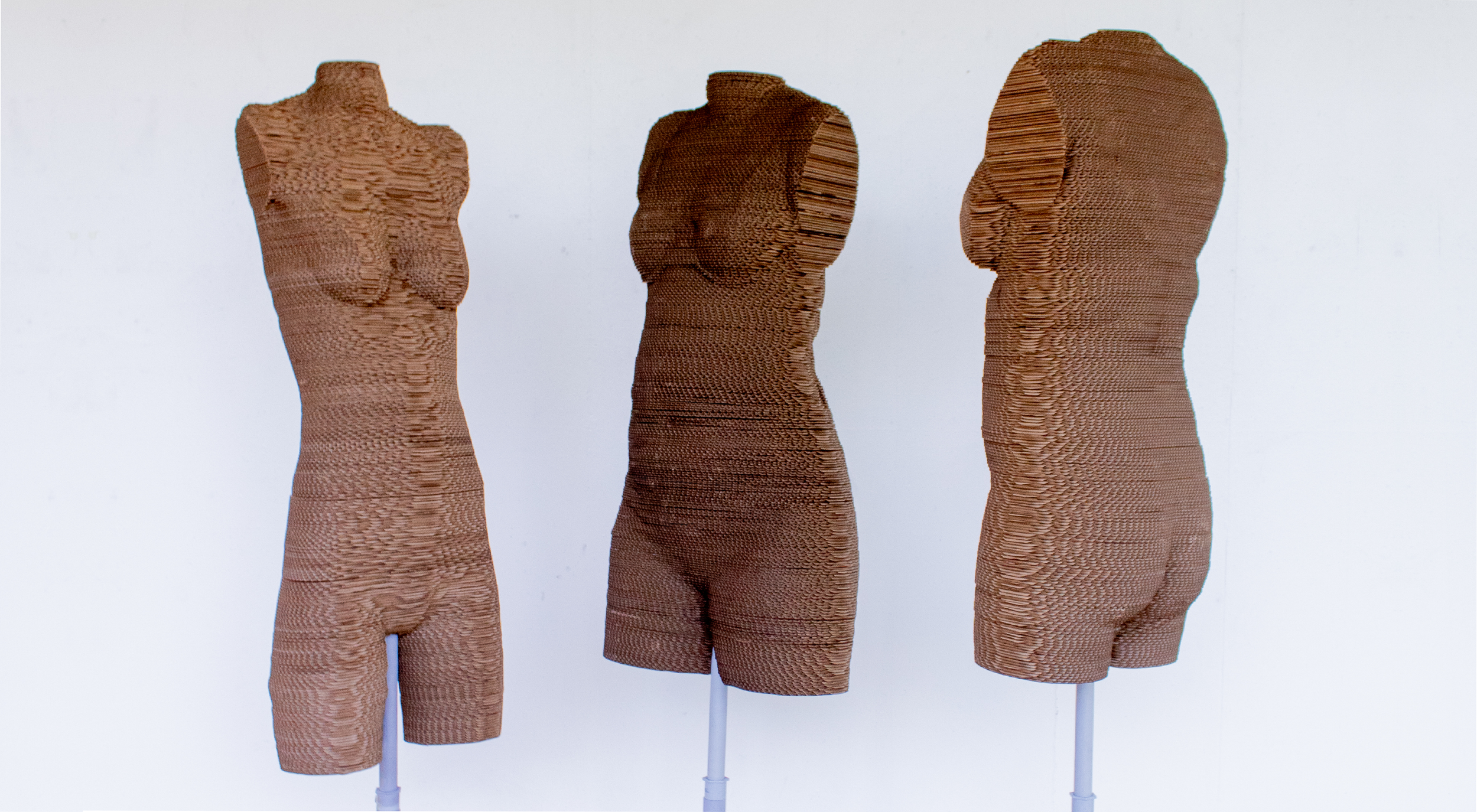
But how can people combat fast fashion when the tools needed to make quality, personalized garments are not inclusive? That’s where Your Form comes in. The startup uses 3D body scans to create custom-made dress forms and sewing patterns out of recycled materials, making fashion sustainable and inclusive.
Made Just for You
Your Form’s process for creating its Custom Fit Form is simple and can be accomplished entirely from home. Wearing form-fitting clothing, the user stands in an A-pose. Meanwhile, another person slowly films a 360° walkaround video using their phone, keeping the user’s entire body in frame. Finally, the user submits the video to Your Form.
From there, the startup uses Light Detection and Ranging (LiDAR) and photogrammetry to process the video, turning the 2D video into a complex 3D model. This model becomes a digital avatar with over 250 unique measurement points taken directly from the body scan, with no estimates or averages. After the user reviews the avatar and data, Your Form begins making the custom dress form.
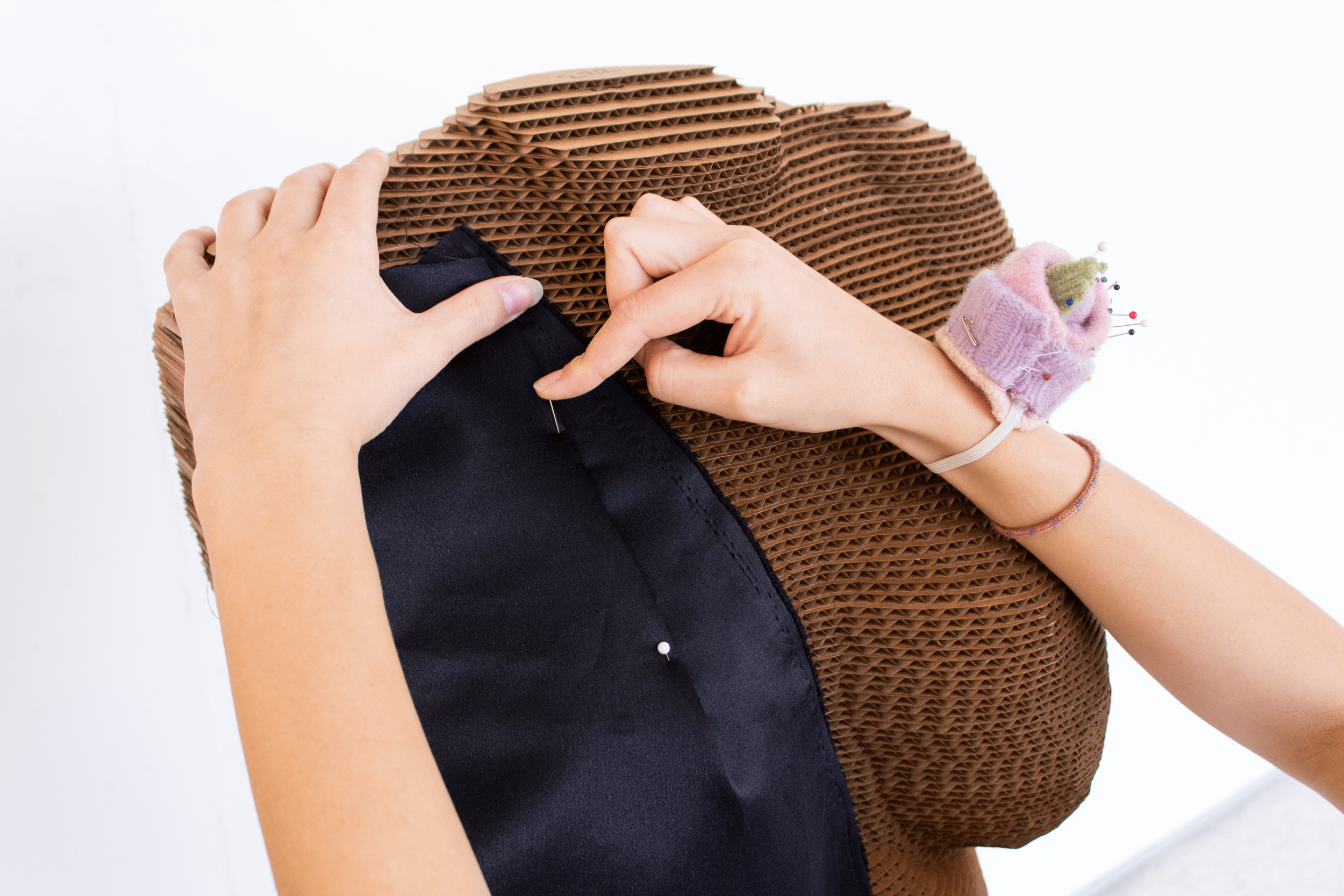
Along with the dress form, the user also receives sewing patterns, pattern-making measurements compatible with software like Seamly2D, and a library of tutorial videos, including the option for a live, personal demo curated just for them.
Unlike traditional forms and patterns, Your Form uses no approximations, making the tools a perfect fit for the user. “They're all basically snowflakes; no one's going to have the same patterns as you,” said Lyman.
Making the forms inclusive of different body types also makes sewing and alterations more accessible to people who previously would not have been able to. Your Form is “making tools that work for a much wider group of people, because Your Form is for everybody, any size, any shape, whoever you are, you can use this tool,” said Lyman.
A Sustainable Future for Fashion
As much as Your Form intends to make fashion more accessible and inclusive, it also envisions a more sustainable fashion industry.
The forms are made from durable recycled cardboard. Once the form has served its purpose for the user, it can be completely recycled. According to Lyman, in addition to being made from sustainable materials, the forms promote a message of investing in personalized, used, and quality clothing rather than participating in fast fashion — garments that are cheaply produced and sold to keep up with rapidly changing trend cycles.
While access to affordable, trendy clothing may seem beneficial at first glance, the industry has a dark underbelly, and the effects of producing these garments are dangerous. In addition to the previously mentioned environmental effects of fast fashion, UNEP estimates that textiles account for approximately 9% of microplastic losses to the ocean. Furthermore, UNEP states that if the fashion industry continues as it is now, by 2050, it will be responsible for one-fourth of the world's carbon budget.
Fast fashion also has detrimental social impacts, especially in developing economies. In a 2024 report, the US Department of Labor found that garments were the most common goods produced through forced labor, and identified 10 countries involved. Garments beat brick production, which had nine listings, and cotton, which had seven. Additionally, the report found evidence of child labor and forced child labor to manufacture garments in countries like Argentina, Bangladesh, Burma, and others. Ultimately, fast fashion is about much more than clothes; it actively harms people and the planet.
Your Form aims to combat fast fashion, created in direct response to the current environmental and social harm the industry causes. Lyman said the startup’s primary directive in sustainability is “enjoying and putting more effort into our clothes instead of… buying new clothes over and over. So, slowing that [process] down, spending more time, and making our garment choices more thoughtful.”
By creating tools that are inclusive of every body type, Your Form is designing a future where the concept of ‘slow fashion’ becomes more accessible and desirable to consumers than fast fashion.
Blending Fashion Design and Industrial Design
Although Lyman always aimed to work in garment making, she did not realize she could influence the fashion industry by creating tools for designers until she began studying industrial design at Georgia Tech. When she graduated high school, Lyman wanted to study fashion; however, as an Atlanta native, she also wanted to stay local and attend Georgia Tech. Ultimately, she chose Georgia Tech, a decision that would allow her to pursue fashion through an innovative lens.
“A huge part of our education at Georgia Tech in industrial design is focusing on tools. ‘How can we make things that make life easier?’ … So, making a tool that would help garment makers is my way of contributing to sewing and to the garment-making industry, but with that industrial design point of view,” said Lyman.
So far, Lyman’s unique perspective, combining garment-making and industrial design, has been rewarding both in her success at Georgia Tech and in her mission to make garment- making inclusive and sustainable. Your Form participated in the CREATE-X Startup Launch and was showcased in the 2025 CREATE-X Demo Day.
Despite the challenges of evolving Your Form from a student project to a product going on the market, Lyman found the support from the Georgia Tech community and industry professionals inspiring. For any other students considering whether to make the jump from working on a student-led project to heading a startup, Lyman offers a short but poignant piece of advice: “Just do it.”