
The Buttons That Talk Back
TSRB researcher Allie Teixeira Riggs is examining how we record history—not in books or bytes, but in buttons. A design researcher and former UX designer with years of experience at digital agencies, Riggs brings a background in fine arts and information science from Cornell, as well as an MFA in Digital Arts and New Media from the University of California, Santa Cruz. Now a PhD student in the Digital Media program and member of Noura Howell’s Future Feelings Lab, Riggs merges queer theory, human-computer interaction (HCI), and tangible design to explore how marginalized communities create, remix, and reflect on their own archives.
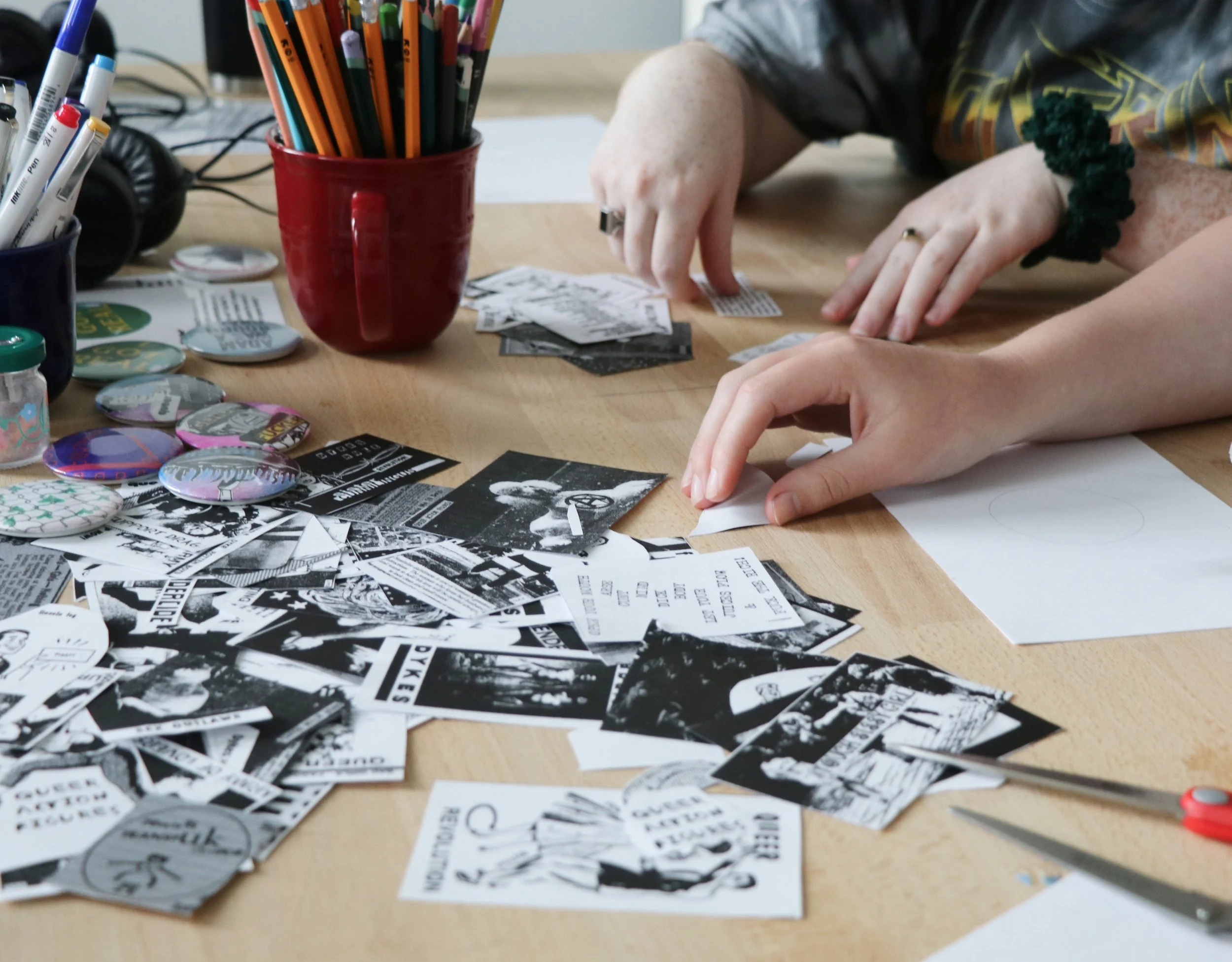
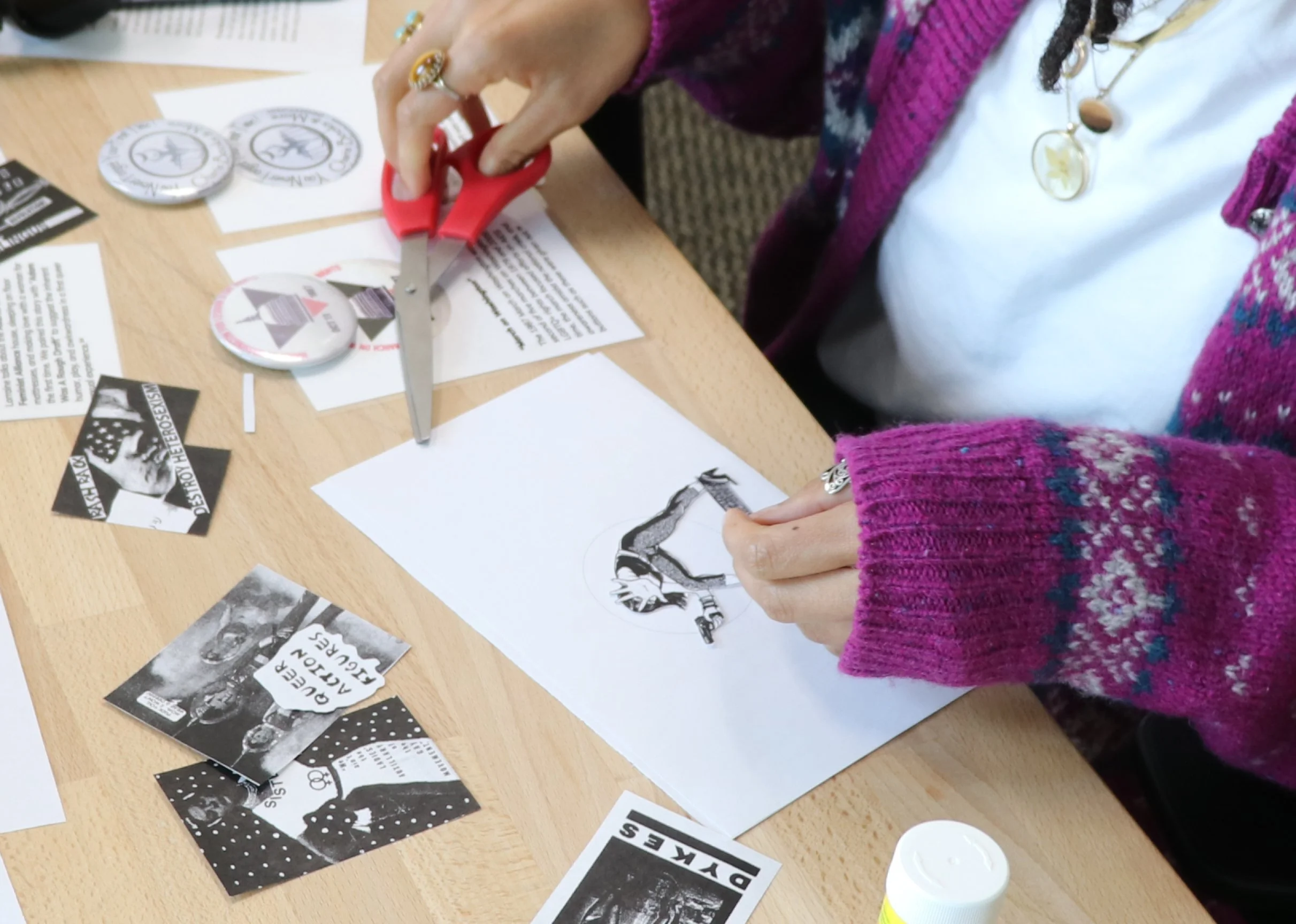
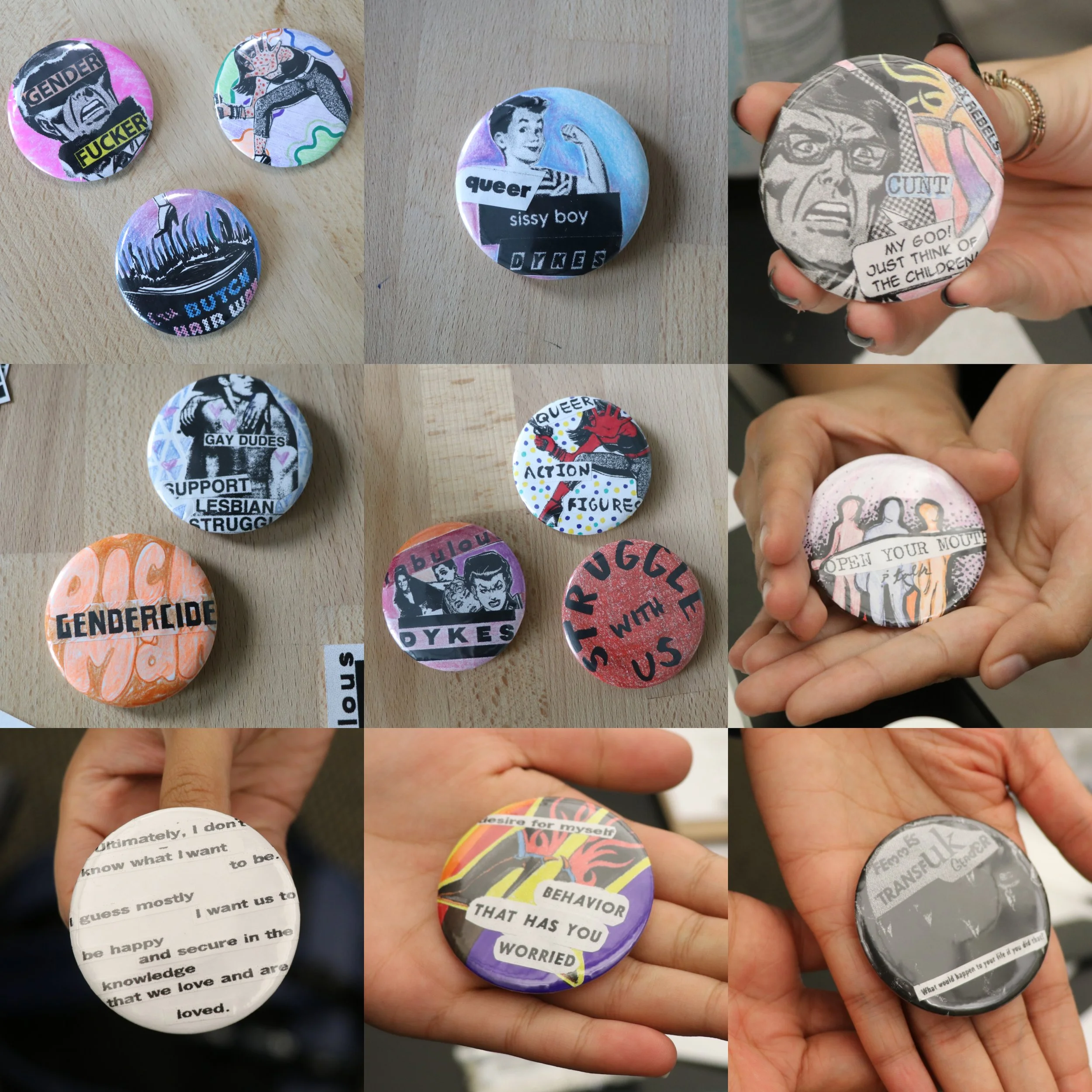
Riggs’s latest project invited participants to cut, collage, and create their own buttons from zines in the Queer Zine Archive Project. These buttons are more than wearable art: each one contains an embedded NFC tag that stores a personal audio recording. An NFC (Near Field Communication) tag is a small, wireless chip that stores and transmits data when scanned by a nearby device, typically a smartphone. It works over very short distances. When scanned with a phone, the button plays back a story, memory, or reflection—often deeply personal, sometimes subversive, always intentional. “This is a button you can then take with you wherever,” Riggs explains. “It’s important to have tangible, material ways to connect with other queer people.”
The concept, known as “queer archival un/making,” challenges the way traditional archives often exclude or flatten queer identities. Riggs’s workshops blend making and unmaking: participants collage fragments from existing queer zines and reassemble them into new artifacts of self-expression, thereby unmaking institutional narratives that universalize queer identities. One participant likened it to “trying on” different labels and identities. Another said, “I think buttons are kind of like a proto-Instagram bio.”
This project builds on work in Queer HCI, which seeks to “unmake” assumptions about users, design systems, and histories. In this case, unmaking becomes a method of refusal—of resisting categorization, of archiving through storytelling rather than codification. “A design project that materializes how queer people connect in the digital age outside of big tech,” Riggs calls it.
Each button also operates as a layered interface: its visual design may be public, but the embedded audio offers a private layer of meaning. Participants decide how much to share. One described it as “flagging, or a secret message for those in the know.” For others, it’s a way to carry that history into everyday life. As one participant put it, “It’s like legitimizing what’s outside the museum as also part of history.”
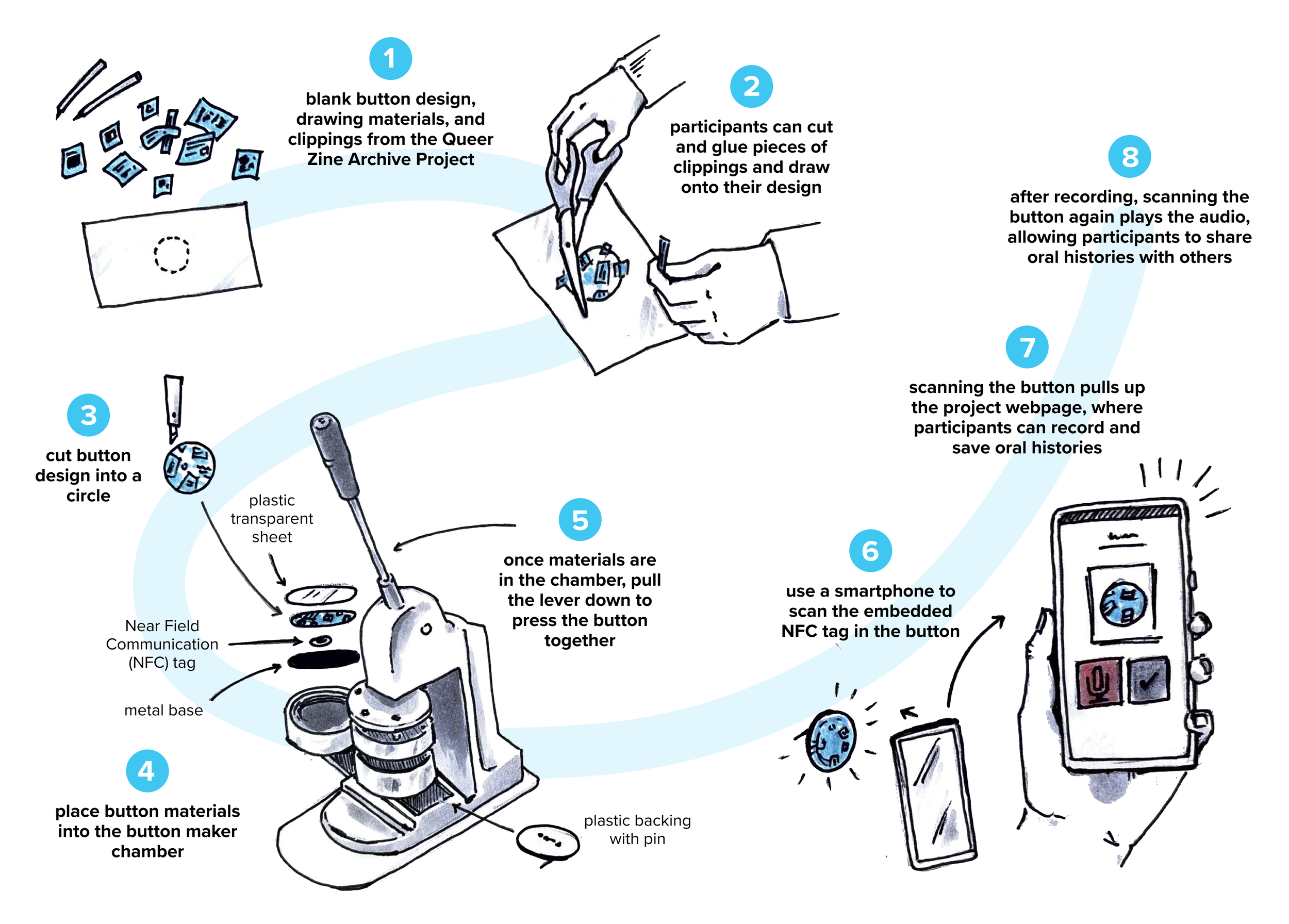
Riggs’s work, which combines critical making, NFC technology, and zine culture, pushes HCI into a more embodied and activist space. It’s not just about interaction; it’s about conveying the multifaceted and nuanced aspects of queer identities and communities in tangible ways. As Riggs says, “There are layers of how much you want to show. Privacy is built in; you engage with it however much you want. These buttons with hidden audio allow folks to share different aspects of their identities within different contexts, which feels similar to how queer identities are always shifting and fluctuating."
References
Designing an Archive of Feelings: Queering Tangible Interaction with Button Portraits
Queer Archival Design in Tangible Embodied Interactive Experiences
Queer Archival Un/Making as Tangible Information Activism
Red [Redacted] Theatre: Queering Puzzle-Based Tangible Interaction Design