
Fashioning a Sustainable Future from Fungi
“It’s the smell of the future,” says Mya Love Griesbaum, reflecting on her work with fungi. The 21-year-old materials researcher has come to appreciate the earthy odor of decomposing matter, a scent that symbolizes possibility: a future where fungi clean up pollution and transform the fashion industry. As the founder of Mycorrhiza Fashion, she is developing a sustainable approach to textiles by cultivating fungi-derived materials that can help address the pollution problem in the fashion industry. Her research journey from a high school science project to a fungi-made dress on the runway is a story where science and creative design come together.
Early Inspiration: Fungi That Feast on Pollution
Griesbaum’s fascination with fungi took root in an unlikely place: an oil spill cleanup report. She learned that crews often rely on absorbent plastic pads to soak up oil – essentially “cleaning up pollutants with a different pollutant,” as she notes in disbelief. That irony spurred her search for better solutions. She learned about mycoremediation – using fungi to remove environmental contaminants – and was instantly captivated by the idea that mycelium (the part of the fungi system responsible for releasing enzymes that degrade pollutants) could be nature’s cleanup crew.
As a high school sophomore at the Illinois Mathematics and Science Academy, Griesbaum conducted a semester-long research project, studying several species of white rot fungi, a group of fungal species known for their voracious appetite for toxic chemicals. Fungi are nature’s decomposers; their thread-like mycelia release enzymes that break down tough molecules in pollutants and essentially “digest” the material they grow on. Griesbaum investigated how these fungi could neutralize water contaminants, laying the groundwork for her future mission. It amazed her that some fungi can even enzymatically degrade petrochemical-derived plastics, breaking them down into simpler compounds that can serve as a carbon source for growth. In simpler terms, the fungi, given the right conditions, can literally “eat” the plastic. That revelation planted a seed: What if the power of fungi could be harnessed to address the waste in another toxic industry she cared about – fashion?
Blending Fashion Passion with Biomaterials
Beyond the lab, Griesbaum became inspired by fashion and textiles through her sisters during high school. She was alarmed to learn that the fashion and textiles industries are among the world’s top polluters. Fast fashion churns out trends at the cost of nearly 10% of global carbon emissions and mountains of waste, with roughly one-third of garments never even sold. As she puts it, the clothing we love can come with a heavy environmental price tag, from chemical dyes polluting rivers to synthetic fibers contributing to microplastic pollution. Griesbaum felt a growing conviction that her fungi research could help change that.
Arriving at Georgia Tech in 2022 to study Materials Science and Engineering, Griesbaum set out to merge her two passions. “I wanted to continue down the path of bio- and myco-remediation, but apply it to something tangible like fashion,” she says. Early in her freshman year, she sketched out an experimental plan and emailed professors across multiple departments, seeking a mentor adventurous enough to support her research on fungi-based textiles. Before long, she teamed up with like-minded classmates and entered Georgia Tech’s Idea to Prototype (I2P) program, a hands-on incubator for student inventors.
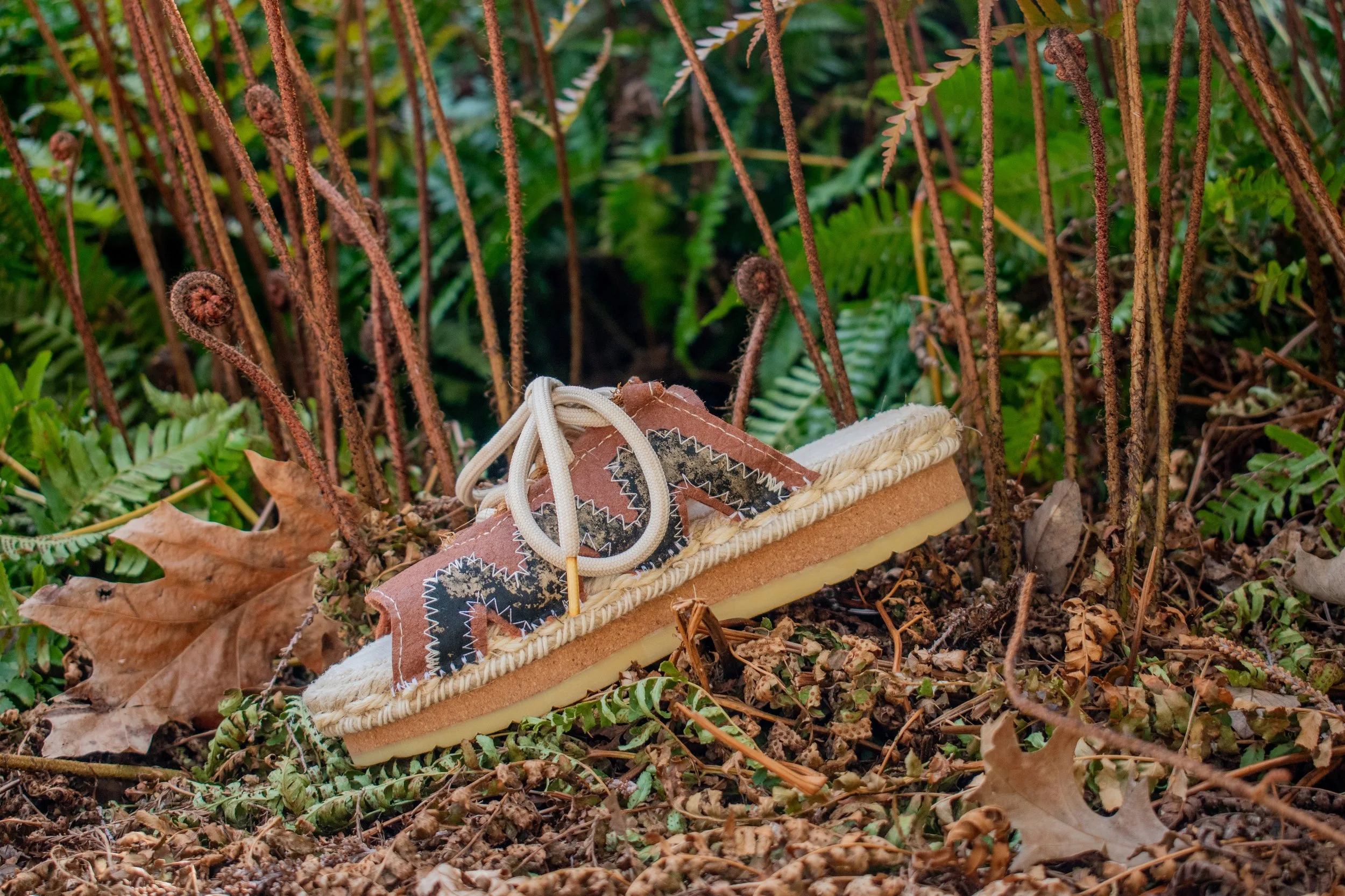
For her first I2P project, Griesbaum’s team attempted to grow a leather-like material from mycelium, the fibrous root network of fungi, as a sustainable alternative to animal leather. By December 2022, their prototype “fungi fashion” won second place at the I2P showcase for its inventive approach. Encouraged, Griesbaum pushed further. The following semester, she tackled the problem of textile waste by seeing if fungi could “eat” polyester, the plastic-based fabric found in so many fast-fashion garments. She fed patches of polyester-blend cloth to hungry fungal cultures, first providing them with a dextrose “appetizer” to kick-start their metabolism. The experiment showed promise as the fungi began breaking down the synthetic fibers. It earned Griesbaum first place in the Spring 2023 I2P competition. This victory secured her a spot in Tech Square’s prestigious CREATE-X Startup Launch accelerator, turning her classroom project into a budding startup.
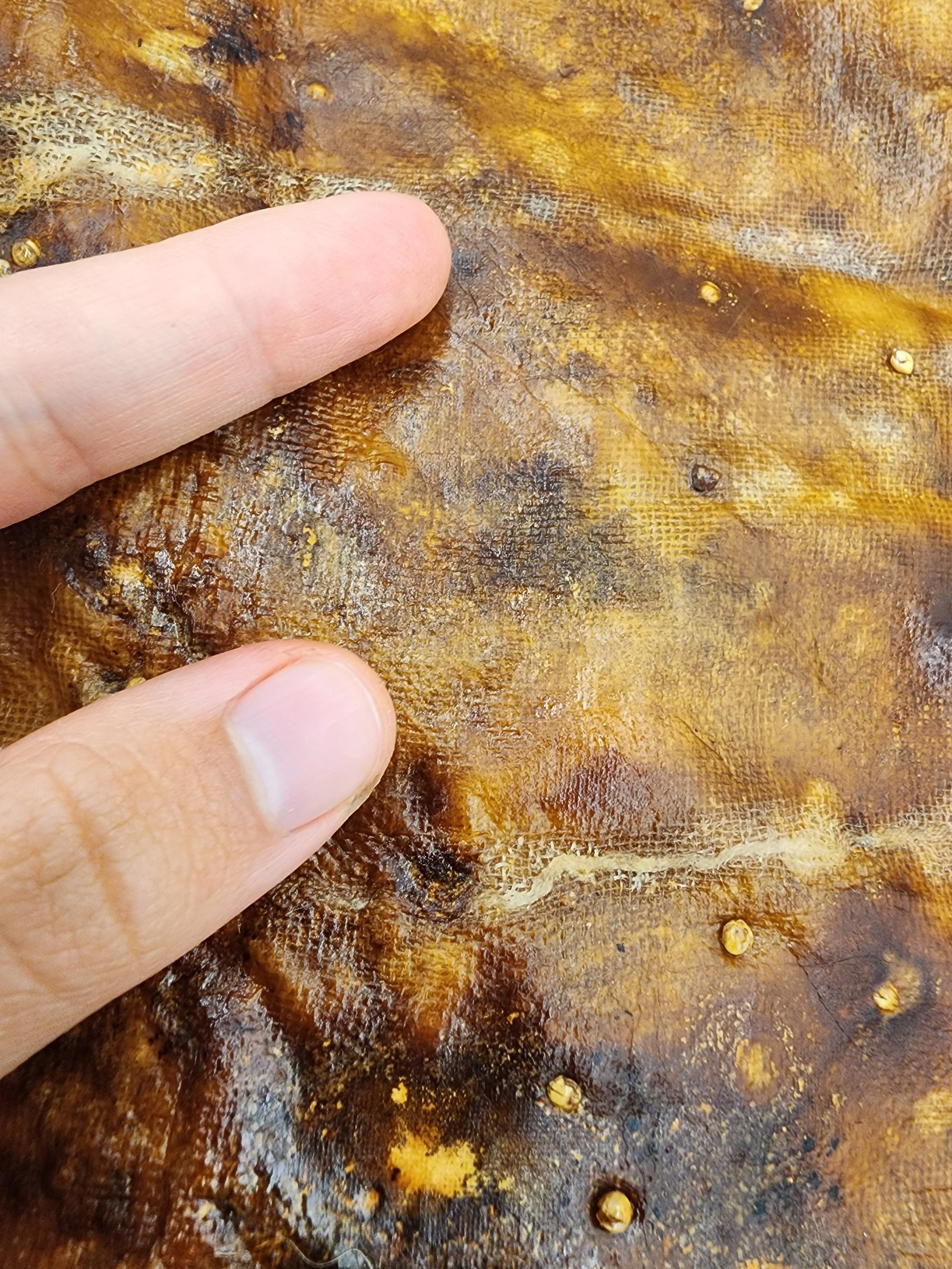
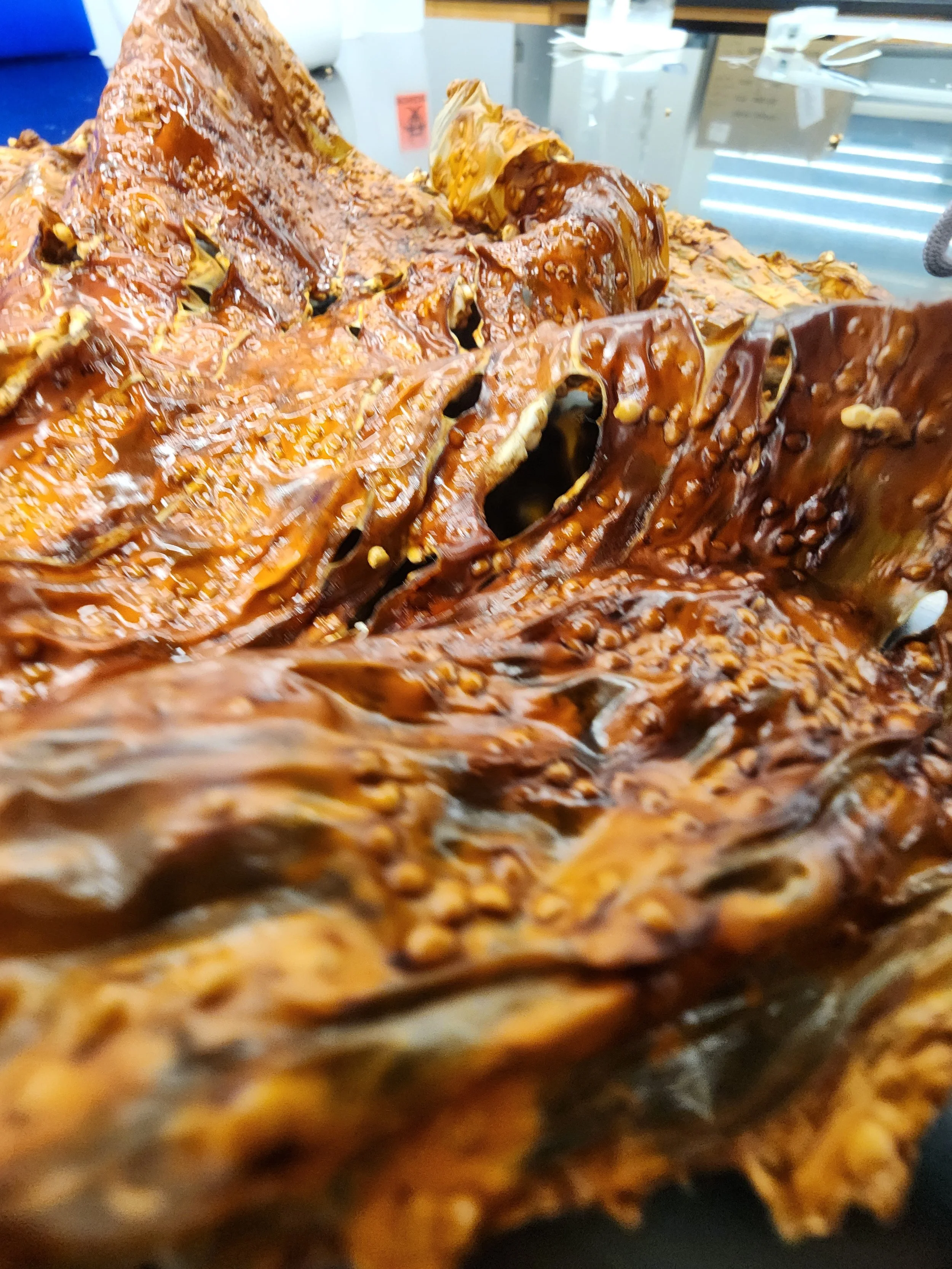

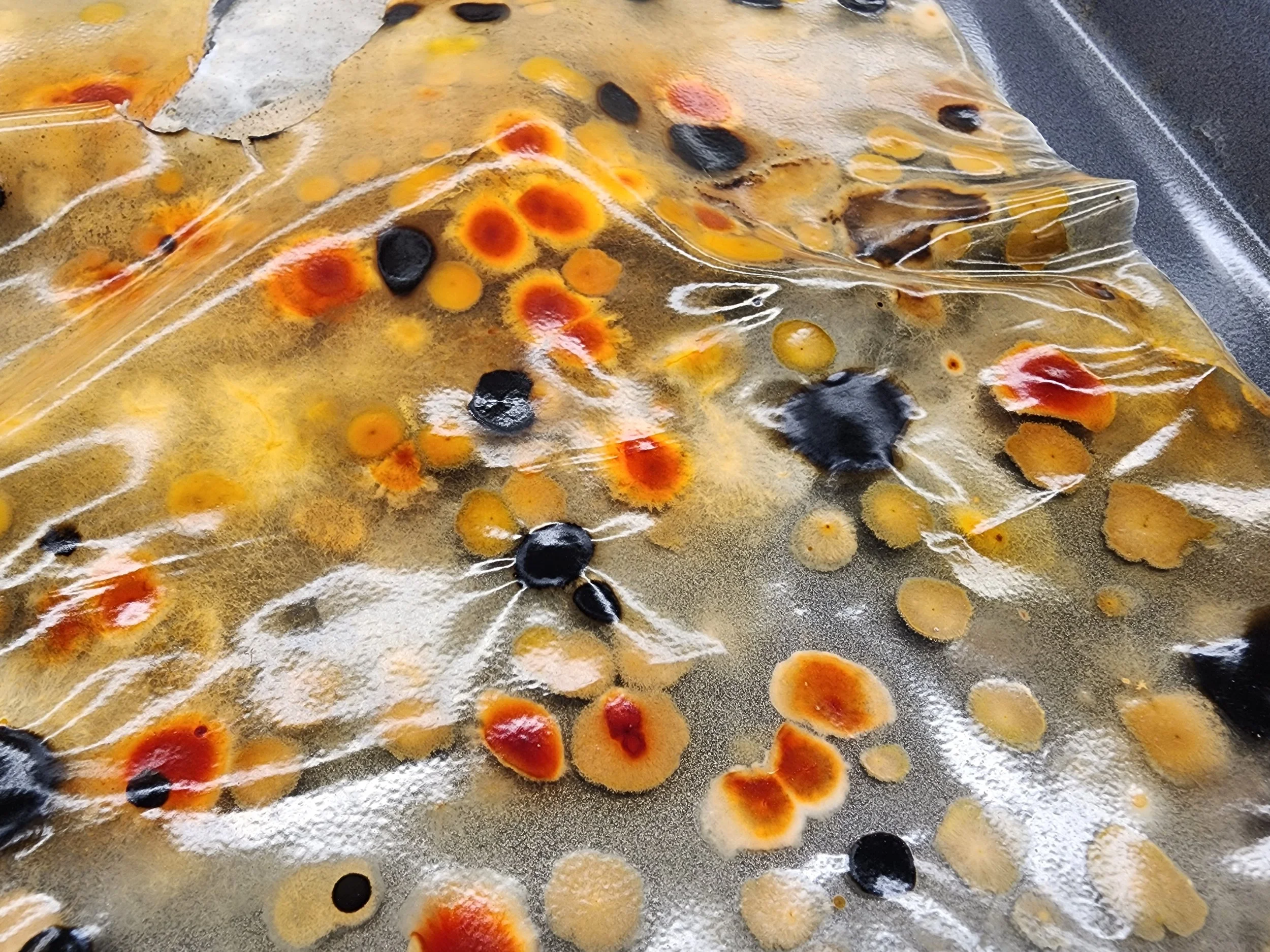
Moving into the Startup Launch program in Summer 2023, Griesbaum shifted from a purely research-based approach to an entrepreneurial mode. CREATE-X provided seed funding and mentorship in the heart of Tech Square, Atlanta’s innovation hub, adjacent to Georgia Tech. Griesbaum conducted exhaustive customer discovery, interviewing everyone from strangers on the street to textile industry veterans, to figure out how fungal biomaterials might fit into the real world of fashion. Through these conversations, she realized the bigger opportunity was business-to-business: partnering with apparel manufacturers or designers who could integrate sustainable materials at scale, rather than trying to sell mushroom leather belts, wallets, or shoes directly to consumers.
Every year, Startup Launch culminates in its Demo Day towards the beginning of the fall semester. That fall, Griesbaum met a graduate student at Demo Day who stopped by her booth and explained that many industrial design students were looking for sustainable materials to work with. That graduate student, Rob Stout, ended up introducing Griesbaum to Professor Yaling Liu, an expert in “soft goods” (textiles and fabrics) at Georgia Tech. Liu introduced Griesbaum’s materials to her class, and she even sold some of her early mycelium material prototypes to Liu’s graduate design students for testing. By her second year of college, Griesbaum was assembling an interdisciplinary team around Mycorrhiza Fashion. “Interdisciplinary collaboration is where progress is made,” she says, echoing a core belief that complex problems demand diverse expertise. She welcomed volunteers from various fields, including industrial design, chemical engineering, microbiology, and anyone motivated by the vision of fungus-derived fashion.
Going Global: Atlanta, Spain, Singapore
Georgia Tech’s support went beyond entrepreneurship programs. Griesbaum secured a President’s Undergraduate Research Award (PURA) grant, which funded her lab work on myco-textiles as a student researcher. She also took her ambition overseas: a study-abroad term in Spain introduced Griesbaum to Jessica Dias, a Barcelona-based designer working with biomaterials. Dias, co-founder of the BioBabes collective, gave Griesbaum a fresh perspective on aesthetics and wearable design for mycelium-based fabrics. “Jessica offered valuable insight into an architect’s perspective,” Griesbaum notes, balancing her science training with creative flair. This exchange reinforced her mantra that true innovation happens at the intersection of disciplines and cultures.
With a growing team and prototype in hand, Griesbaum next entered SUSTAIN-X, Georgia Tech’s sustainability entrepreneurship initiative, in early 2024. Competing against startups tackling everything from upcycled oyster shells to solar-powered drones, she made the case that fashion, the third-largest polluting industry, could be transformed for the better. The judges were impressed. Griesbaum, still only a sophomore, took home first prize at the SUSTAIN-X Pitch Competition in spring 2024 for Mycorrhiza Fashion’s fungi-derived textile concept. The win came with $2,500 and a coveted spot in the next CREATE-X accelerator cohort, validating her venture’s potential.
That summer, an even bigger opportunity beckoned half a world away. Griesbaum applied and was accepted into the Global Education and Mobility (GEM) Trailblazer Exchange Programme, leading her to Nanyang Technological University (NTU) in Singapore. NTU is globally ranked for materials science and sustainability innovation. As part of an international cohort of young innovators, Griesbaum pitched Mycorrhiza Fashion at a local competition and won the top prize: 10,000 SGD in funding and a two-year mentorship program through NTU. Located at the heart of global textile manufacturing, Singapore’s proximity to Southeast Asia’s environmental challenges provided Griesbaum with firsthand exposure to the industry’s supply chain issues. It also expanded her team: today, Mycorrhiza Fashion is an international collaboration, with students from NTU working alongside researchers and designers from Georgia Tech. In July 2024, Griesbaum officially incorporated Mycorrhiza Fashion as a C-Corp startup, poised to scale her vision across two continents.
Runway Debut
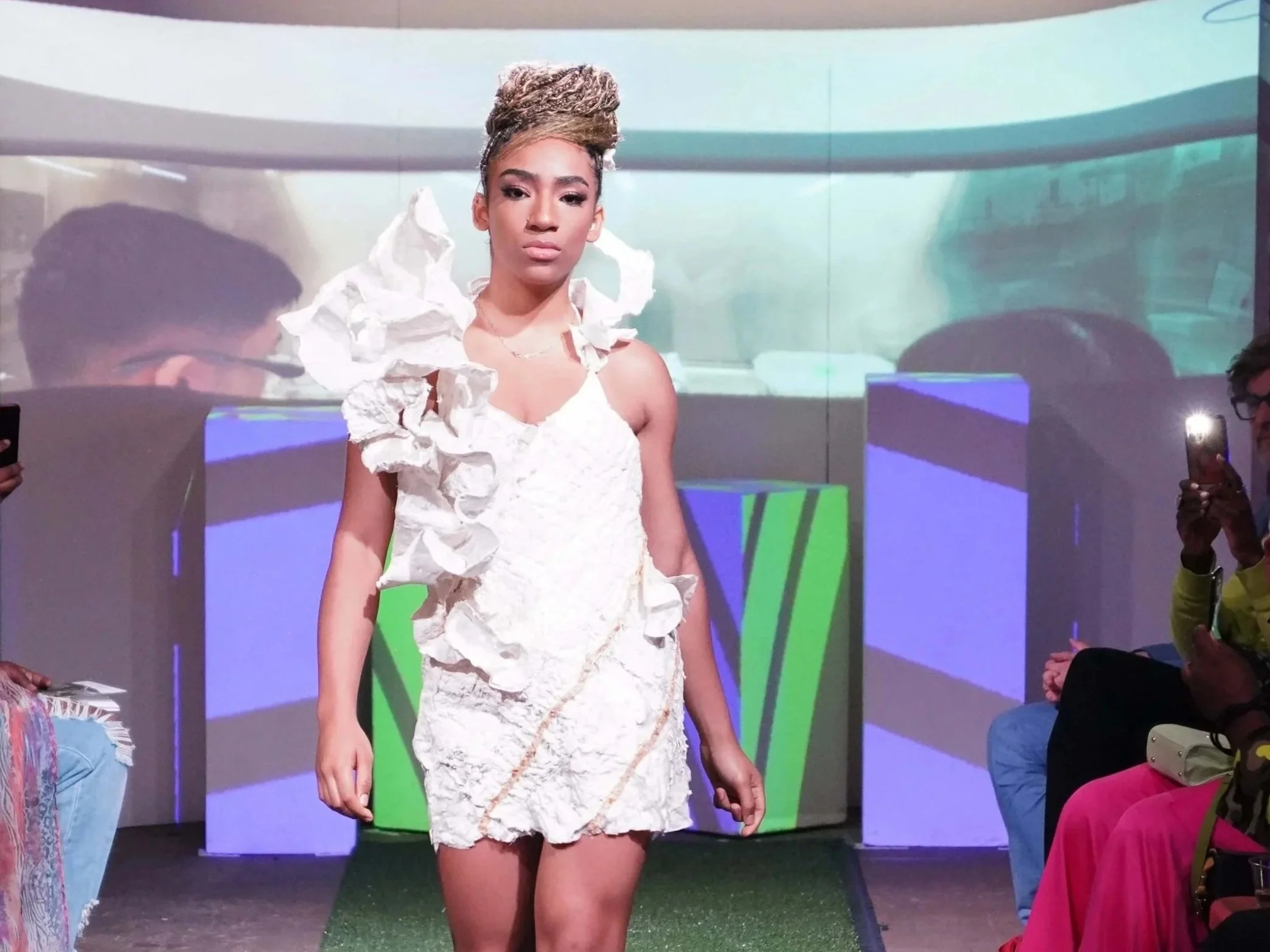
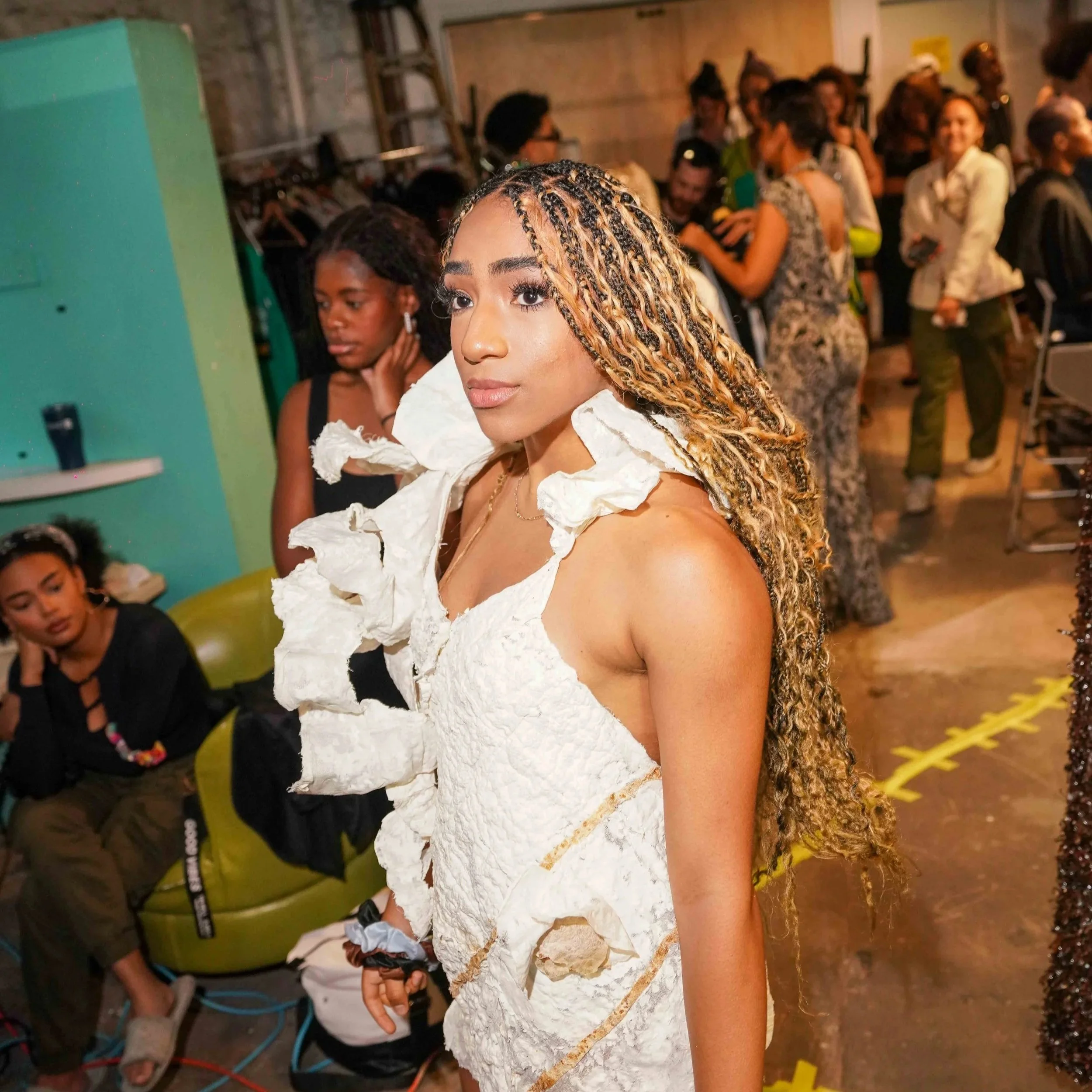
Griesbaum’s fusion of fungi and fashion had its public debut in April 2025 on a stage far from the lab: Atlanta Sustainable Fashion Week. Invited to showcase her work, she presented Mycorrhiza Fashion’s first garment, a prototype dress grown from mushroom mycelium and upcycled fibers. The piece, created in collaboration with Atlanta artist-designer Bojana Ginn, demonstrated the stunning possibilities of biomaterials. The dress’s unique texture and earthy aesthetic prompted both curiosity and praise from the audience. For Griesbaum, seeing a model walk the runway in a material she had grown from fungi was a triumphant moment and proof that science and couture could intertwine. It was also a full-circle milestone linking back to Tech Square: many of the connections and mentors that helped her reach the runway were nurtured through the Georgia Tech and Atlanta innovation community.
The Road Ahead
Back in the lab at Georgia Tech, Griesbaum is doubling down on the science underpinning Mycorrhiza Fashion. Her immediate focus is on mechanical testing – making sure that fungi-grown fabrics can meet the durability and comfort standards of everyday wear. That means iterating on formulations, strengthening the mycelium-based leather so it’s not just eco-friendly but also long-lasting and supple. Meeting grant milestones from the NTU partnership is another priority, as the team works to optimize the scaling up of production of their biomaterial. They are also forging new collaborations with designers and textile recyclers in Singapore, aiming to pilot the integration of mycelium textiles into real products.
True to her interdisciplinary ethos, Griesbaum’s team is now expanding its tool kit beyond fungi. One new research direction involves bacteria that can help break down polyester, one of the most common plastics in clothing. By combining fungal and bacterial remediation strategies, Mycorrhiza Fashion aims to tackle the issue of polyester pollution from multiple angles, potentially even transforming old polyester garments into nutrients for cultivating new biomaterials. It’s a vision of circularity, emblematic of what Griesbaum calls a “coevolution of people and technology,” meaning that human progress will come from working in tandem with our innovations and relationship with nature – and in her case, with living organisms themselves.
Griesbaum draws inspiration from pioneers like Neri Oxman, the MIT professor who pioneered “material ecology” by blending biology, technology, and design. This sparked an entire mindset shift in engineering and design. Inspired by Oxman, Griesbaum’s work blurs the lines between lab scientist, engineer, and fashion designer. Her startup’s name, Mycorrhiza, evokes the symbiotic partnership between fungi and plant roots, a fitting metaphor for the collaborative network that has helped her venture grow.