
Designing With, Not For: Dr. Carl DiSalvo’s Approach to Accompaniment
Last semester, faculty, students, and researchers gathered in the Hodges Room at Centergy One for the latest IPaT GVU Lunch Lecture. Carl DiSalvo, professor in the School of Interactive Computing, took the floor to pose a simple but unsettling question: What if the real power of design is not what we produce, but how we stand with people along the way?
The talk, “Accompaniment, Design, and Research,” challenged a familiar story in technology circles. Design is often evaluated by outcomes. New tools. New platforms. New systems. Measurable impact. DiSalvo argued for shifting attention away from outputs and toward relationships.
“Our inquiry is concerned with a different question,” he and his collaborators write in their recent work on the topic. Rather than asking what designers make, they ask how designers work with others. Accompaniment, they explain, is “a moral commitment of solidarity that a researcher chooses to accept and subsequently guides their work.” It prioritizes relationships over products.
A Different Kind of Lab
In addition to being a Georgia Tech professor, Carl DiSalvo is also on the board of the AIAI Network and a co-editor of the MIT Press Journal, Design Issues. There, he works to broaden contemporary discussions of design theory and criticism.
DiSalvo’s approach to computing does not look like a conventional computer science lab. “My background is not actually in computer science,” he said in conversation after the lecture. “My background is really much more in design and the humanities.” He has been at Georgia Tech for 18 years, and for most of that time, his work has been rooted in community partnerships across Atlanta.
“I tend to structure the work we do here a little bit differently,” he said. “Our work is really grounded in working with communities.”
Almost all his group’s projects are community oriented. They often span years, not semesters. PhD students may spend four or five years embedded with a single organization.
One recent graduate worked with the Housing Justice League, an Atlanta-based tenant advocacy group. Together, they examined how eviction data is constructed and how it can be mobilized for organizing. “They use some of that for tenant organizing,” DiSalvo explained. The collaboration shaped policy recommendations and even informed proposed state-level legislation. “It’s a great example of how this community-based research has gone on to influence those who are writing and proposing actual state level legislation.”
Another multi-year collaboration involves Urban Heat ATL, a project working with the West Atlanta Watershed Alliance and other partners to study how residents experience heat across the city. Rather than relying exclusively on stationary weather stations or remote sensing models, the effort explores hyperlocal data collection by community members themselves.
“A lot of what she is doing is looking at what are other ways that community residents could collect data about heat and the heat experience,” DiSalvo said of researcher Ashley Boone. The project focuses not only on measurement, but on how data can support civic advocacy.
Across these efforts, the pattern holds. Work is slow. It is embedded. It is often uncertain.
“It’s not like working on an algorithm, like on a supercomputer where you control the environment,” DiSalvo noted. In civic life, everything shifts. “Who’s in City Hall, who’s on City Council, what policies have been passed or not passed.” That environment is dynamic and deeply political. Because of that, change takes time.
What Accompaniment Asks of Designers
Accompaniment, as DiSalvo defines it, is not a method like ethnography or participatory design. It is an approach you bring to those methods. It reframes the researcher’s role.
“To accompany someone is to go somewhere with him or her,” he and his collaborators write, drawing on the concept’s roots in liberation theology and public health. It suggests presence, solidarity, and long-term commitment.
In practice, accompaniment has several implications.
First, it requires relinquishing control. Researchers follow the trajectory of their partners rather than imposing predefined research agendas. “What that making and doing entails is contingent on the journey of those we are accompanying,” the team writes. That means the outputs can change. The timeline can stretch. The original research questions can evolve or dissolve.
Second, accompaniment asks researchers to leverage their institutional privilege. Universities hold cultural and political capital. DiSalvo recounted how a long-term community partner strategically wore Georgia Tech gear when meeting with city officials. The association mattered. The university name helped open doors. In accompaniment, such privilege becomes a tool used intentionally in solidarity.
Third, it turns the gaze back on researchers themselves. Instead of treating communities as subjects of study, accompaniment reframes the work as joint action. “Those we partner with are not under our observation,” the article explains. “We are not there to study them. We are there to work together toward change.”
For DiSalvo, this also means rejecting the idea that research can be apolitical. His work examines how data, software, and policy intersect everyday democracy. “We draw a lot from the humanities and social sciences,” he said, “trying to understand how data and more generally technology fits into everyday democracy.” That might mean working with nonprofits rather than government agencies or studying how data practices shape housing inequities rather than optimizing computational performance.
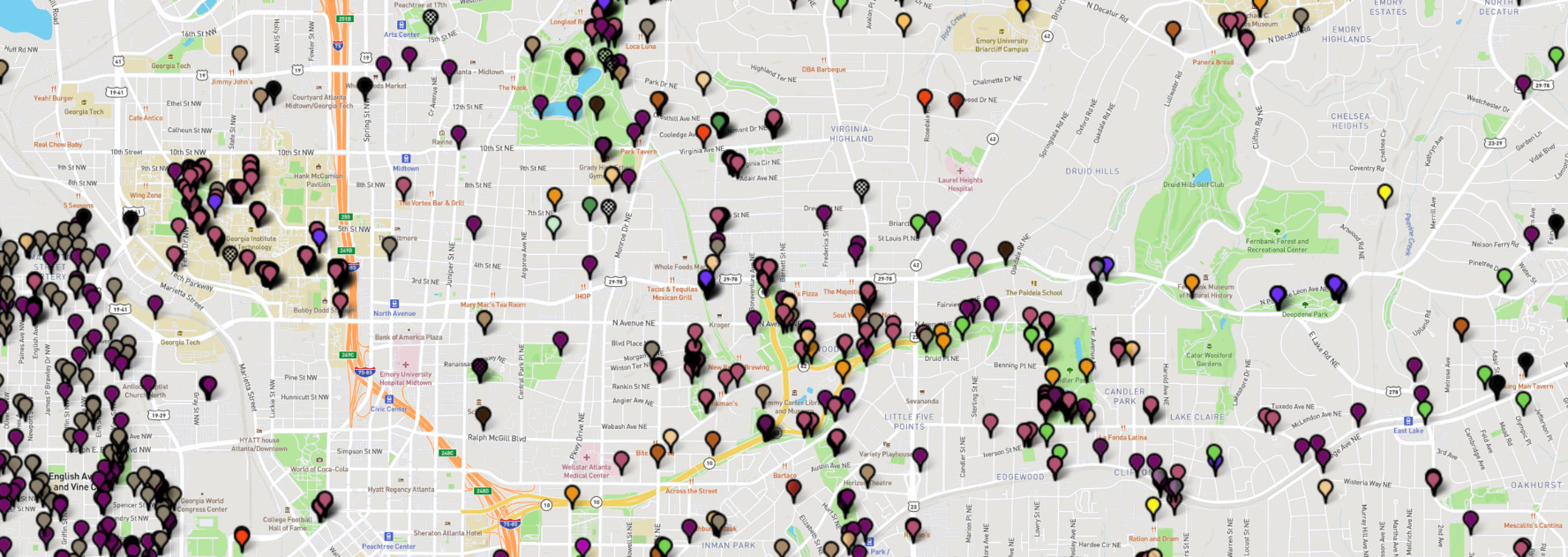
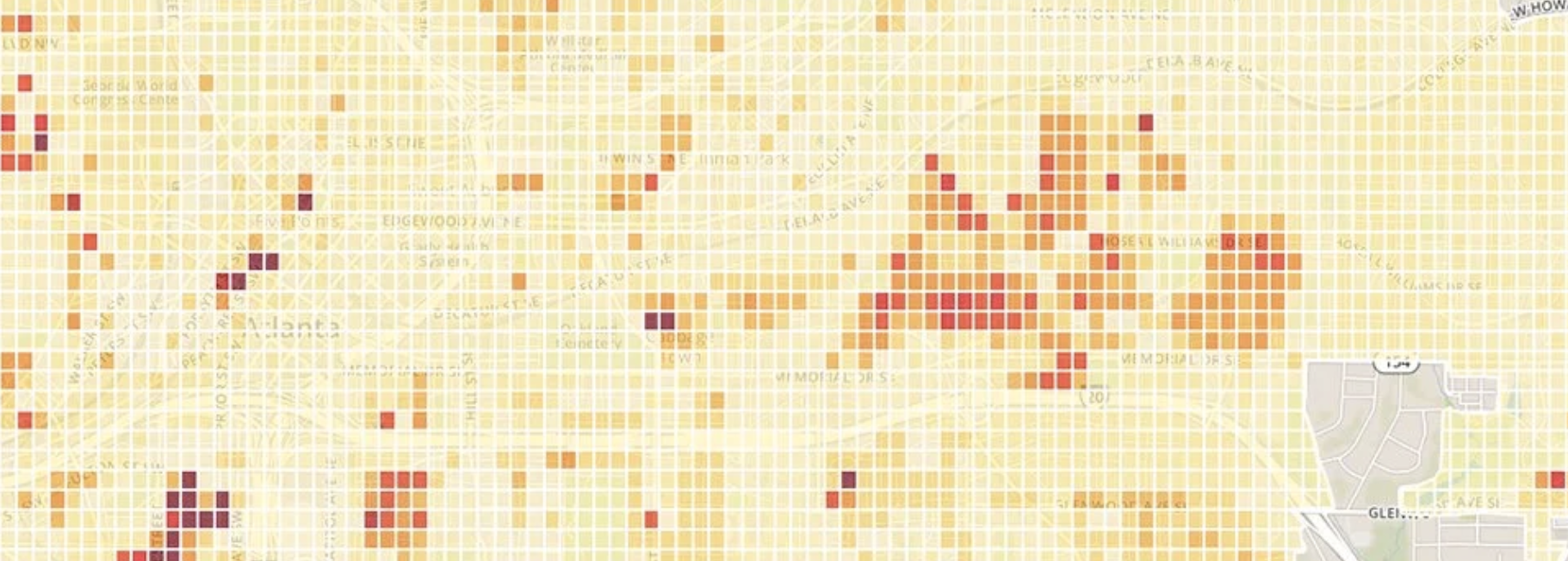
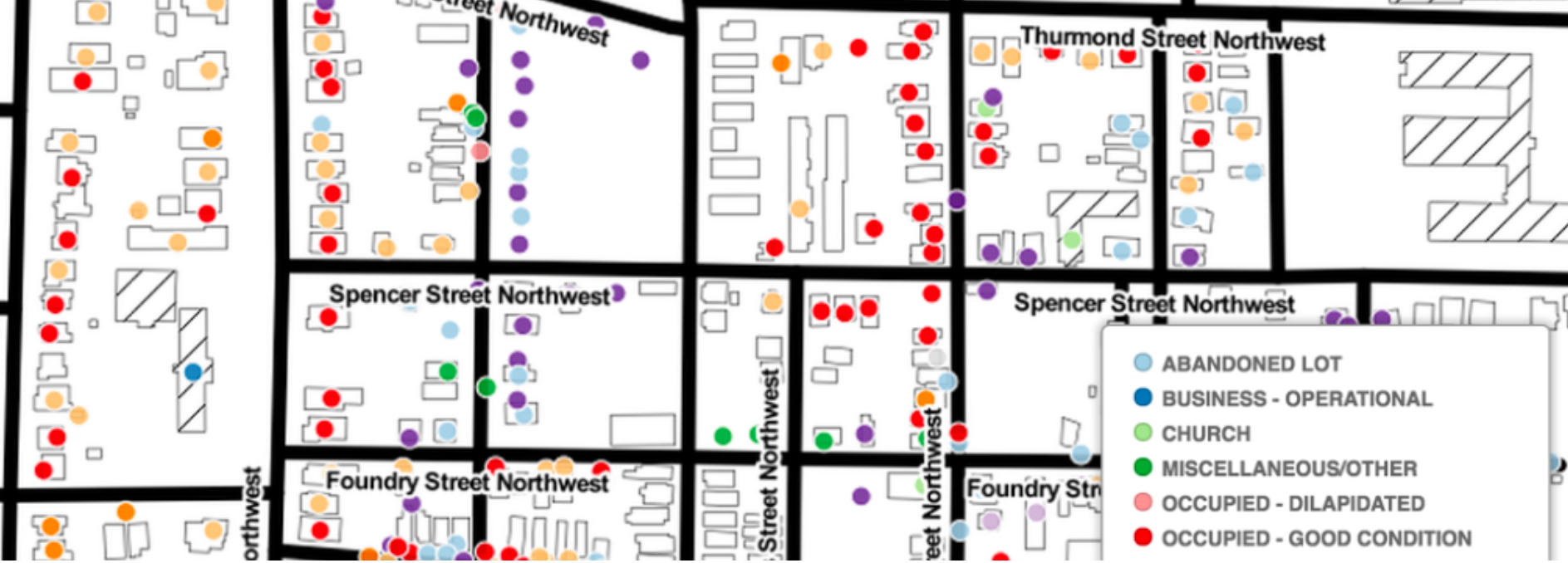
Much of DiSalvo’s work translates community-gathered data into maps that help residents, researchers, and advocates understand and act on local challenges.
Slow Work in a Fast Ecosystem
Tech Square is known for startups, commercialization, and rapid iteration. Accompaniment sits uneasily within that culture.
Not all research, DiSalvo acknowledges, can or should take this approach. Accompaniment requires time, commitment, and a willingness to depart from familiar productivity metrics. In fields accustomed to rapid publication cycles and tight funding timelines, that can be difficult.
But for complex civic challenges—housing instability, environmental justice, data inequities, the model offers a different path. It refuses extraction. It prioritizes solidarity over novelty.
It’s not usually something that’s impactful in the first semester. Impact, in this frame, is cumulative and collective.
As the lecture concluded, the takeaway was less about a new tool and more about a new posture. Accompaniment asks designers and technologists to consider how they show up in the world. It calls for presence over performance, relationships over deliverables.
In a district defined by innovation, that reframing may be one of the most consequential design interventions of all.
Click here to see the rest of this year’s IPaT GVU Lunch Lecture schedule.