
Voyage Health Wants to Answer Healthcare's Most Common Question

Voyage Health Founder Anish Cheekati
Anish Cheekati spent four years at Georgia Tech preparing for medical school. He studied psychology on the pre-med track, worked as a medical assistant, shadowed physicians and volunteered in clinics across Atlanta.
Then the patients he met changed his plans.
Working with pharmaceutical trials at clinics in Atlanta, Cheekati took medical histories from patients, many over 65, who arrived juggling multiple conditions and long medication lists, often without a primary care physician to help them make sense of it all.
"When I would take their history, I'd think, how do they manage all of this?" he said. "A lot of times they're telling me about medications they don't know why they're taking."
That gap between patients and answers became the seed of Voyage Health, a free AI-powered health guidance platform Cheekati launched this summer, weeks after graduating in May 2026. The startup is now part of the summer CREATE-X Startup Launch cohort.
More Than a Chatbot
Cheekati is quick to acknowledge that general AI tools like ChatGPT already outperform the WebMD searches of a decade ago. He uses them daily. But when he turned to them with his own health questions, he saw their limits.
"There's a very big difference between a general AI chatbot and health AI," he said. "Health AI should be at a point where it not only listens to what you have to say, but also gives back."
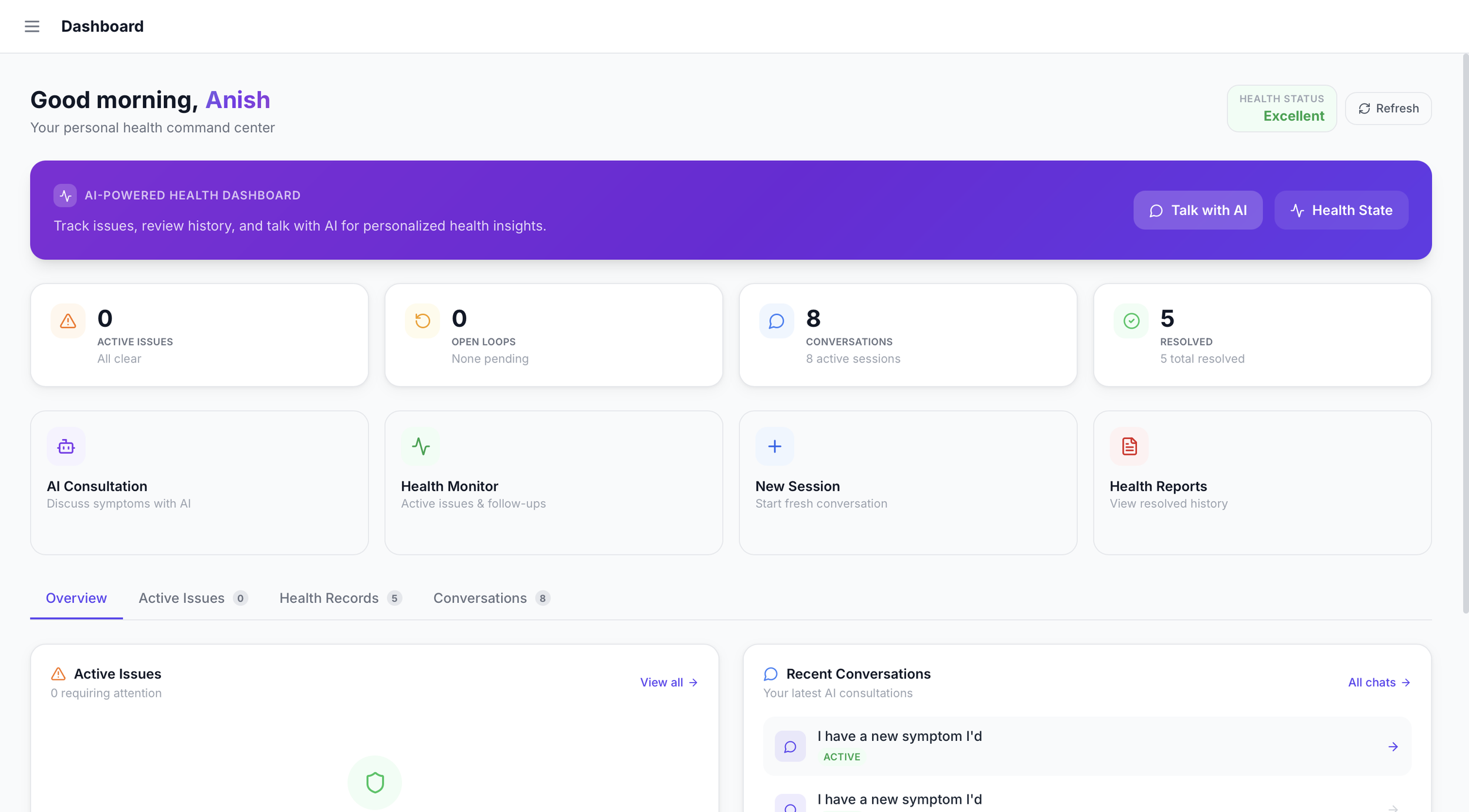
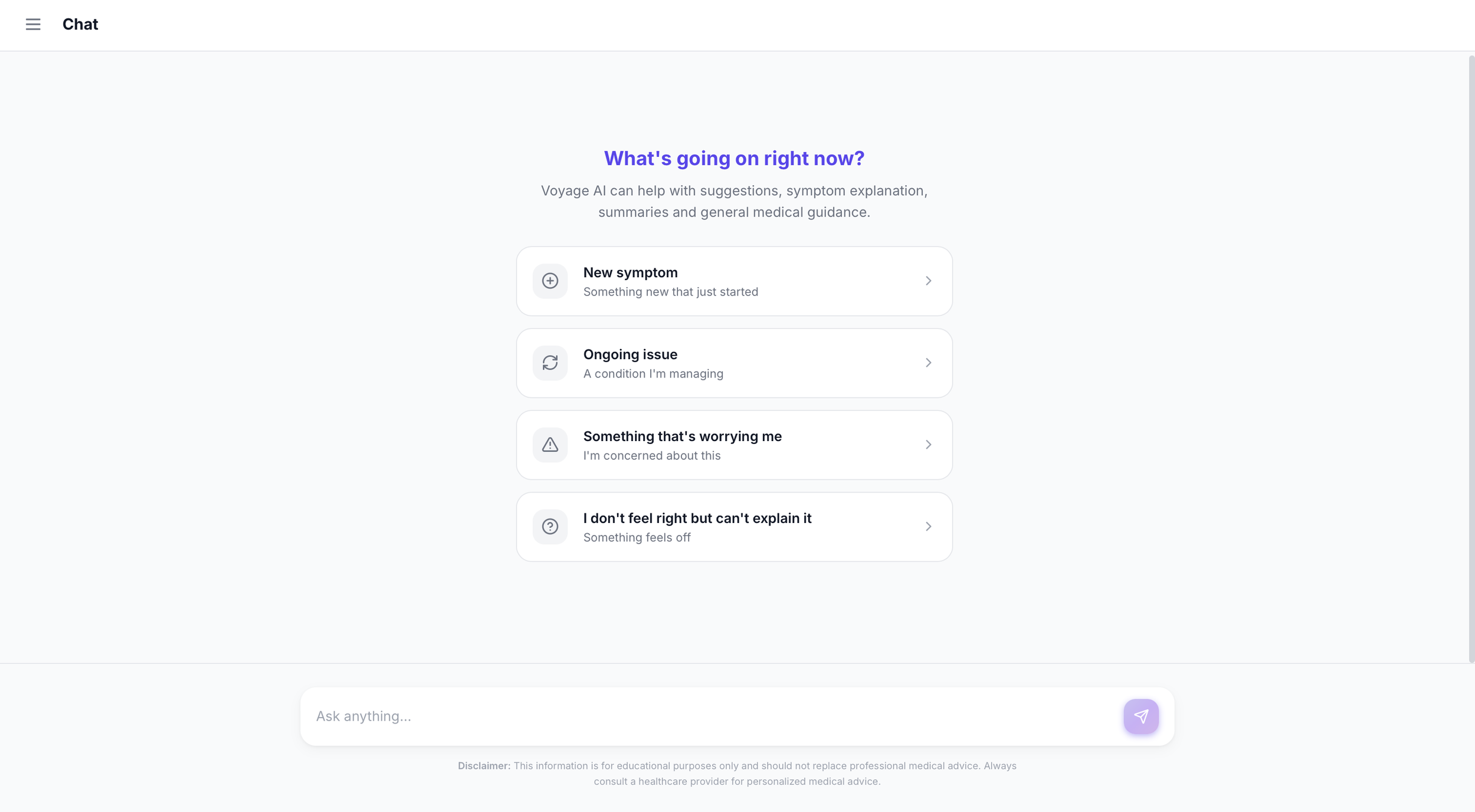
Where a general chatbot functions like an advanced search engine, Cheekati said, Voyage is built to work more like a clinician. When users open the app, it starts with structure: Is this a new symptom? One you're managing? Something recurring, or just a question? From there, the platform asks follow-up questions one step at a time rather than flooding users with information, builds a memory of each person's health history and monitors patterns over time. Its most common job is answering a deceptively simple question: Do I need to see a doctor?
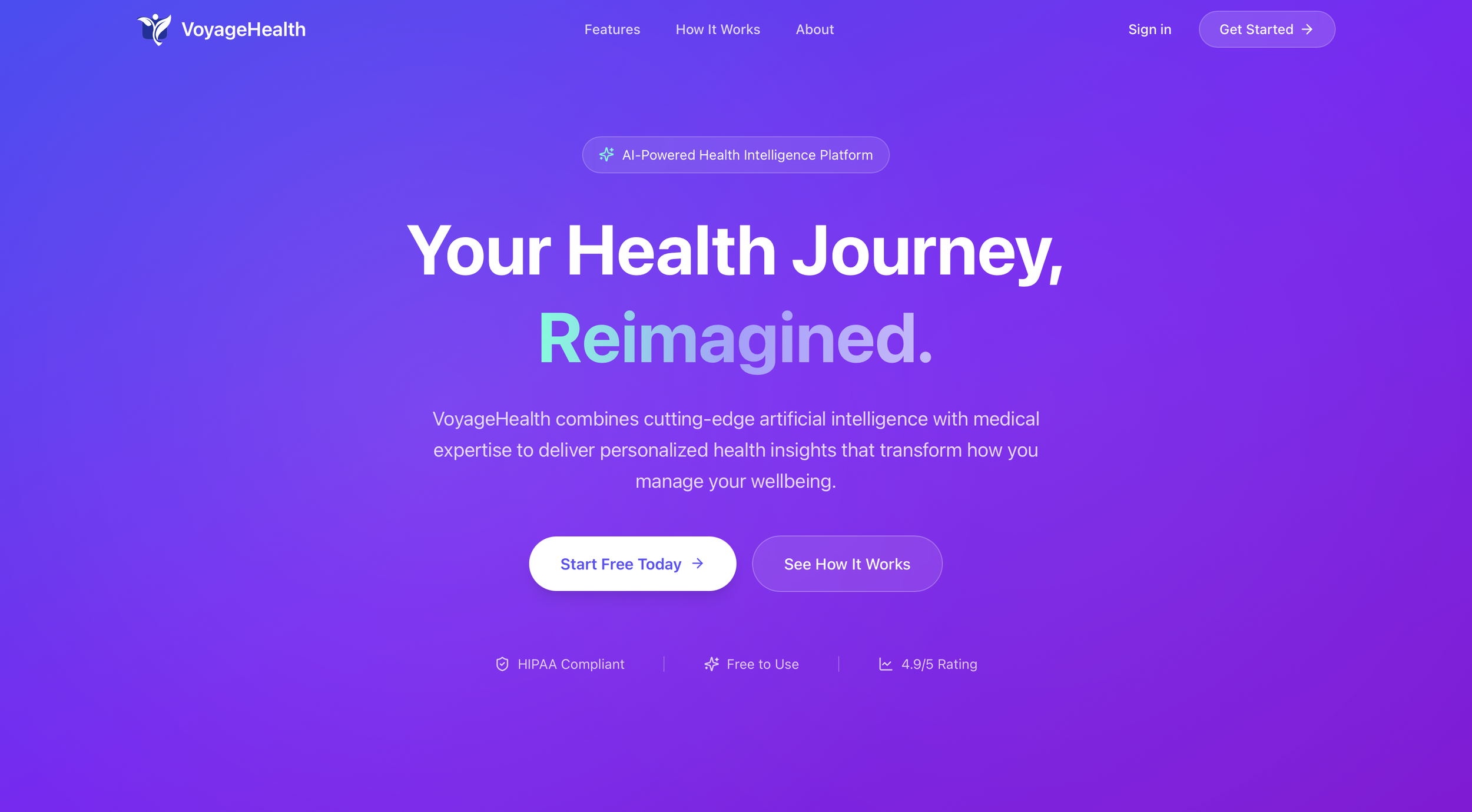
The platform draws on multiple open-source medical APIs, including sources like the CDC, MedlinePlus and the World Health Organization, and cross-references them rather than relying on any single one. Users can trace where any piece of information came from.
Privacy came first, too. Cheekati made Voyage HIPAA compliant before he even filed the company. "Being HIPAA compliant is the bare minimum," he said.

People living in rural areas seem to stand to gain the most from a platform like Voyage Health, where hospitals are scarce, far, or not easily accessible. (Image: omarglx/Unsplash)
Built for the People Who Need It Most
Voyage is free for consumers, and Cheekati insists it will stay that way. "This is not some premium product," he said. "It's for a basic need: taking care of your health."
The audience he has in mind stretches from uninsured patients and anxious college students to underserved communities far beyond Atlanta. Cheekati, whose parents are from India, points to the scale of the problem there. “In rural parts of India, access to a physician can be as high as 1 in 2000 or worse,” he said. As smartphones reach more people than doctors do, he sees an opening, but not a shortcut. After Voyage saw early user growth in India, his team began tailoring the platform region by region, accounting for differences as granular as monsoon season and the diseases that come with it.
Revenue will come from the business side. Cheekati envisions Voyage as a triaging tool for hospitals, clinics and universities, including backed-up campus health centers, helping institutions reduce unnecessary visits and manage patient flow while keeping the consumer product free. Conversations with potential institutional partners are already underway.
The CREATE-X Effect
Cheekati credits CREATE-X, Georgia Tech's startup accelerator, with giving Voyage both credibility and community. "This program has helped me expand in numerous ways," he said. "You have that credibility. This school and this accelerator believe in you, and that's why they help you with these connections."
Halfway through the cohort, Voyage has grown to a team of five and passed 150 users in its first two weeks. But Cheekati measures success differently.
"Whether it's 1,000 users, 150 users or 50 users, what matters is that they're happy with what they're using and coming back when they're facing a problem," he said.
And he plans to keep building it from Atlanta.
"I don't think you need to go all the way to the West Coast to make something happen," Cheekati said. "I think we can do it right here."