
Georgia Teen Is Building Skin Cancer Awareness and Helping People Connect with Clinicians with SkinTight AI
High school senior Barsa Majidi was looking for a challenge and a way to bring together his interests in health, technology, and finance. After dual-enrolling in courses at Georgia State University starting in his junior year, Majidi has been able not only to take core college courses but also to participate in activities previously out of reach for a high school student, such as hackathons.
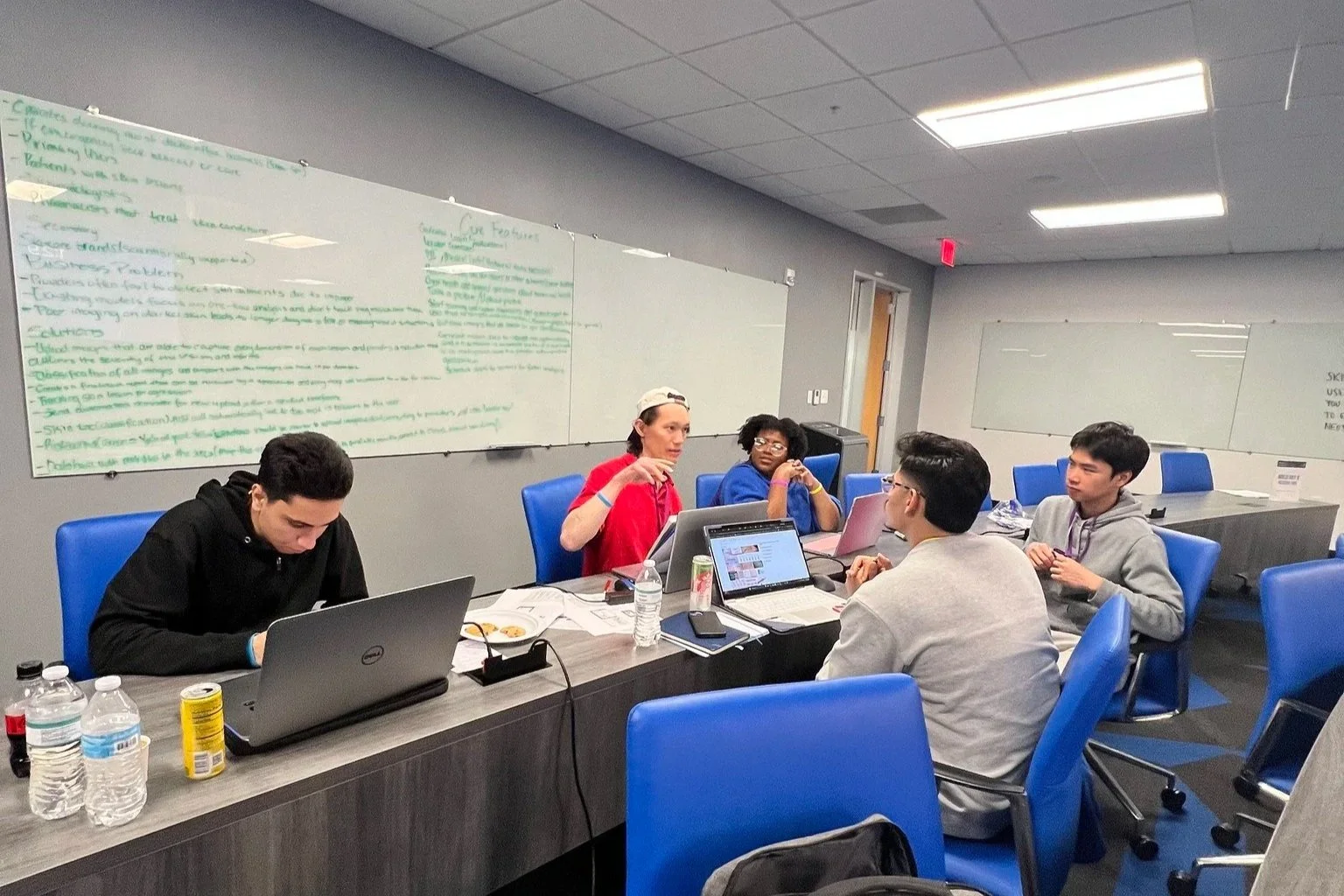
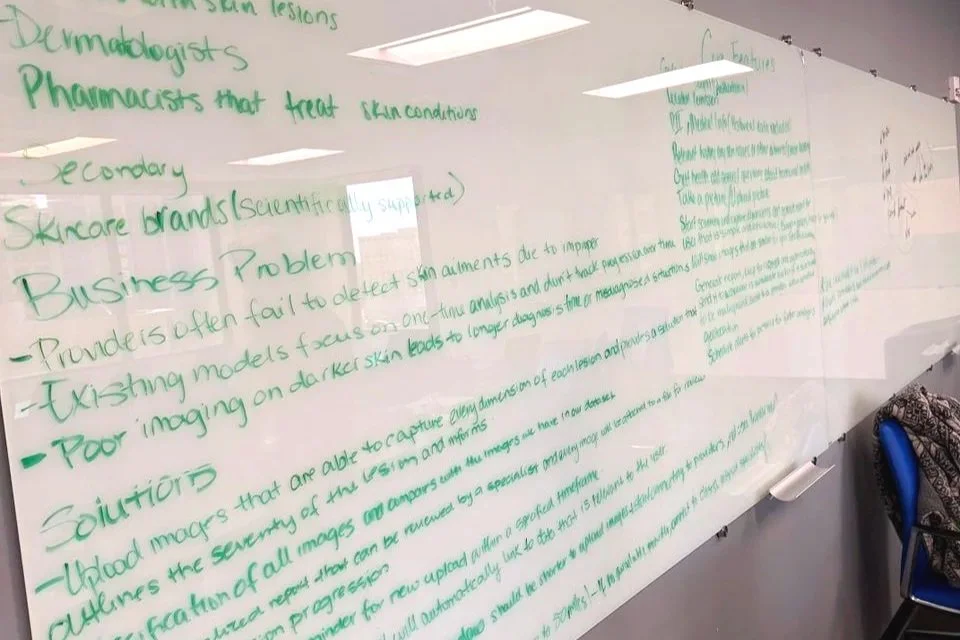
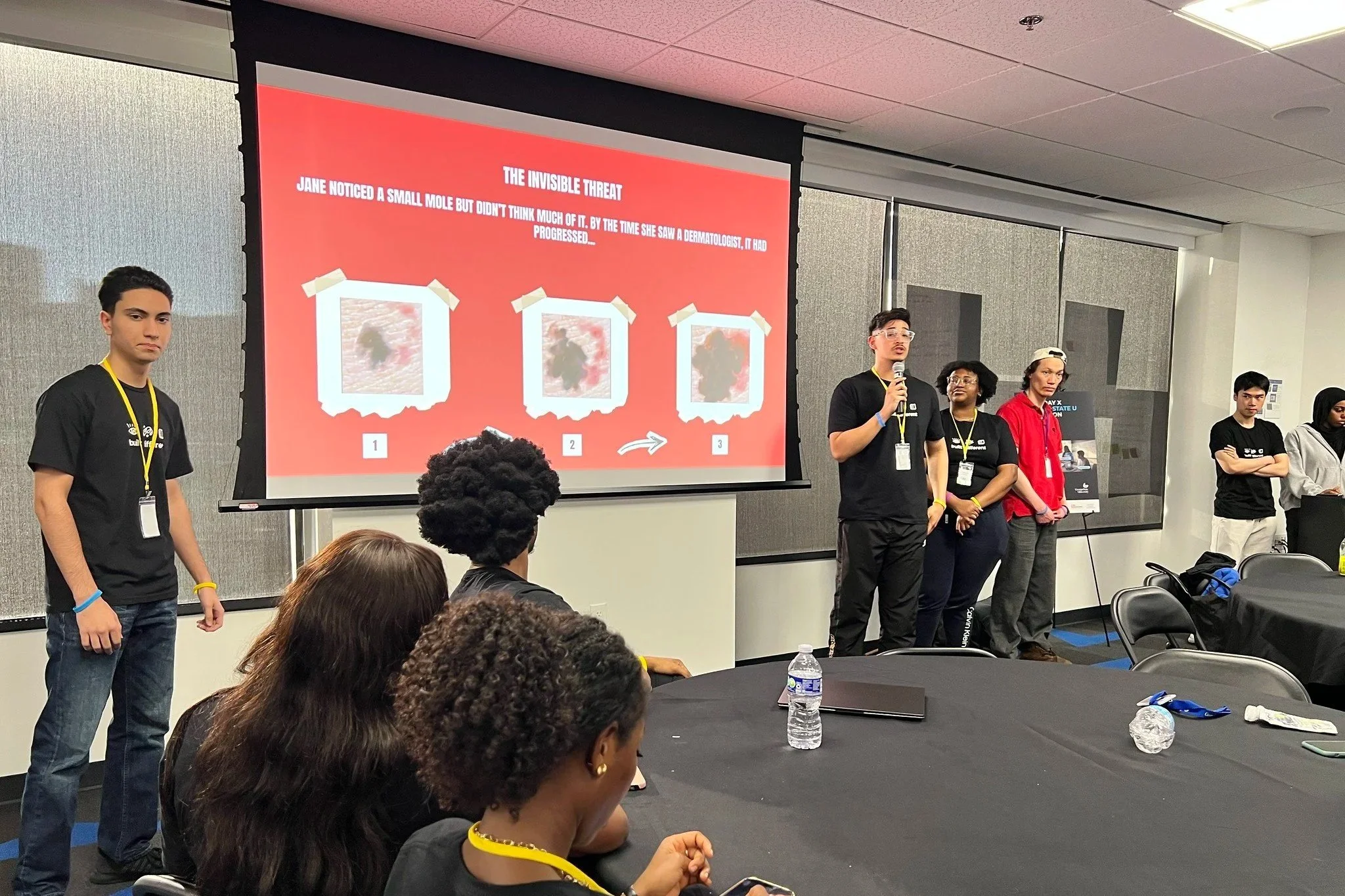
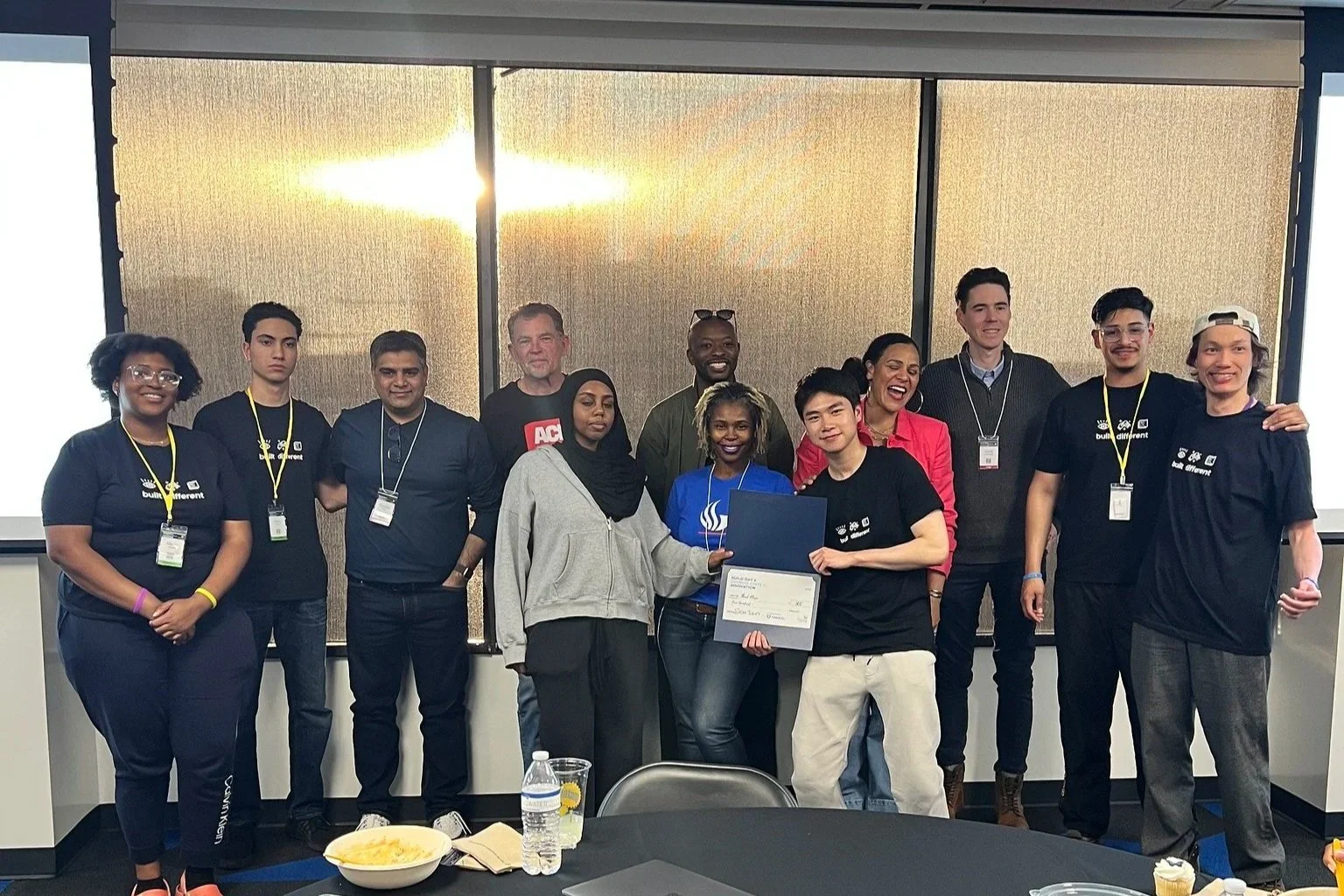
Majidi’s journey to connect community members with resources to monitor, learn about, and connect with local doctors started in March 2026 at the Build Day X Innovation Bootcamp hackathon hosted by the Entrepreneurship & Innovation Institute at Georgia State University, where teams were challenged to transform an idea into a prototype in 24 hours.
The team’s project centered on an important health topic: early detection for skin cancer. “Our realization was that skin cancer is an extremely common cancer, but most people don’t know it until it’s too late. Early detection is key and we wanted to create something that people can freely access without spending too much time,” said Majidi.
The Centers for Disease Control and Prevention advises people to check their skin regularly for suspicious changes and discuss them with their doctor. However, questions of “What are the symptoms?” “and “What should I be looking for?” along with “Is this normal?” are common.
And for those looking to make an appointment with a dermatologist, they may face long wait times, healthcare costs, or be far from home, especially for those living in less-populated regions, where there may be fewer dermatologists practicing in their area.
A Connection to Experts
Build Day X was a true launchpad for Majidi. After the team was named one of the winning teams, Majidi continued exploring the idea. “I took ownership of this project, not only for a college application or resume, but to create something real,” said Majidi.
As a result, Majidi founded SkinTight AI. This app helps people learn about the signs of skin cancer to watch for, gain awareness of how to protect their skin health, and find local dermatologists who can provide an expert review.
“There are great companies doing AI-powered skincare analysis, both for personalized product recommendations and to identify common skin conditions, such as what we are doing with SkinTight AI. They are all great apps, and they are more focused on analyzing the skin. I was thinking, ‘How can I create something that does more?’ and ‘How can I help people understand what is going on behind the AI screen to understand why the application is saying this? What is it seeing?’”
When building, Majidi's top priority was privacy for SkinTight AI users. Majidi said, “I use Google Firebase cloud infrastructure to store every photo and health record in a private, encrypted environment that only that specific logged-in user can access. I also enforce strict Firebase security rules and backend processing, so photos are never exposed, sold, or used to train public AI models.”
When pictures are uploaded to the SkinTight AI app, they are reviewed against dermatology standards. Majidi said, “SkinTight AI applies dermatology standards such as the ABCDE criteria to flag signs of melanoma, which checks for asymmetry, border irregularities, color changes, size, and evolving patterns, alongside sun safety and skin health guidelines to provide personalized preventative care tips.” Majidi highlighted that the AI model is also trained to recognize visual patterns associated with the other most common skin cancers, basal cell carcinoma and squamous cell carcinoma, as well as precancerous lesions such as actinic keratosis.
The AI review of the image is powered by Google’s multimodal Gemini Flash model, which is designed to analyze high-resolution images in real time. “I didn’t have to build this AI model from scratch, but it’s also not just a Gemini API key,” said Majidi.
“I built the system by guiding advanced vision models with strict clinical dermatology rules, structured output formats, and safety guardrails. SkinTight AI is powered by multimodal AI models trained and validated on thousands of verified dermatology cases across diverse skin tones and real-world lighting conditions,” said Majidi. We also verified that any suspicious or high-risk sign immediately directs the user to book an in-person visit with a local dermatologist,” said Majidi.
“In the first few days that I was working on the project in downtown Atlanta at the Build Day X event, I was surprised by how powerful this AI model is when analyzing images,” said Majidi.
However, Majidi acknowledges that AI-powered image review is just a starting point for skin cancer. Image results may depend on image quality, lighting conditions, camera resolution, and skin tone variation, among other factors. That is why, in addition to SkinTight AI being powered by a Gemini AI model to review skin images, education and connection with doctors are among the app's main goals.
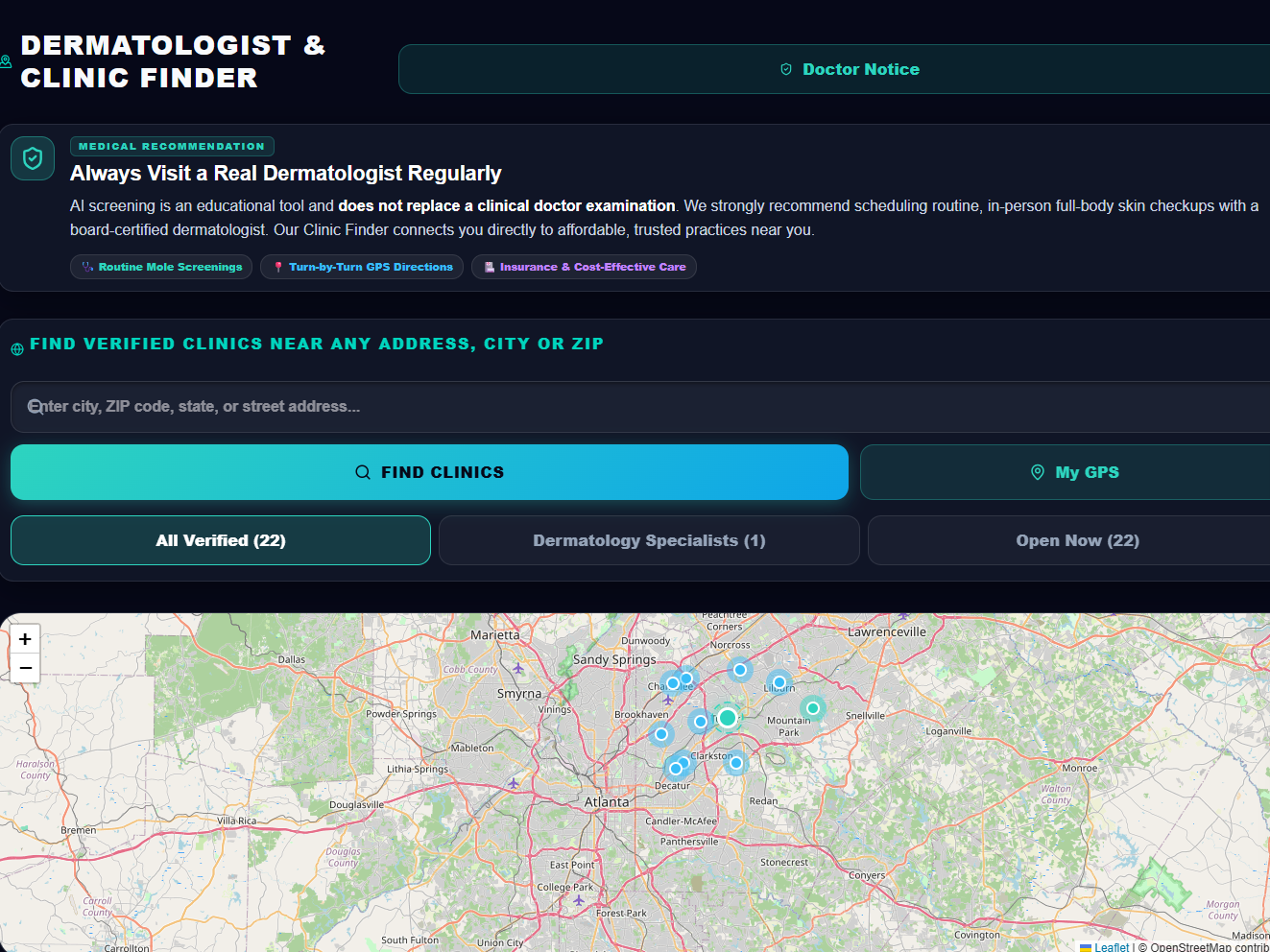
If a photo is flagged based on the ABCDE indicators for moles, pattern symmetries, and risk factors as something that warrants further review by a professional, SkinTight AI provides resources and information to connect people with a list of potential providers and clinics near them, including contact information. Majidi reiterated that SkinTight AI is a monitoring and wellness tool and not to be used to replace a doctor or clinical diagnosis.
What seems simple can have a big impact on someone who’s just had an image flagged, suggesting that a professional review may be needed. “It’s like bringing a small part of Google Maps into SkinTight AI, so people don’t go to the internet to find locations, start self-diagnosing, or get distracted online,” said Majidi.
SkinTight AI also provides personalized daily advice to protect your skin, based on a combination of visual indicators from your previous photos, changes in your skin over time, skin characteristics, and sun exposure habits. “For example, a user with a newly changed, irregular spot receives an urgent prompt to schedule an in-person exam, while a user with a stable profile receives customized daily SPF and UV-protection tips.”
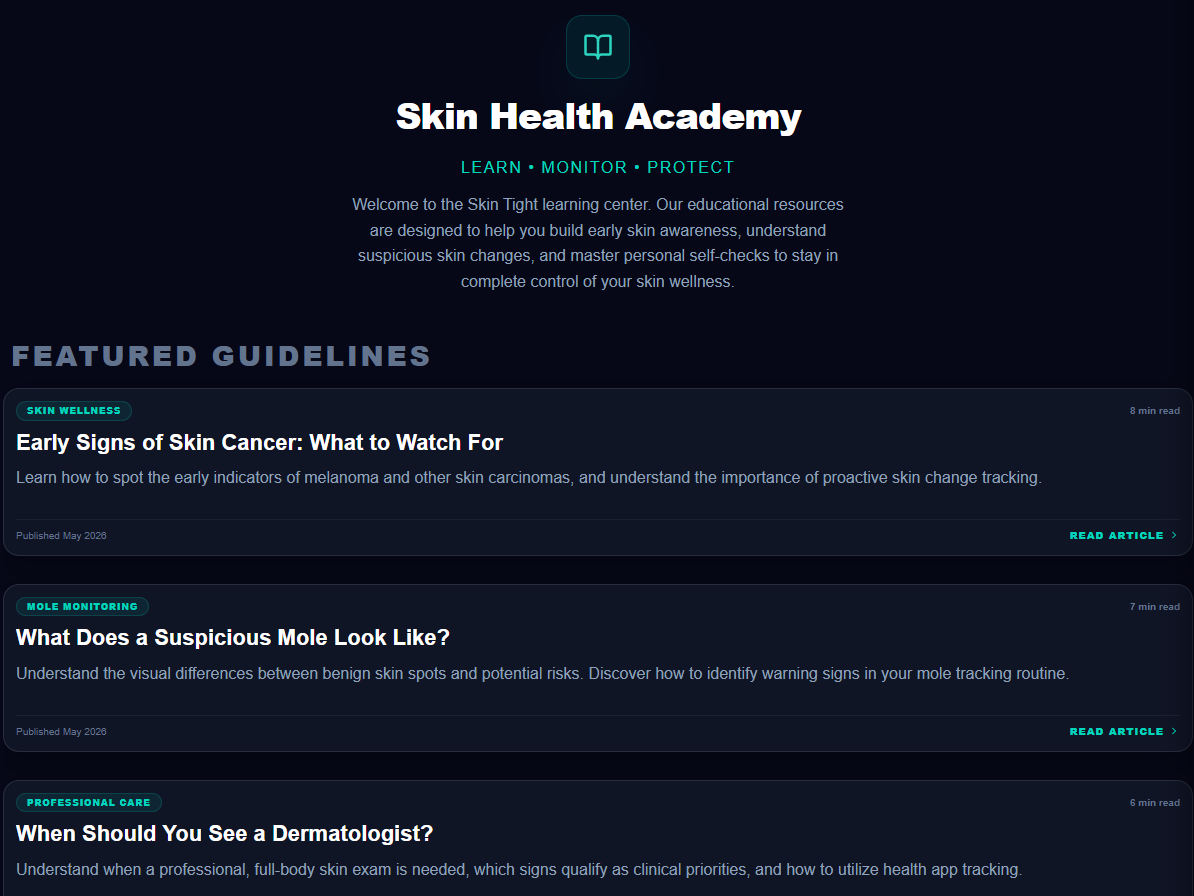
There are also, along with educational resources to learn more. “We have a page called Skin Health Academy with the goal for people to learn, monitor, and protect their skin health,” said Majidi. SkinTight AI’s Skin Health Academy has articles related to early signs to look for and understanding the ABCDE signs for melanoma, which stands for asymmetry, border, color, diameter, and evolving. The three most common types of skin cancer are squamous cell carcinoma, basal cell carcinoma, and melanoma. The content on these pages is sourced from recognized dermatological authorities including the American Academy of Dermatology (AAD), the Skin Cancer Foundation, and the National Cancer Institute (NCI/NIH), as well as the Centers for Disease Control and Prevention (CDC) and the World Health Organization (WHO) for UV index and sun-safety standards.
“The app is about connecting people with certified derms. Once the AI-powered image analysis flags something potentially abnormal, it can help you find and connect with the nearest dermatology clinics and local primary care doctors,” said Majidi. “We want people to know that this isn’t a doctor or a replacement for a doctor. It’s a monitoring and wellness tool that is accessible to everybody.”
Clinical Perspective and Building Trust
Exposure to UV rays from the sun or tanning beds over the course of our lives adds up, leading to changes in skin texture, early aging, and sometimes skin cancer. In fact, one in five Americans face skin cancer by the time they reach age 70, as described by the Emory Winship Cancer Institute.
“Working on this project really highlighted to me how common skin cancer and other skin issues are. While it may not be something you see every day or is immediately lethal with the more common types of skin cancer, it can still be dangerous, time-consuming, and cost a lot if you wait too long to get medical care,” said Majidi. “I’ve learned a lot about skin cancer, skin health, and how seriously UV exposure can damage your skin,” said Majidi.
Regarding cumulative UV exposure over our lifetime, one feature that SkinTight AI offers users with an account is the ability to save and view multiple pictures side by side over time and share them with your doctor.
Determined to build SkinTight AI on trust, Majidi has been engaged in ongoing conversations with Atlanta-area providers and clinics to learn about what would be most useful for them from a clinical standpoint and how a tool such as SkinTight AI can be a trusted resource for and best connect people to clinics.
“Trust is a big thing. It might take time to build trust, but that is a big thing that I want to learn from the doctors and nurses. Instead of doing cold calls or promoting on social media, where trust can go down, if doctors are sharing this tool directly with patients, it can help, and we can serve a lot more people,” said Majidi.