
A New Route to Electrification: How Metzev Is Centralizing EV Battery Recycling
"The way forward in the world is clean energy," said Joseph Metzler Concepción, CEO of Metzev.
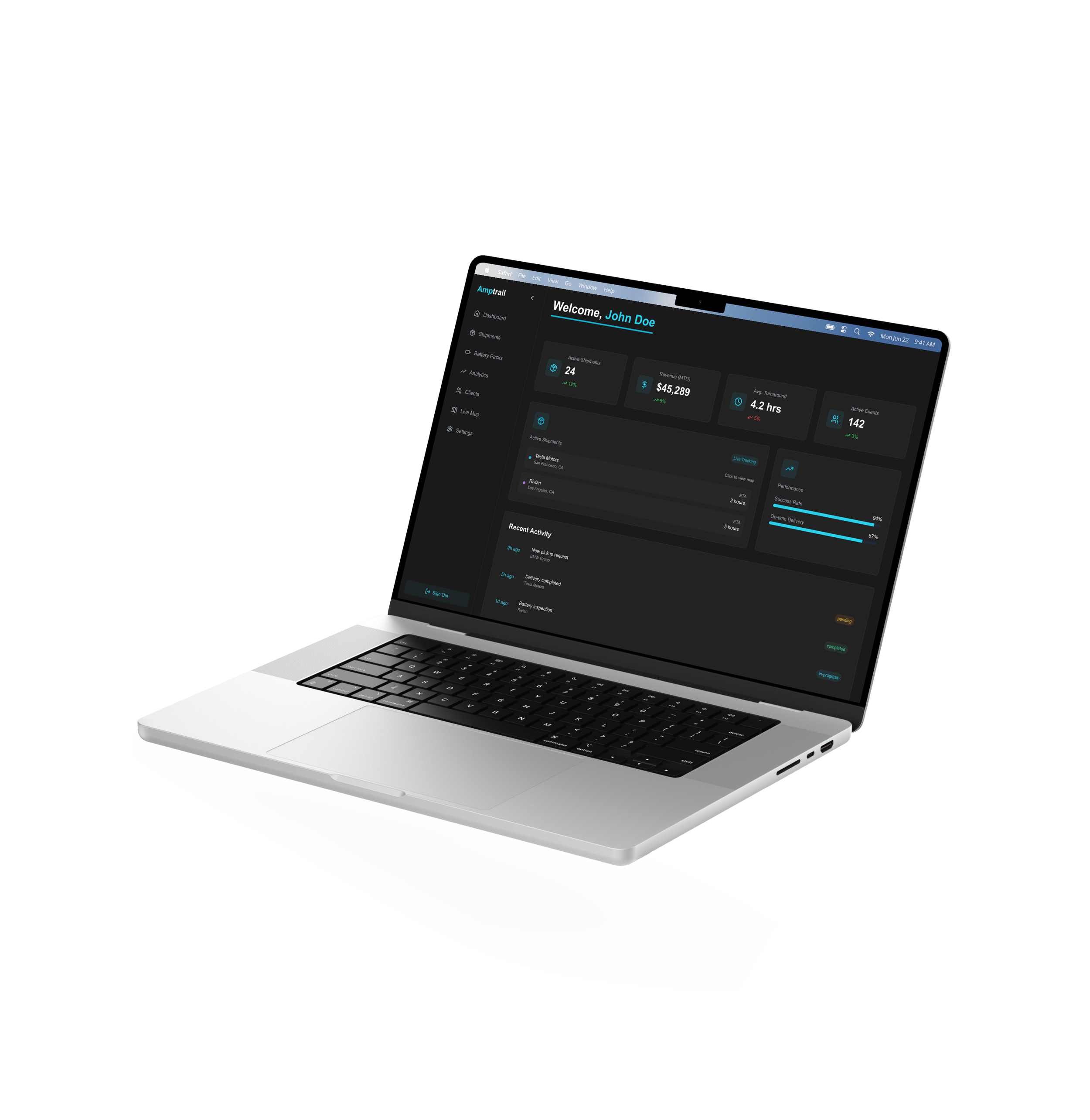
For Metzev, this statement is more than a pitch; it's their mission. The startup's software, Amptrail, helps recyclers and original equipment manufacturers (OEMs) manage shipments of lithium batteries and scrap metal. Amptrail provides customers with information on delivery schedules, live maps of shipment locations, and a central place to manage and communicate directly with suppliers. Metzev simplifies the process of recovering, processing, and tracing batteries — ultimately making battery recycling easier.
One of Metzev's greatest focuses is keeping batteries in a circular loop. Currently, producing new Lithium-ion batteries requires procuring non-renewable minerals such as cobalt and lithium, and the manufacturing process releases fossil fuels and CO2 into the atmosphere. However, recycling the batteries bypasses this procedure. Despite the advantages to recycling, according to Metzler Concepción, “There is a lack of dedicated tools to lithium battery recycling, even though battery recycling has been around forever.” That’s where Metzev comes in, providing recyclers and OEMs with the tools to organize the recycling operation.

The idea for Metzev began when Metzler Concepción was only a junior in high school. At eight years old, he started working with batteries, converting a small electric motorcycle to Lithium-ion batteries. Throughout middle and high school, he continued experimenting. However, during this period, he also noticed two significant issues in the industry: first, OEMs were receiving a stockpile of discarded batteries. Second, Lithium-ion batteries are expensive for any project, ranging from those small-scale as his electric motorcycle to those large as solar fields. With these two problems in mind, Metzev's objective was born.
Knowing he wanted to start a business, Metzler Concepción decided to attend Georgia Tech. At Tech, he continues to be inspired by other students' work ethic and dedication to "thinking outside the box and of how they can solve problems in the world." In the summer of 2023, Metzler Concepción participated in Tech's CREATE-X Startup Launch.
In their current stage of the startup journey, Metzler Concepción says that Metzev aims to be "A key pillar of the lithium battery recycling industry," making the EV industry more sustainable and accessible. Prior to making EVs more accessible through Amptrail, the startup focused on producing high-performance Second-Life Lithium-ion batteries. However, during the sales process, the company realized the demand for new ways to manage the logistics of EV battery shipments — an idea they had already been developing for internal uses. Since then, the startup has made the jump from developing hardware to software.
While Metzev is undergoing internal shifts, it also hopes to bring about changes within the industry. Metzler Concepción acknowledges that there is no doubt the EV industry is growing; however, he also believes that "there needs to be a big shift in access to other types of electrification." One of the most significant difficulties within the EV industry is infrastructure, including charging stations, which often cannot be supported by the grid. Which is why the development of battery backups for the grid is crucial and, in the words of Metzler Concepción, "will then, in turn, make EV infrastructure more accessible, more doable, and then get more EVs on the road, lowering carbon emissions and going to the point that we need to hit to ultimately save Earth."
Protecting the planet remains at the core of Metzev's mission. To reach net-zero emissions by 2050, electrification needs to occur at a much higher rate. However, the cost and production of batteries make this challenging to achieve. Metzler Concepción emphasized the importance of making electrification more accessible. "The only way for that to happen is to reduce the battery cost, which is exactly what Metzev does."