
How Technology and User-Centered Design Are Making Kitchen Cabinets Cognitively Friendly
An important aspect of aging in place is adapting our homes to meet the needs of those living in them. In addition to being able to move around your home safely, aging in place is also about navigating changes in cognitive functioning, such as remembering where things are, finding items, and conducting daily activities without frustration.
Helping people and their families prepare for life’s changes is what Ibrahim Bilau’s doctoral research at Georgia Tech, with the SimTigrate Design Center, Workplace Ecology Lab, and the Charlie and Harriet Shaffer Cognitive Empowerment Program (CEP), aimed to do by building evidence for cognitively friendly kitchen cabinets.
But what might seem to be obvious solutions, such as simply removing cabinet doors or labeling, are not the best option for those experiencing mild cognitive impairment. That is why it is so important to engage with community members and their care partners who are living with this experience every day.
Bilau’s evidence-based and user-centered research seeks to understand how the design and functionality of kitchen cabinets, such as variations in open and closed shelving, can help adults with mild cognitive impairment (MCI) maintain their independence in preparing meals, engagement in daily activities, and quality of life.
MCI an early decline in memory and cognitive ability and is often a precursor to Alzheimer’s disease or a related dementia. Bilau described that, according to academic literature, some people with MCI recover, while a large percentage stay in MCI for the rest of their lives; some may improve, and some may develop Alzheimer’s disease or a related dementia. Research is ongoing to understand this transition from MCI to Alzheimer’s. According to Alzheimers.gov, roughly 10% to 20% of people over the age of 65 have MCI, with the risk increasing over time.
“There are many daily and essential activities related to the kitchen environment. And for adults with mild cognitive impairment, they have challenges with at least one of these activities, such as remembering where the items are located. This piqued my interest to go deeper into this topic of research,” said Bilau.
With a lifelong interest in science, innovation, and entrepreneurship, Bilau has earned a B. Tech in Architecture from the Federal University of Technology in Akure, Nigeria, a M.S. in Architecture-Facility Management, an MBA from Florida A&M University in Tallahassee, Florida, and, in May 2026, a PhD from the Georgia Tech School of Building Construction in the College of Design.
Research Inspiration and Partners
For adults with MCI preparing food, a major challenge is being able to see and remember what items are stored on the cabinet shelves. Closed cabinet doors make it difficult to remember where cups, plates, and pantry items are stored, especially if they are on high shelves or farther back in the cabinets.
“Most homes are not designed to be cognitively friendly, and this inspired my research,” said Bilau.
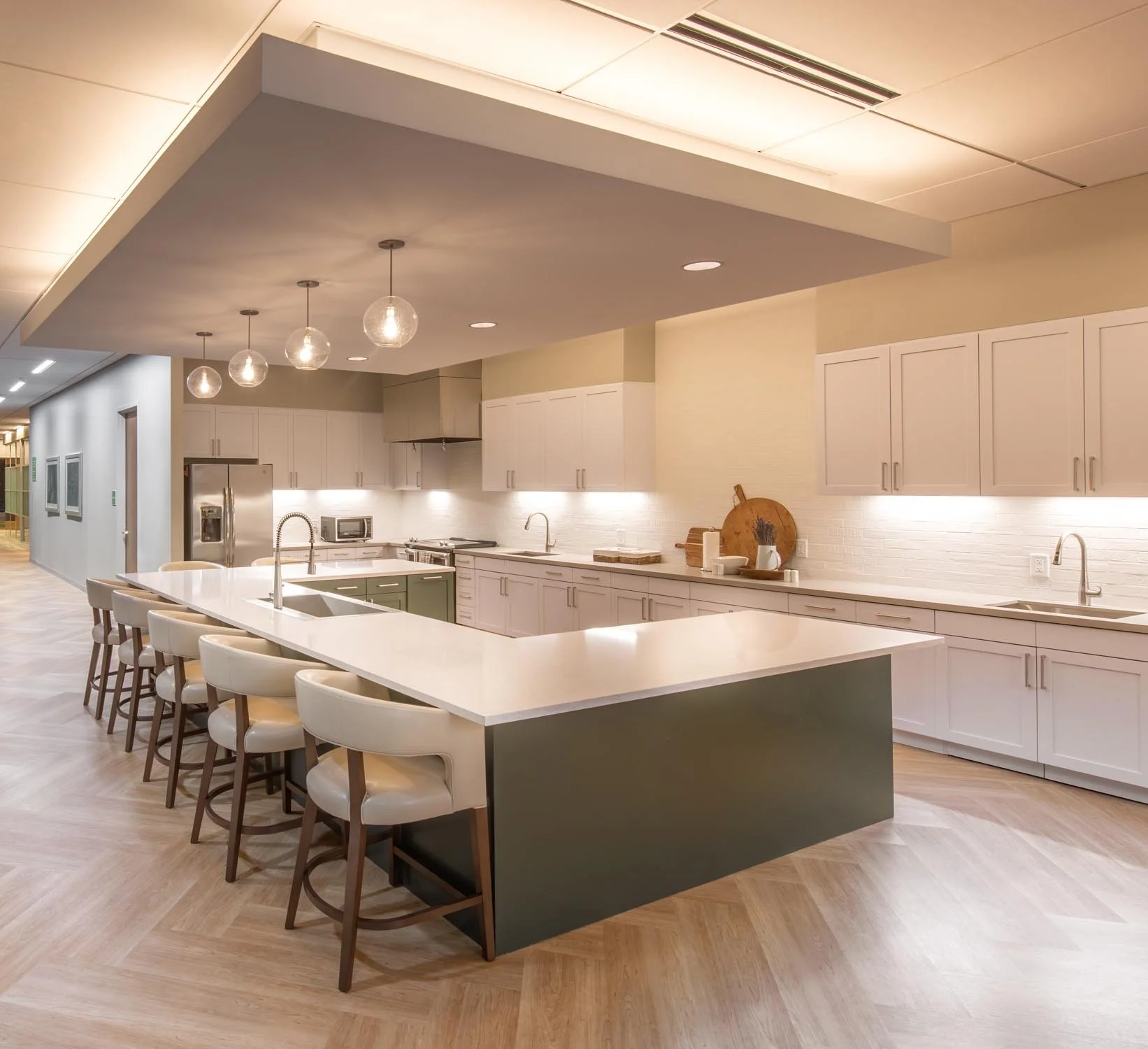
A research kitchen in the Charlie and Harriet Shaffer Cognitive Empowerment Program facility. Source: Nelson Worldwide
Bilau conducted this research with his advisor, Dr. Eunhwa Yang, an Associate Professor at the Georgia Tech School of Building Construction and a core faculty member at the SimTigrate Design Center in the Tech Square Research Building. Bilau and Yang’s research is also associated with the Georgia Tech Workplace Ecology Lab in the School of Building Construction.
SimTigrate Design Center, which developed the Home Design Guidelines to support safe cognitive aging in place, is a partner in the Charlie and Harriet Shaffer Cognitive Empowerment Program alongside Georgia Tech’s Institute for People and Technology and the Emory Brain Health Center. The Charlie and Harriet Shaffer Cognitive Empowerment Program is a collaborative and flexible space for researchers to conduct evidence-based research to support people who are experiencing MCI through design, intervention, and clinical research.
“In addition to the focus of this research on aging in place, we use the term ‘cognitive aging in place’. Additionally, this research utilizes human-centered design, which for this research requires an understanding of the perspective of and designing for both MCI patients and their care partners,” said Bilau.
“While a simple solution is to take off the doors, we wanted to understand, from an evidence-based approach, what the impact there is on people to have the cabinet doors taken off,” said Bilau.
What Do Cognitively Friendly Kitchen Cabinets Look Like?
For Bilau and the team at the SimTigrate Design Center, the goal is to conduct research that builds evidence on the visual accessibility of kitchen cabinets and on cognitive load.
First, the team conducted a study in a simulated kitchen environment in the Charlie and Harriet Shaffer Cognitive Empowerment Program (CEP) building. This unique facility, located near Emory, is U-shaped, allowing it to be divided into two parts to test differences, in this case between closed and open shelving.
“We removed the cabinets from one side and left them on for the other, so we can replicate the study on both sides,” said Bilau. The team collected sensor data, including eye-tracking and a wrist-worn accelerometer, alongside participants’ perceptions through interviews, in which participants reported concerns about dust, clutter, and limited privacy related to open shelving.
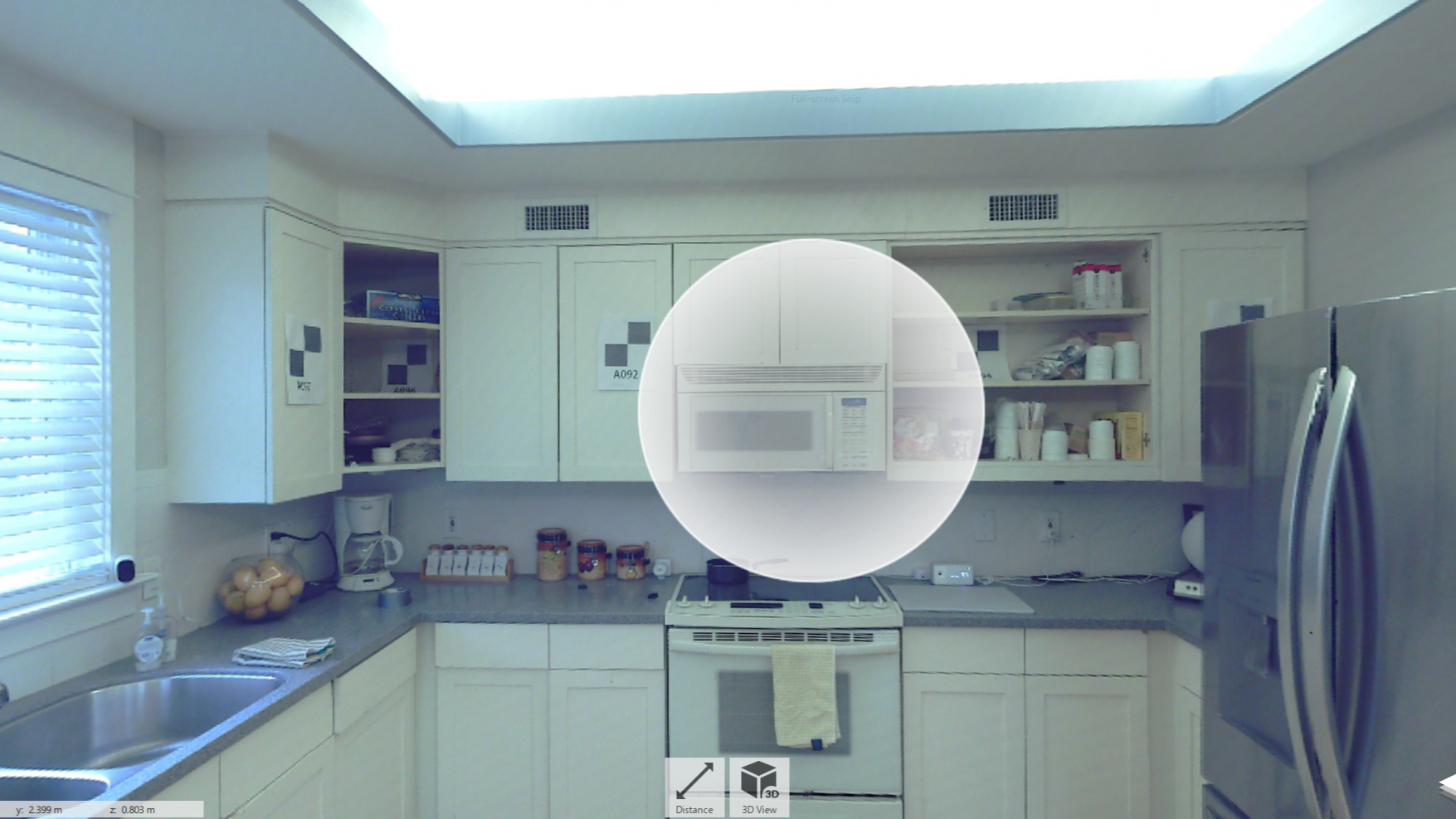
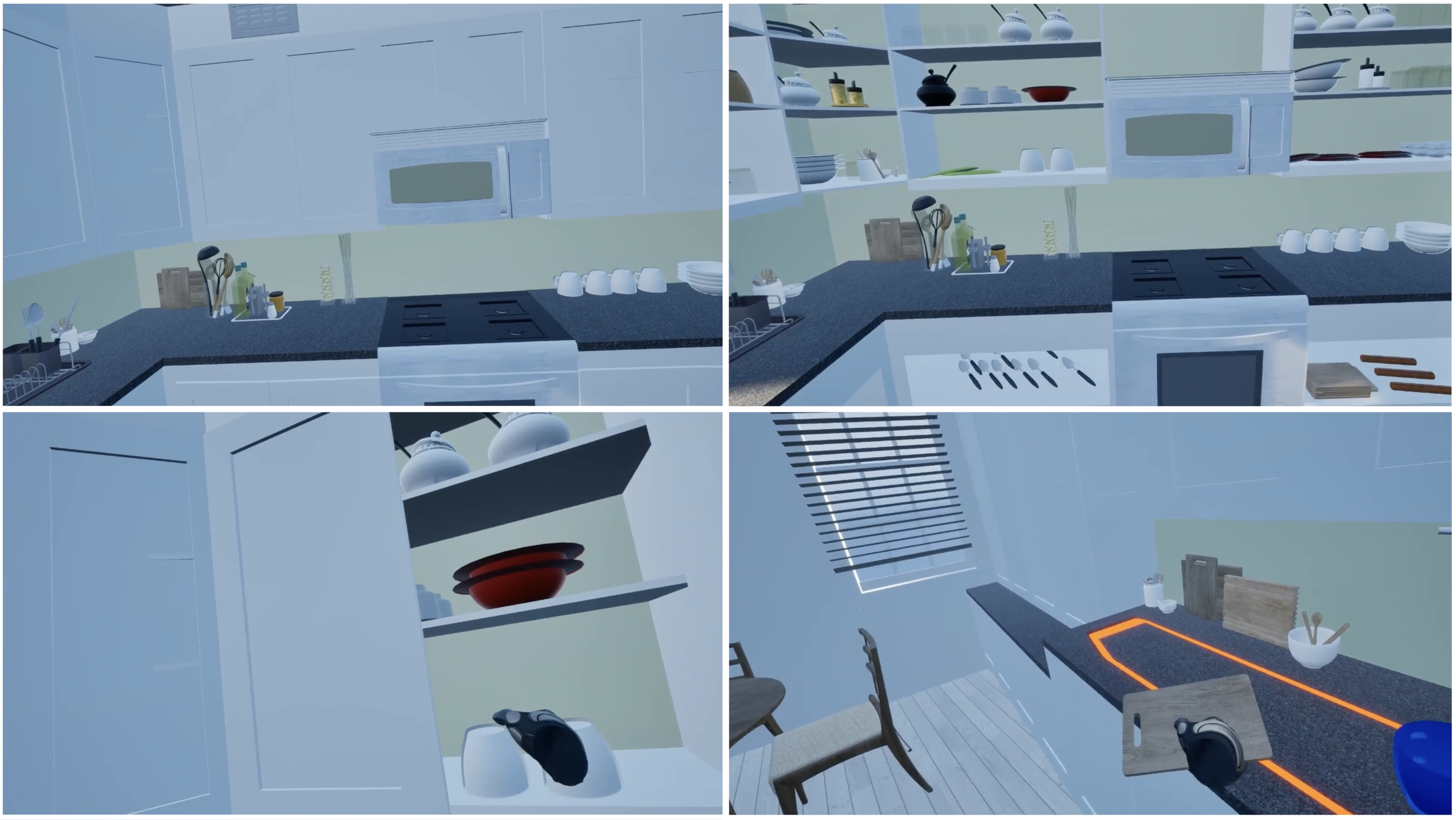
Next, the team explored visual accessibility of open shelving in a virtual kitchen, which was completed in a virtual replica of the Georgia Tech Aware Home’s first-floor kitchen. “We scanned the kitchen with 3D point scanners to recreate accurate dimensions to then test in virtual reality,” said Bilau.
Third, to better understand the balance between the visual accessibility of open shelving and concerns such as aesthetics, dust, and privacy, the team applied a co-design and user-centered design approach using a card sorting process, which contained features such as opening methods, visual methods to use, lighting, and interior layout, to explore how people living with MCI and their care partners best perceive what an ideal visually accessible and cognitively-friendly kitchen cabinet should entail.
Through co-design with people experiencing MCI and their care partners, Bilau and the team shed light on key desired features related to visibility, function, and accessibility. Participants predominantly chose glass cabinets, pull-out trays, passive automation for lighting and door mechanisms, and rejected the use of labels.
Each of these can support daily functioning for people living with MCI by reducing the demands of remembering where everything is located and the time and frustration associated with searching for items.
Shedding Light on the Importance of Community Engagement
“Designing for cognition requires balancing accessibility, dignity, and aesthetics,” said Bilau. “For people to age in place, we heard from participants that it is important for them to feel confident and that they have possibilities,” said Bilau.
While reminders like notes could be a potentially easy-to-implement solution, Bilau shared that people do not want overly institutional environments or ones that feel or look like a hospital, signifying that someone in the home might be struggling.
This brings up the importance of mixed-methods research, such as the co-design work that Bilau and the team conducted, which blends qualitative and quantitative methods. “While quantitative studies can provide data on behavioral patterns, the qualitative insights gained from people sharing or reporting on their experiences through observation, interviews, or surveys provide rich context to better understand the qualitative data,” said Bilau. “With qualitative research, you’re dealing with people. Sensors never tell the full story.”
Through this research, Bilau gained experience and insight on how to engage and talk with participants to understand how tech and design interventions can empower and help people.
Prototyping the Future of Cognitively Friendly Kitchen Cabinets
After the co-design process and card sorting, the team’s goal is to bring the visually accessible, cognitively friendly, and dynamic cabinets to life. The team reviewed various features and methods to make the kitchen cabinets more cognitively friendly, assigning potential solutions to low-, mid-, and high-tech options.
One option that is currently being explored for development and commercialization by the SimTigrate Design Center team is cabinet doors that have a sensor to detect a person, transforming the door from opaque to transparent. Another advanced prototype that Bilau shared was having interactive glass like some modern fridges have. “There are a lot of possibilities for designers to explore in the future, in both different settings and over longer periods of time,” said Bilau.
As part of Bilau’s cognitive aging in place research, he completed a study to develop an artificial intelligence system that converts standard kitchen photos into MCI-friendly designs guided by the recommendations in the SimTigrate Design Center’s Home Design Guidelines.
Grounded in training and using feedback from older adults with MCI and their care partners, these generative AI images provide a low-cost, scalable way to visualize and implement DIY kitchen changes that improve visibility, lower cognitive load, and support greater independence.
“It was a creative process,” said Bilau when discussing the AI-Home Design Guidelines project. “From DIY home modifications to more high-tech solutions, next it was up to us to see what is possible through prototyping based on what we learned from participants.”
Guided by the needs of participants, which included an understanding of the importance of visibility and visual cues, the team explored options to help with behavioral actions. “The goal is to make adults experiencing MCI more confident stepping into the kitchen and doing the things they love to do,” said Bilau.
How Our Homes Can Adapt as Our Needs Change
After graduating with his PhD from Georgia Tech in May 2026, Bilau is continuing this work that blends design, health, and technology to explore how the built environment in our homes plays a significant role in our lives and cognitive health.
Bilau said, “Especially for older adults, who spend a lot of time inside their homes, their built environment, like noise and lighting, can have a big impact on sleep quality and circadian rhythm. And sleep health in turn has an impact on cognitive health.”
Bilau seeks to advance cognitive aging in place through both research and product development. He’s starting with the cognitively friendly dynamic cabinet, its prototyping and commercialization, then extending beyond that as an applied researcher sitting with the population to identify pain points and design solutions that support functional independence, dignity, and reduced caregiver burden.
For those seeking to age in place, this work goes beyond the kitchen to every aspect of the home, particularly for the essential activities that are part of our day-to-day lives.